Introduction
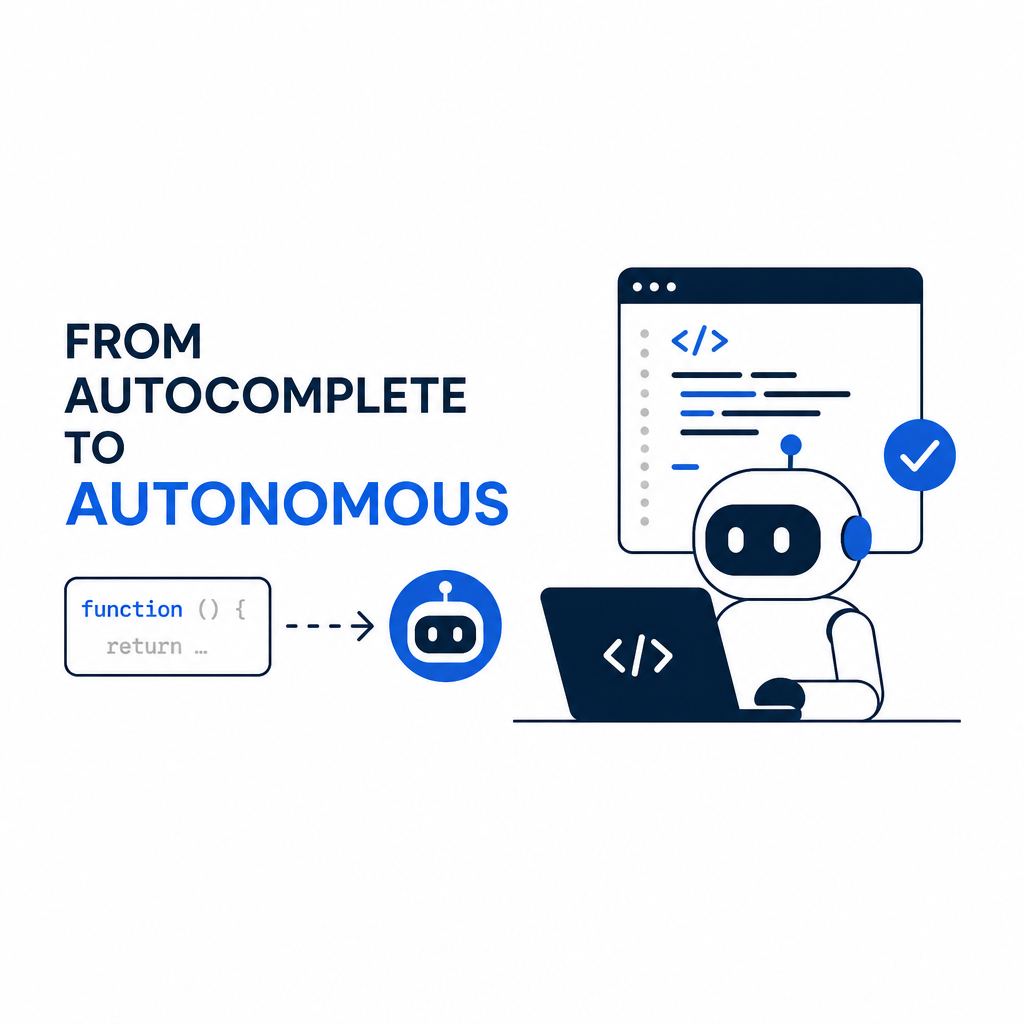
When Google CEO Sundar Pichai revealed that more than 25% of the company's new code is AI-generated, it served as a striking marker of just how quickly large language models have moved from novelty to necessity in software engineering [1]. What began as "autocomplete on steroids" -- probabilistic tools that suggested the next most likely line of code -- has matured into something categorically different: autonomous agents that take a ticket, plan an architecture, write the implementation, generate tests, open a pull request, respond to code review, and even monitor the result in production [2][3].
This shift is not merely incremental. As industry analysts have put it, "a copilot makes a developer faster; an agent changes what a developer is" [2]. Coding agents have crossed the threshold from developer productivity tool to autonomous engineering participant, and the software development lifecycle is reorganizing around them faster than most tooling, processes, and mental models have been able to keep up [2][3]. The consequences are already visible at the macro level: shortened development life cycles, measurable improvements in code quality, and increased team throughput -- changes that will, by many accounts, "redefine software development economics, team structures, and productivity benchmarks" [4].
This article traces the transformation through its key dimensions: the technical evolution from autocomplete to agency, the rebuilding of the software development lifecycle, the evidence on productivity and quality, the restructuring of engineering teams and roles, the emerging economics of the "coding agent economy," and the risks and governance challenges that remain unresolved.
From Autocomplete to Autonomous: The Technical Evolution
The journey to agentic coding unfolded in distinct phases, each changing the unit of interaction between developer and machine.
Phase One: Smarter Autocomplete
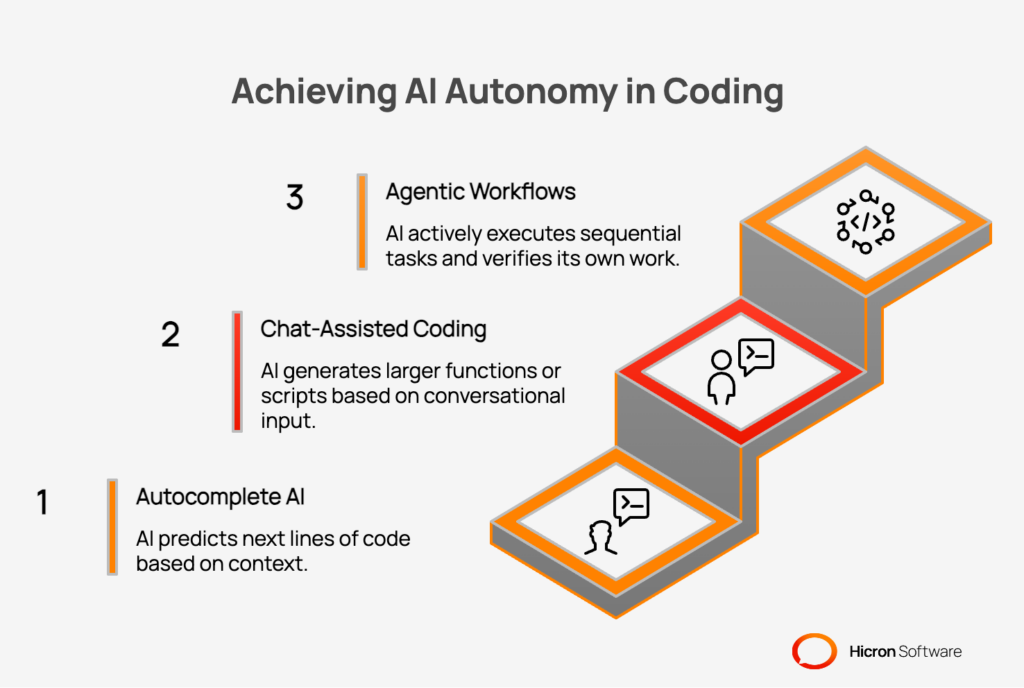
The earliest generation of AI coding tools functioned as accelerated autocomplete -- selecting the most probable continuation of code rather than demonstrating anything resembling true reasoning [1][5]. These tools excelled at generating boilerplate code, summarizing and explaining concepts, and assisting with unfamiliar languages and frameworks, but they consistently struggled with complex reasoning and deeply contextual tasks [1]. Developers remained firmly in control, micromanaging every line and acting as constant supervisors for models with no memory of the larger project goal [6].
Phase Two: IDE Integration and Context Awareness
The second phase embedded LLM capabilities directly into development environments. Platforms such as Cursor and Continue.dev brought context-aware code suggestions, on-demand refactoring, rapid boilerplate generation, inline code generation, real-time error detection, and automated documentation into the developer's daily workflow [1]. Critically, the emergence of the Model Context Protocol (MCP) as an open standard allowed LLMs to connect seamlessly with local repositories, databases, and APIs, providing far richer context for code generation and problem-solving [1]. Developers could finally reduce cognitive load and accelerate development cycles without sacrificing code quality [1].
Phase Three: Assignment-Based Agentic Workflows
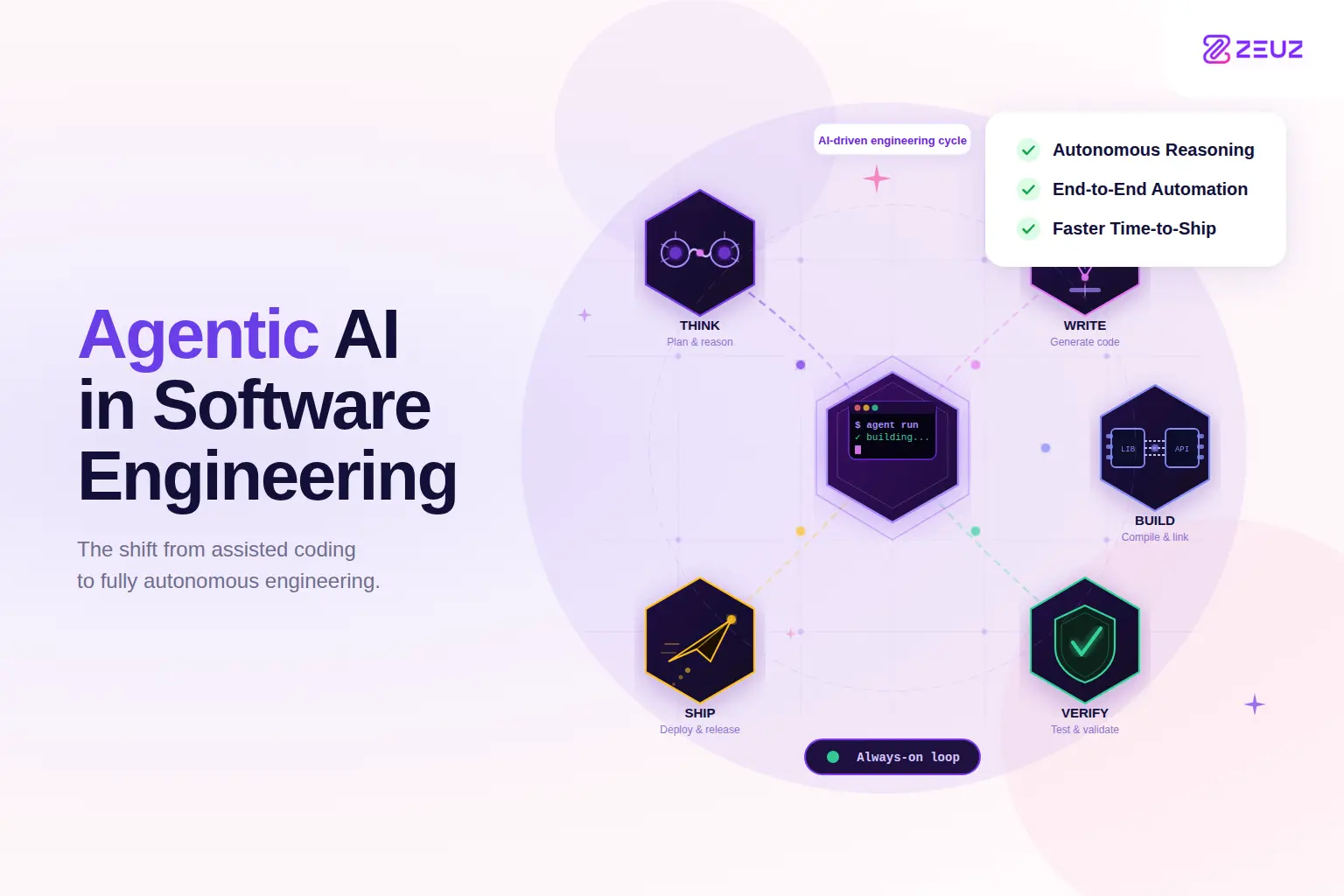
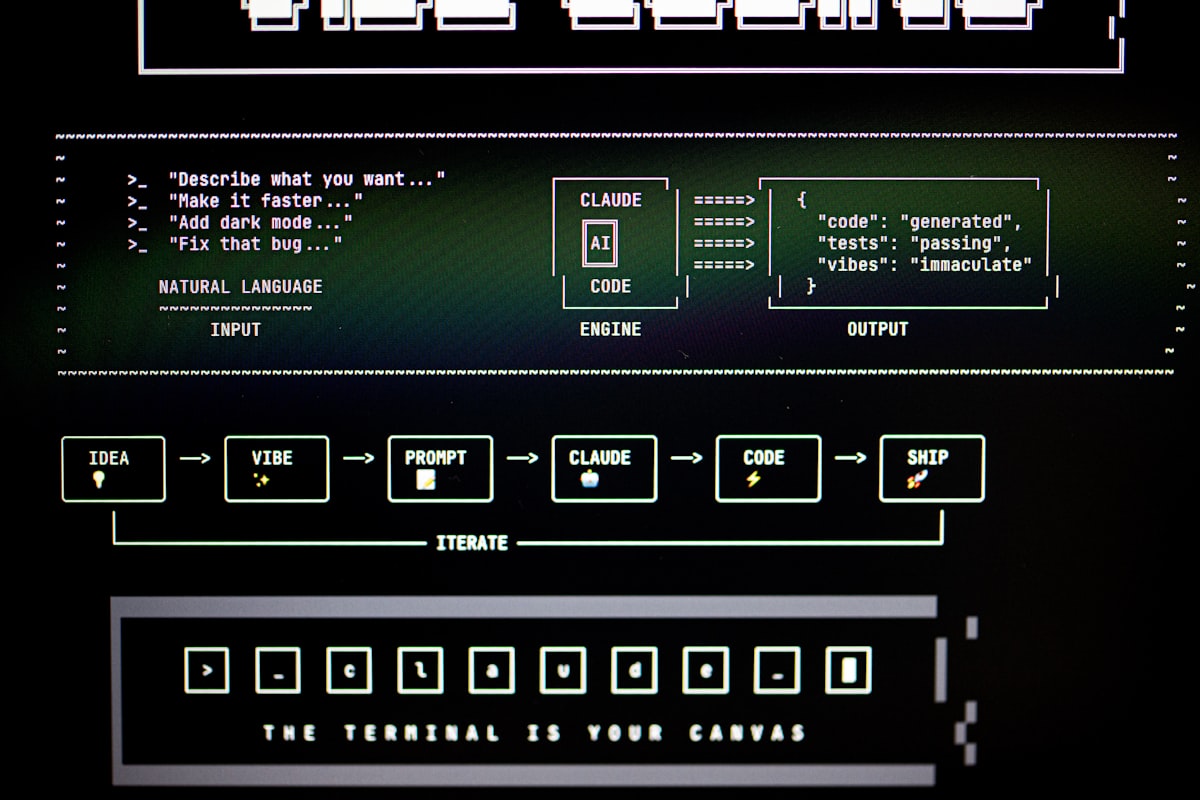
The current phase represents the decisive break. Tools like Claude Code and Cursor Composer now allow developers to delegate entire multi-step workflows -- initial code drafting, automated refactoring, debugging, testing, and deployment -- to agentic LLMs [1]. The shift is best understood as a movement from "prompt-based" interactions to "assignment-based" workflows: rather than micromanaging code, a developer can delegate a high-level objective, such as migrating a legacy database or resolving a complex security vulnerability, and leave the system to execute autonomously over several hours [6].
Several technical breakthroughs made this possible. Modern agentic models can maintain logic and context over hundreds of iterative cycles, reasoning through the implications of their changes while testing and debugging their own output in a continuous loop [6]. They have developed specialized proficiencies in navigating real-world command-line environments and repository generation, and through continuous polishing passes they can strip away redundancies and improve efficiency in ways that time-pressed human developers might overlook [6]. Where engineers have access to model weights, agents can even be fine-tuned to understand proprietary internal tools and legacy languages absent from general training data [6].
 Agentic AI in Software Engineering: The Complete 2026 Guide
Rebuilding the Software Development Lifecycle
The change in the unit of work -- from a line of code to a complete assignment -- is what makes this shift structurally significant rather than incremental [2]. Across the industry, the software development lifecycle is being rebuilt around agents that operate across every phase.
Deloitte frames this as the industry's movement from a traditional software development life cycle (SDLC) to an "agent orchestrated development life cycle" (AO-DLC), in which coordinated agents execute work across requirements, development, testing, deployment, and maintenance [7]. In the most advanced enterprise deployments, agents read tickets, plan architectures, write implementations, generate tests, open pull requests, respond to reviews, and deploy to production -- a full-cycle capability that constitutes a structural change in how software is built, reviewed, and maintained [3].
The Code Review Bottleneck
As agents absorb more of the writing workload, code review is emerging as the critical bottleneck of the new pipeline [2]. When agents can generate implementations and pull requests at superhuman speed, the human capacity to evaluate, validate, and approve those outputs becomes the constraining factor in the entire system. This is reshaping where engineering organizations invest attention: the division of labor increasingly becomes one of "humans who steer, agents who execute" [2], with review quality becoming the primary lever for software reliability.
Deloitte's assessment of enterprise readiness is blunt: many organizations already have AI agents in place but lack the operating model, review structure, and architectural ownership needed to capture the full value of the shift [7]. The lifecycle has been reorganized around autonomous execution, but the governance apparatus surrounding it is still being assembled.
 How AI is Changing the Software Development Life Cycle (SDLC) | Hicron Software
Productivity and Code Quality: The Evidence So Far
Measured Gains
The productivity evidence, while still maturing, is substantial. Autonomous agents are reducing development life cycles and increasing team throughput through independent planning, writing, testing, and execution, delivering dramatic measured gains in debugging and pipeline efficiency [4]. The 25% AI-generated code figure at Google underscores how thoroughly these tools have penetrated even the most sophisticated engineering organizations [1].
For individual engineers, the gains concentrate in specific areas: generating boilerplate, summarizing and explaining unfamiliar code, assisting with new languages and frameworks, and handling the mundane or repetitive tasks that historically consumed mid-level engineers' time [1]. By integrating AI tools directly into development workflows, engineers significantly reduce cognitive load and accelerate cycles while maintaining code quality [1]. On quality specifically, agentic systems offer structural advantages: their capacity for thorough testing, continuous security checks, and iterative self-refinement through multiple passes leads to more robust, error-free software [6][8].
The Caveats
The evidence is not uniformly rosy. Veteran analysts of AI-assisted development caution that while AI coding assistants increase the speed of software delivery, measuring exactly how much is surprisingly complicated -- and without close supervision, the impact on quality could be negative [5]. LLMs remain more like advanced autocomplete tools that select the most probable answer rather than demonstrating true intelligence, and they continue to struggle with complex reasoning and deeply contextual tasks [1].
There is also a human cost to the pace of change. Developers face a double adaptation burden: they must adjust to generative AI's nature while constantly revising workflows and opinions as tools evolve at breakneck speed [5]. Some engineers thrive in this environment; others find it frustrating and disorienting [5]. The productivity picture, in short, is real but conditional -- the gains flow to teams that pair agent speed with rigorous human oversight.
New Team Structures and Roles
Perhaps the most profound changes are happening to the shape of engineering organizations themselves. The transformation unfolds in layers: first-order impacts hit the individual engineer's daily workflow, second-order impacts reshape teams, methodologies, and system architecture, and third-order impacts rework the economics and business models of the entire software industry [4].
The Rise of the Agent Orchestrator
The role of the software engineer is increasingly resembling that of a "system orchestrator" -- managing a fleet of autonomous agents that execute the actual coding [6]. Engineers are becoming conductors and supervisors rather than builders, directing architectural decisions and orchestrating multi-agent workflows across the development lifecycle [4][9]. A new tier of "AI-native engineers" has emerged: practitioners who build an order of magnitude faster not because they type more quickly, but because they treat AI as a force multiplier across the entire lifecycle rather than as an autocomplete [9].
Rethinking the Junior Developer
The traditional engineering career ladder is being redrawn. Junior developers are shifting from implementation to agent supervision and validation, while senior developers spend more time on architecture, agent instruction, and exception handling [3]. The ratio of engineers to product managers is changing as well, because agents absorb the implementation capacity that previously required larger teams [3]. Some visionaries go further, imagining "zero-FTE" departments where entire functions are performed by interconnected AI agents, and team structures that include "guidance teams" providing strategic oversight and ethical governance alongside smaller, AI-augmented project teams [8].
Leading the Transition
For engineering leaders, the transition is as much an organizational challenge as a technical one. Practical handbooks for managers and CTOs emphasize preparing the ground with education and buy-in, structuring onboarding and adoption, measuring the impact of AI adoption, fostering a culture of AI literacy and experimentation, and -- critically -- balancing automation with human judgment [10]. Organizations that fail to cultivate a class of engineers capable of orchestrating agent fleets risk falling behind not incrementally, but permanently [9].
 Agentic Coding in 2026: How AI Tools Are Reshaping the Software Engineering Workflow | Luby Software
The Economics of the Coding Agent Economy
The deepest transformation may be economic. When development timelines collapse from months to days, the unit of economic competition changes: advantage accrues to organizations that can most effectively orchestrate fleets of agents, not merely those with the largest engineering headcount [4]. Software production is being restructured around a new kind of labor -- one in which per-call agent costs continue to compress while agent capabilities expand [4].
For the labor market, the long-term picture suggests rebalancing rather than simple displacement, with demand concentrating on engineers who can architect systems, direct agents, and exercise the judgment that autonomous execution still requires [4]. Third-order effects -- the redefinition of development economics, productivity benchmarks, and industry business models -- are only beginning to come into focus [4].
The window for strategic positioning is narrow. Deloitte's analysis argues that every enterprise will be affected by the shift to agent-orchestrated development, and that organizations moving deliberately in the next twelve months will likely set the terms of the new landscape, while the rest spend their time adapting to standards set by others [7].
Risks, Trust, and Governance
No account of the agentic transition would be complete without acknowledging what remains unsettled. The coding agent economy demands new trust frameworks, and those frameworks are still embryonic [4]. Industry observers note there are significant risks receiving insufficient attention as adoption accelerates [3], and Deloitte identifies the missing operating model, review structure, and architectural ownership as the central gap in enterprise adoption [7].
On an individual level, experienced practitioners warn against over-trusting AI outputs. While it is useful to develop a practical mental model of an "AI teammate," engineers must remain alert to the cognitive biases that generative tools can induce -- the convincing-sounding answer that is subtly wrong, the confident plan that contains a flawed assumption [5]. The most durable principle emerging from two years of hands-on experience is that speed gains are only trustworthy when paired with close human supervision; otherwise quality quietly erodes [5].
The resolution, most experts agree, lies not in rejecting automation but in designing the right interfaces between human judgment and agent execution: robust review structures, clear architectural ownership, validated quality gates, and a culture that treats AI literacy as a core engineering competency rather than an optional skill [10][7].
Conclusion
The journey from copilots to autonomous agents is best understood not as a story about better autocomplete, but as the restructuring of software production around a new kind of labor [4]. The first-order effects have already arrived: agents that plan, code, test, and deploy with minimal intervention, delivering measurable gains in efficiency and throughput [4]. Second-order effects are well underway: engineers becoming conductors and supervisors rather than builders, hybrid human-AI teams replacing conventional organizational structures, and specifications becoming artifacts as important as the code itself [4]. Third-order effects -- redefined development economics, new productivity benchmarks, and transformed business models -- are only beginning to come into focus as agent costs compress and capabilities expand [4].
For engineering organizations, the strategic imperative is clear. The winners of the next era will not simply be those with the most engineers or even the most advanced models, but those that most effectively redesign their development lifecycle around orchestration, quality assurance, and trust at scale [7]. AI coding tools are not replacing developers -- they are creating a new class of AI-native engineers who direct fleets of agents, own architectural decisions, and multiply their impact across the entire lifecycle [9]. The organizations that cultivate this capability deliberately, and now, will set the terms of the agent-driven future of software. The rest will spend the coming years adapting to standards they did not set [7].
References
- 1.
-
2.
From Copilots to Autonomous Agents: How Agentic AI Is Restructuring the Software Development Lifecycle and the Economics of Engineering Teams | Reducates. (n.d.). Retrieved https://reducates.com/ai-digests/from-copilots-to-autonomous-agents-how-agentic-ai-is-restructuring-the-software-development-lifecycle-and-the-economics-of-engineering-teams
- 3.
- 4.
- 5.
- 6.
- 7.
- 8.
- 9.
-
10.
GitHub - lucianoayres/agentic-software-engineering-for-leaders-handbook: Agentic Software Engineering for Leaders is a comprehensive handbook for software engineering managers, aspiring leaders, and CTOs. The book provides strategic insights on leveraging AI and autonomous IDEs—such as Cursor and Windsurf—to boost productivity, enhance code quality, and streamline development workflows. · GitHub. (n.d.). Retrieved https://github.com/lucianoayres/agentic-software-engineering-for-leaders-handbook