Introduction
The era of "vibe coding" is officially upon us. Coined by former OpenAI researcher Andrej Karpathy, the term describes a fundamental shift in software development where engineers describe what they want in plain English and watch AI agents materialize functioning code almost instantly [1][2]. Armed with tools like GitHub Copilot, Claude, Cursor, and Devin, development teams are deploying features at unprecedented velocities. The appeal is undeniable: Y Combinator reports that 25% of its latest cohort built products that are 95% AI-generated, transforming non-technical founders into overnight software engineers [1].
But beneath the surface of this rapid deployment lies a quiet, compounding crisis. As organizations rush to ship AI-generated features, they are inadvertently accumulating a new, insidious class of technical debt. The danger is not that artificial intelligence writes fundamentally broken code; rather, it is that AI writes working code so quickly that teams ship features long before addressing underlying structural problems [2]. This creates a paradox where the very tools designed to accelerate development are quietly eroding the architectural integrity of the codebase [3].
For engineering leaders, the debate has moved past whether to adopt AI. The urgent question is how to prevent these tools from quietly rotting the software infrastructure. Understanding the unique architecture of AI-generated code--and the maintenance burden it demands--is the first step toward sustainable AI-assisted engineering.
The Invisible Architecture of AI Debt
To understand why AI-generated code reshapes technical debt, one must understand how it differs from the classic definition of the term. In traditional software development, technical debt is usually an intentional, conscious trade-off. A senior engineer looks at a looming deadline, evaluates the architecture, and makes a deliberate call: "We will hardcode this configuration for now and refactor it next sprint." It is a loan taken out with eyes wide open [4].
AI-generated technical debt is fundamentally different. It is not a negotiated trade-off; it is an unintentional byproduct. Large language models (LLMs) generate code inside narrow context windows, completely devoid of long-term architectural memory. They are optimized to solve the immediate prompt presented to them, not to fit cleanly into a broader, evolving codebase [4]. The result is structural decay that nobody explicitly chose to take on--it simply materialized.
 From Technical Debt to Cognitive and Intent Debt - ACM Queue
This invisibility is what makes it so dangerous. Traditional debt is documented and tracked; AI debt hides in suggestions that look entirely correct but lack the architectural reasoning to hold up over time [3]. Because the code compiles and passes initial unit tests, it slips past human reviewers who may not immediately notice the subtle misalignments with the system's broader design philosophy.
The Overengineering Trap and the Bloat Factor
When humans take shortcuts, the resulting code is often overly simplistic. When AI takes a shortcut, it tends to do the exact opposite. Because current coding agents lack the ability to fully map relationships across an entire application lifecycle, their context is usually isolated [1]. To compensate for this lack of holistic understanding, LLMs frequently overengineer solutions.
Software engineering has always been an art of keeping things "stupid simple" (the KISS principle). LLMs, however, tend to overcomplicate things. They rewrite perfectly working code and generally provide much more than was asked for [1]. As one industry observer noted, coding agents often act like a senior engineer who constantly feels the need to prove themselves by overdelivering--adding unnecessary middlewares on top of services, separated by complex mediator patterns that look elegant on paper but give actual developers migraines [1].
This architectural bloat has severe downstream effects. With bloated systems come increased vulnerabilities that are difficult to spot and diagnose [1]. Furthermore, AI models trained on vast repositories of older code may inadvertently suggest patterns that contain known, outdated security vulnerabilities. The core problem is not necessarily more vulnerabilities per line of code, but that vulnerable, bloated code now reaches production at a speed that outpaces human evaluation [3].
The Maintenance Gap and the Productivity Paradox
The most stark revelation regarding AI-generated code comes from recent empirical data tracking the lifecycle of these files. A comprehensive study analyzing over 456,000 pull requests from tools like Copilot, Claude, Devin, and Cursor found a glaring discrepancy between code generation and code maintenance: AI agents currently account for only about 17% of maintenance activity on the files they create [5].
This statistic exposes a critical handoff failure. Agents are highly effective at initial generation but contribute minimally to the sustained maintenance lifecycle [5]. The remaining 83% of maintenance--debugging, refactoring, and functional additions--falls squarely back on human developers.
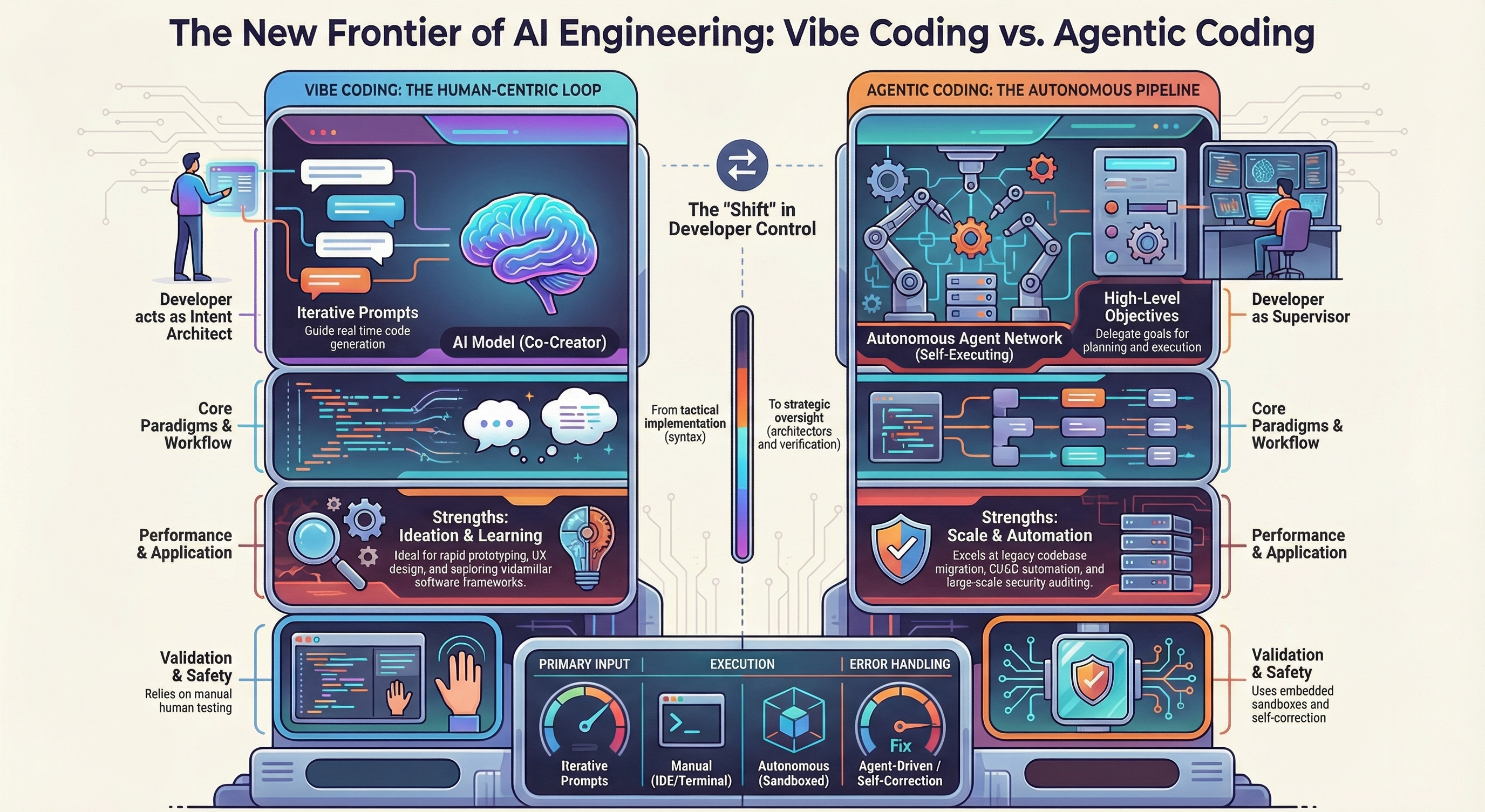 Vibe Coding vs. Agentic Coding: The New Frontier of AI Software Engineering | by Wahidur Rahman | Towards AI
This dynamic fuels what industry experts are calling the "productivity paradox." Individual developers report massive productivity gains, often saving 30 to 60 percent of their time on initial coding and testing [2]. However, when engineering leaders look at macro-level metrics like throughput, quality, and delivery velocity, company-wide metrics often remain flat [2]. Google's 2024 DORA report corroborates this phenomenon, confirming a 7.2% drop in code stability over the past year as AI tool adoption has surged [6].
Velocity without understanding is merely debt in disguise [6]. Teams find themselves spending an increasing fraction of their sprint capacity on bug fixes and untangling AI-generated spaghetti code, unable to explain how the codebase became so fragile so quickly [4][6].
Governing the Agent Lifecycle
To prevent AI from cannibalizing long-term software stability, organizations must adapt their governance and maintenance strategies. The first imperative is treating AI-generated code with the same rigor as human-written code. As recommended by industry analysts, this requires cross-functional governance between Security Architecture, Engineering, and DevOps to ensure AI code is subject to standard vulnerability management and peer review [7].
However, human review alone will not scale against the sheer volume of AI-generated code. Forward-thinking teams are turning to continuous, automated maintenance cycles. Coding agents can be configured to run scheduled automations that scan repositories for common debt patterns: duplicated logic, unused dependencies, inconsistent naming conventions, and outdated patterns [3]. Instead of waiting for a developer to notice a problem during a manual review, an agent proactively identifies issues and opens pull requests to fix them, creating a continuous loop where AI-generated debt is addressed before it compounds [3].
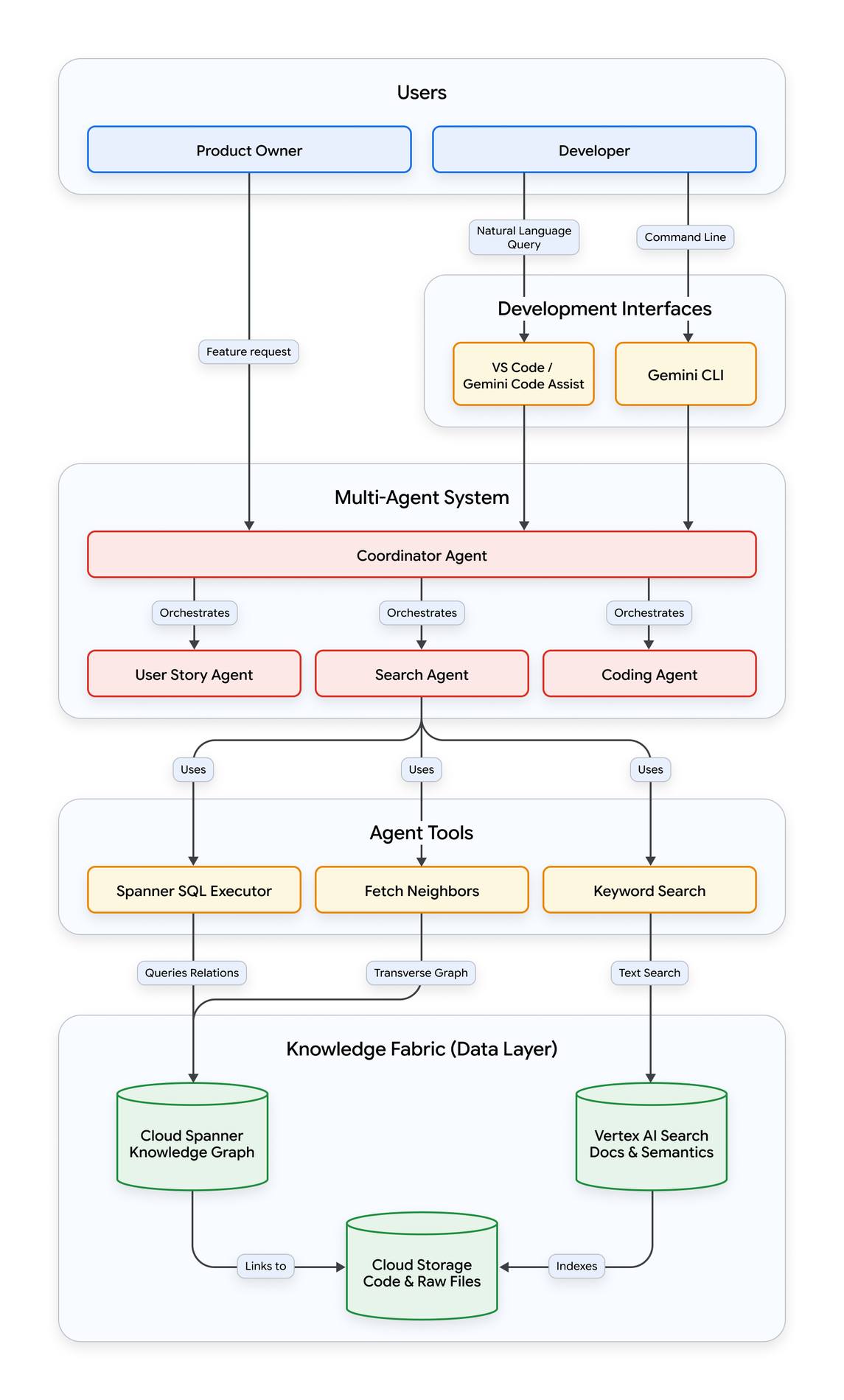
Looking ahead, the industry must prioritize developing AI agents explicitly designed for long-term maintenance [5]. Current agents are built to generate, but future agents must be capable of performing complex refactoring, understanding architectural intent, and anticipating future requirements. Until that technology matures, developers must transition from being primary code writers to acting as strict architectural gatekeepers--delegating the heavy lifting of initial generation to AI, while fiercely guarding the structural integrity of the systems they oversee [2].
Conclusion
The integration of AI coding agents represents one of the most significant shifts in software engineering history, but it is not a free lunch. The architectural footprint of AI-generated code is fundamentally different from human-written code, characterized by unintentional debt, isolated context, and a tendency toward overengineering. As the empirical data shows, the current paradigm effectively outsources the easy work of creation to machines while leaving humans to shoulder the grueling burden of maintenance. Resolving this imbalance requires a shift in how we deploy these tools: moving from blind acceleration to governed, continuously monitored integration. Ultimately, the success of "vibe coding" will not be measured by how fast code can be generated, but by how sustainably it can be maintained.
References
- 1.
- 2.
- 3.
- 4.
- 5.
- 6.
-
7.
How are you addressing technical debt risk resulting from AI coding tools? Have you established specific processes to manage vulnerabilities in AI-generated code, and are you collaborating with software engineering or other teams using these tools? | Gartner Peer Community. (n.d.). Retrieved https://www.gartner.com/peer-community/post/how-addressing-technical-debt-risk-resulting-ai-coding-tools-have-established-specific-processes-to-manage-vulnerabilities