Introduction
Software engineering is undergoing its most significant structural transformation since the emergence of Agile. In 2023 and 2024, developers largely worked with passive AI tools--autocomplete suggestions and chat interfaces where humans typed a prompt and did the rest. That model is being replaced by something categorically different: autonomous agents that receive a goal, decompose it into subtasks, invoke tools, track their own progress, and iterate until the work is complete or human input is required [1]. Coding agents went from experimental to essential in 2025, and industry analysts now expect the software development lifecycle to be dramatically altered as these capabilities mature [2].
The implications extend far beyond individual productivity. A single developer can now orchestrate multiple autonomous agents capable of independently creating pull requests, writing tests, generating documentation, and responding to review feedback--around the clock [3]. Anthropic's 2026 Agentic Coding Trends Report anticipates single agents evolving into coordinated teams, long-running autonomous agents building complete systems, and the barrier between "coders" and "non-coders" growing increasingly permeable [2][4]. Yet the shift remains grounded in reality rather than hype: developers currently use AI in roughly 60% of their work but fully delegate only 0-20% of tasks, suggesting autonomy is still tightly coupled with human supervision [2].
This article examines the agentic transformation across three interconnected dimensions: how daily developer workflows are being restructured, how team structures and engineering roles are evolving in response, and how the fundamental economics of software development are being rewritten. It also addresses the governance challenges that accompany this shift--because autonomous does not yet mean unsupervised, and the organizations that thrive will be those that design deliberately for hybrid human-AI collaboration [5].
From Passive Assistance to Goal-Driven Autonomy
What Makes Agentic AI Structurally Different
What distinguishes agentic AI from earlier generations of developer tooling is not better prompting--it is sustained execution. Frontier models can now reason across long-running, multi-step workflows, invoking tools, interpreting results, and iterating over time [5]. Where a code assistant responds to a single request, an agent operates at the task level: reading codebases, planning changes, executing tools, refactoring code, running tests, and submitting pull requests [3]. This shift from reactive generation to goal-driven execution is the defining break with everything that came before [1].
Researchers have begun mapping this evolution into distinct stages. The current era of tool-augmented development (roughly 2023-2025) positioned agents as assistants within human-led workflows. The next phase, single-task autonomy (projected for 2025-2027), sees agents owning complete tasks from specification to deployment, with humans shifting from "doing" to "specifying what to do and verifying what was done." Beyond that lies the multi-agent team era (2026-2029), in which coordinated agent collectives handle entire workflows [6]. Systems like Devin and OpenHands have already demonstrated that agents can autonomously navigate codebases, implement features, and submit pull requests [6].
 The Dawn of Agentic AI - Revolutionizing Software Development Economics | Vinci Rufus
Where Agents Deliver Value Today
The workflows paying off first are predictable and well-scoped: bug fixing, repository analysis, refactoring, test generation, dependency updates, and code review preparation [7]. Agents connected to issue trackers like GitHub, Linear, or Jira can read incoming issues, classify severity, assign labels, route to the right team, and draft initial responses--without a human touching the ticket first. Agents that read issue descriptions, locate relevant code, propose fixes, and run lint and test checks before surfacing a draft pull request have compressed triage-to-PR time from hours to minutes [1].
Adoption, however, remains uneven. Preliminary findings from the JetBrains Developer Ecosystem Survey suggest around 23% of developers still primarily write code manually, using AI only occasionally [7]--a reminder that the agentic transition is happening in waves, not all at once.
Reshaping the Software Development Lifecycle
The Bottleneck Moves from Implementation to Decision-Making
The methodological assumptions underpinning software processes are collapsing. Waterfall assumed building was expensive, so teams documented heavily before coding. Agile assumed building was slow, so teams iterated in sprints. Both assumptions are now wrong: when a working prototype can be generated in hours, the bottleneck shifts from implementation to decision-making [2]. This changes the SDLC fundamentally--agents increasingly act as a first-pass executor across planning, build, validation, and review, analyzing feasibility during planning, implementing features during build, expanding test coverage during validation, and surfacing risks during review [5].
The downstream consequences are tangible. When agents can work autonomously for extended periods, formerly non-viable projects become feasible, and technical debt that accumulated for years--simply because no one had time to address it--gets systematically eliminated by agents working through backlogs. Entrepreneurs are already using agents to go from idea to deployed application in days instead of months [4].
Intent-Driven Development and New Infrastructure
Traditional manual coding is shifting toward development based on intent and requirements. Engineers now create precise specifications and test criteria while AI agents generate, validate, and update the software--moving team members into roles focused on active orchestration and oversight [8]. Some researchers frame this as SE 3.0: an intent-driven, conversational process where developers collaborate with autonomous AI teammates, and workflows extend beyond classic IDEs into AI-native orchestration environments [3]. Infrastructure is evolving to match. Internal Developer Platforms are transforming from basic API and script aggregators into foundational control planes for multi-agent orchestration, exposing the modular integration points, policy-as-code engines, and monitoring tools that agents need to interact with corporate assets safely and at scale [8].
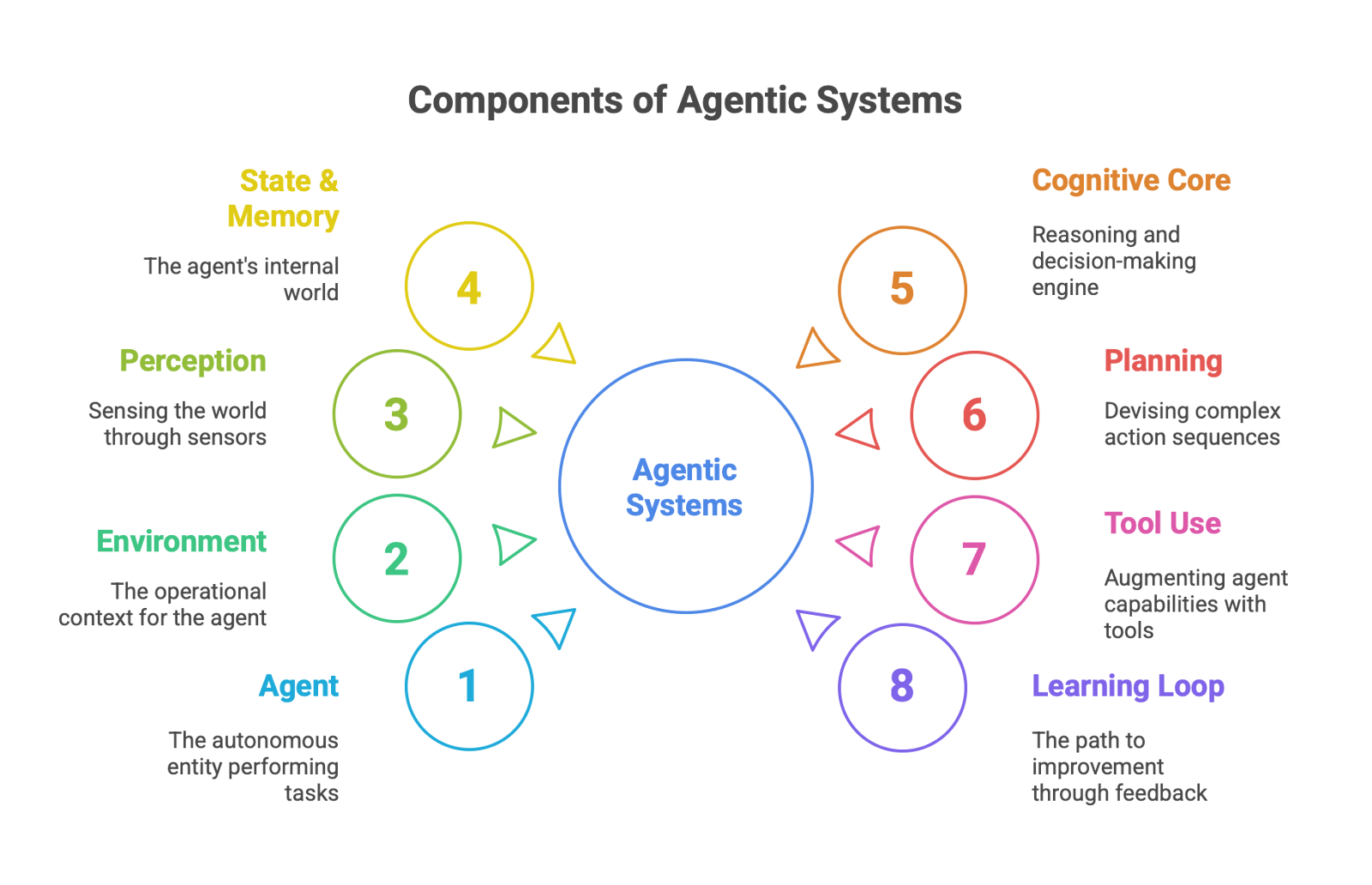 The Agentic Transformation of Software Engineering
Multi-agent orchestration patterns enable what amounts to virtual assembly lines composed of AI workers: a project manager agent defines requirements and hands them to a planning agent; the planning agent decomposes work and hands coding tasks to a developer agent; the developer agent completes code and hands it to a QA agent for testing. This automates the handoffs that are often a source of friction and delay in human teams [9].
Team Structures and the Rise of the Engineer-Orchestrator
From Creators to Curators
The most profound organizational shift is in the human role itself. Engineers are moving from creators to curators--the engineer of 2026 will spend less time writing foundational code and more time orchestrating a dynamic portfolio of AI agents, reusable components, and external services [5]. In the SE 3.0 model, the developer's role becomes one of orchestration: setting goals, defining permissions, and reviewing final changes [3]. Crucially, this is not a story of engineers being replaced by autonomous AI. It is a shift from engineers doing every task themselves to engineers orchestrating, reviewing, and governing agents--with routine, reversible work increasingly delegated while architecture, security, product intent, and consequential decisions retain clear human ownership [5].
Redesigning the Team
As individual productivity multiplies through agent leverage, team topologies must evolve. Smaller teams of "agent orchestrators" may replace larger teams of developers, with corresponding shifts in hiring, promotion, and career development [6]. Hybrid human-AI development teams will handle the bulk of automatable work--generating code, writing and executing tests, managing CI/CD pipelines, updating documentation--freeing human engineers for what remains uniquely human: complex system architecture, creative problem-solving, understanding stakeholder needs, and setting strategic and ethical direction [9][6].
This restructuring also requires rethinking supporting practices. Researchers propose that agentic engineering demands three infrastructural adaptations: orchestration frameworks to manage high-throughput agentic workflows while preserving human oversight; review systems adapted to triage agent contributions, potentially requiring agents to provide structured rationales, test plans, or explanations for code edits; and governance models clarifying when agents may act autonomously, how contributions are validated, and who holds accountability for defects [3].
The Economics of Software Development
Productivity Through Volume, Not Just Speed
The economic case for agentic AI is compelling, but the mechanism is more nuanced than simple speed gains. Internal research at Anthropic reveals a striking productivity pattern: engineers report a net decrease in time spent per task category, but a much larger net increase in output volume. AI enables productivity primarily through greater output--more features shipped, more bugs fixed, more experiments run--rather than simply doing the same work faster [4]. Industry surveys of teams using AI agents corroborate meaningful gains, with reported productivity increases of 30-50% in routine coding tasks [10].
Throughput Without Headcount--and Falling Total Cost of Ownership
For engineering leaders, agents offer throughput without headcount: they can run 24/7 across multiple workflows simultaneously, handling volume that would otherwise require expanding the team [1]. The aggregate economic effect is a shift in the total cost of ownership of software--agents augment engineer capacity, project timelines shorten, and faster time-to-value improves return on investment [4]. By automating routine tasks and reducing time spent on debugging and maintenance, AI agents lower development costs while improving overall project economics [10].
Beyond cost reduction, autonomy changes what is economically viable. Work that involves pulling information from multiple systems, formatting it, and routing it somewhere is exactly where agents outperform humans on speed, and agent-based workflows scale horizontally--adding a new ticket source or data format often means updating a tool or prompt rather than rebuilding a pipeline [1][4]. Perhaps most consequentially, the barrier between "coders" and "non-coders" is becoming more permeable: non-technical teams are expected to use agents to build their own tools and automate workflows directly, embedding software creation into business functions that previously waited months in engineering backlogs [2].
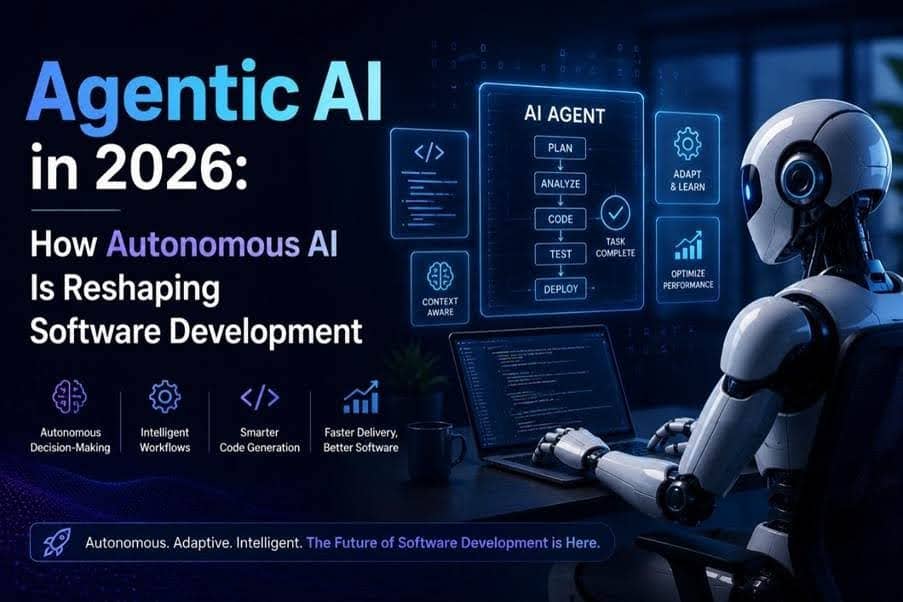 Agentic AI in Software Development: How It's Changing 2026
A New Discipline Emerges
Some researchers argue these changes amount to a new engineering discipline altogether--"agentic engineering"--in which software is not delivered so much as outcomes are delivered. The agent may generate thousands of lines of code, execute database queries, and call external APIs, all ephemerally; what persists is the agent's capability rather than its intermediate artifacts. This represents a control plane that orchestrates cross-team workflows, maintains long-term memory, and manages state and traceability across the full software delivery lifecycle [6]. Organizations preparing for this shift are advised to invest in evaluation frameworks, since the quality of agent output depends critically on the quality of the evaluation signal--test suites must go beyond correctness to measure robustness, maintainability, and alignment with business intent [6].
Risks, Governance, and the Limits of Autonomy
Autonomy Demands Oversight Architecture
The agentic transition carries real risks. Anthropic's trends report explicitly flags dual-use risk as requiring a security-first architecture [4], and practitioners warn that handing agents write access to codebases introduces failure modes that must be anticipated rather than discovered in production [7]. The challenges are not merely technical. The influx of agentic contributions alters the cadence of development, the locus of decision-making, and the very definition of team velocity--raising unresolved questions about how developers should manage and review a flood of machine-generated pull requests [3].
Governance is emerging as the central management challenge. Organizations need to clarify when agents are allowed to act autonomously, how their contributions are validated, and who holds accountability for defects [3]. Platform-level solutions are already materializing: enterprise tools now govern AI usage, models, policies, and costs across organizations, including third-party tools, while terminal-based agents run through centrally governed gateways controlling access, models, and usage [7]. The defining challenge, as CIO-level analysis puts it, is not whether AI can participate across engineering workflows, but how deliberately organizations design for it [5].
Conclusion
Agentic AI is not incrementally improving software engineering--it is restructuring it. The shift from passive code completion to goal-driven, tool-using agents is compressing development timelines, eliminating long-standing technical debt, and moving the discipline from writing code toward specifying intent, orchestrating agent fleets, and governing outcomes [3][4][5]. Team structures are evolving accordingly: smaller teams of agent orchestrators, hybrid human-AI development crews, and Internal Developer Platforms reimagined as multi-agent control planes [9][8][6].
Yet the data counsels balance over revolution. Developers still fully delegate only a small fraction of their work, and a meaningful minority continue to code primarily by hand [2][7]. The near-term reality is hybrid: agents handle the automatable bulk while humans retain ownership of architecture, security, product intent, and accountability [5]. The organizations that prosper will be those that treat this as an engineering design problem--building the orchestration frameworks, review systems, evaluation signals, and governance models that make autonomy reliable--rather than simply bolting agents onto legacy processes. The era of software being built by teams of humans and agents working in concert has arrived; the remaining work is deciding, deliberately, how that partnership should function.
[Article based on cited sources; reference list generated automatically.]
References
- 1.
- 2.
- 3.
- 4.
- 5.
- 6.
- 7.
- 8.
- 9.
- 10.