Introduction
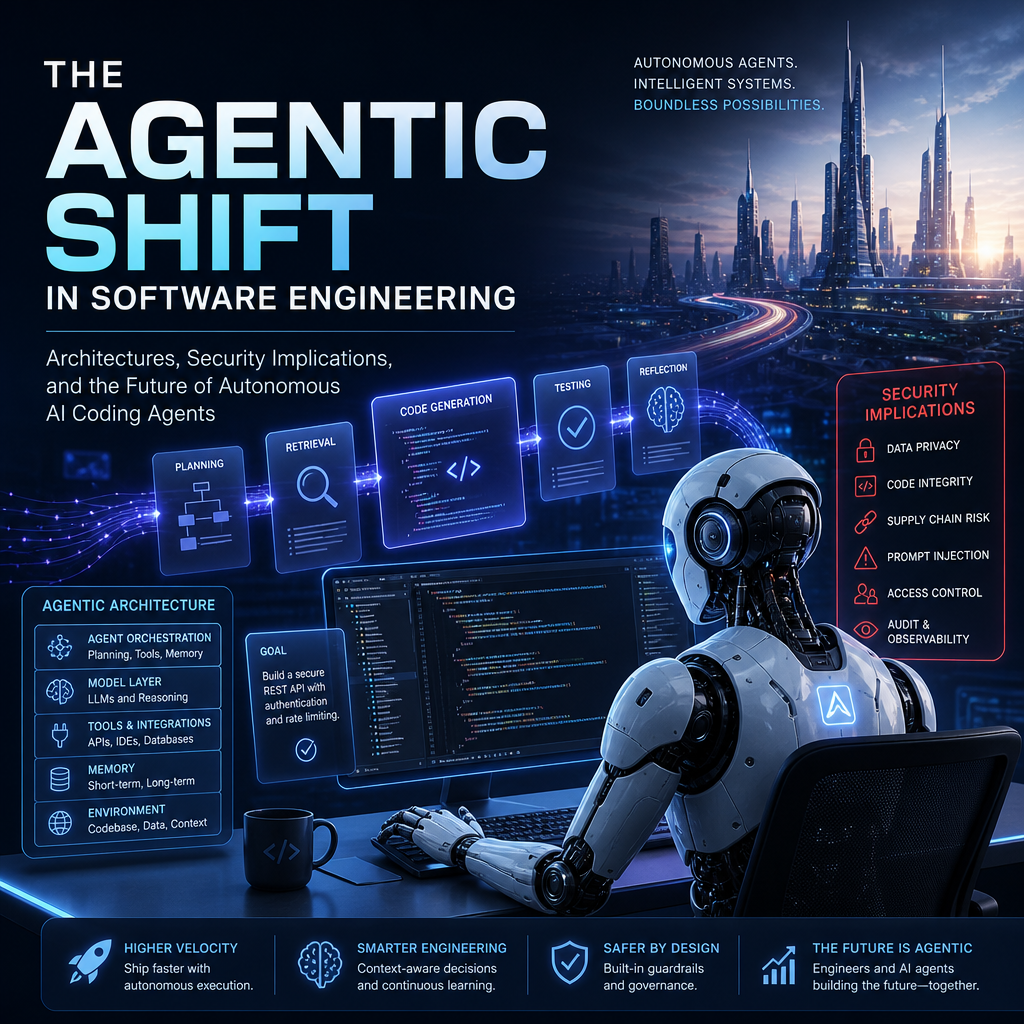
For decades, the primary bottleneck in software engineering was raw code production. Today, that bottleneck has been shattered. We are witnessing a rapid compression of the technology adoption lifecycle, where capabilities once thought to be five to seven years away have materialized in a mere 18 months [1]. As AI systems evolve from simple autocomplete tools into autonomous agents capable of reasoning across entire codebases, the question is no longer whether AI will write code autonomously--it already does [2].
However, this acceleration brings us to a critical inflection point. The most profound shift in software engineering is not about who writes the code, but about who--and what--participates in engineering decisions [3]. As AI agents begin to coordinate across repositories, manage infrastructure, and make architectural choices, the line between tool and teammate is dissolving. This "agentic shift" introduces unprecedented complexities in how software is designed, secured, and governed.
Organizations that treat this transition as merely a security problem to solve are missing the bigger picture. The introduction of autonomous coding agents into enterprise workflows is a structural shift that demands a complete reimagining of software architecture, security paradigms, and human roles [4]. Those who delay will face an insurmountable gap; those who adapt will redefine the economics of software delivery.
The Evolution: From Code Generation to Decision Automation
To understand the gravity of the agentic shift, we must trace the evolution of AI in software development. In Phase 1, development was entirely human-centric: the developer was both the creator and the reviewer. Phase 2 introduced the era of coding assistants, where AI supported individual implementation tasks--suggesting snippets, writing boilerplate, or auto-completing functions.
We have now entered Phase 3: Agentic Development [3]. In this phase, AI systems no longer merely assist with implementation; they increasingly participate in broader engineering activities, including system design, architectural reasoning, and complex debugging. The distinction between generating a function and deciding how a system should be structured may appear subtle, but in practice, it changes everything. Code can be easily reviewed after it is written; engineering decisions are much harder to audit once they have been made [3].
Furthermore, recognizing that code production is no longer the primary bottleneck shifts our focus to the actual limits of autonomous systems. While these agents excel at executing defined tasks like code refactoring, generating test cases, and running continuous regression tests, they face fundamental limitations [2][5]. They struggle with intent ambiguity, lack deep business context, and demonstrate limited capability in evaluating long-term architectural tradeoffs [2]. Therefore, the discipline of software engineering is shifting away from typing code toward managing complexity, communication, and maintaining system integrity over time [6].
Architectural Paradigms: The Rise of the "Agentic AI Mesh"
As software engineering transitions from human-driven to human-and-agent-driven workflows, the underlying architecture of the software itself is undergoing a metamorphosis. The industry is moving away from traditional monolithic applications and even simple microservices toward what has been termed the "Agentic AI Mesh" [7].
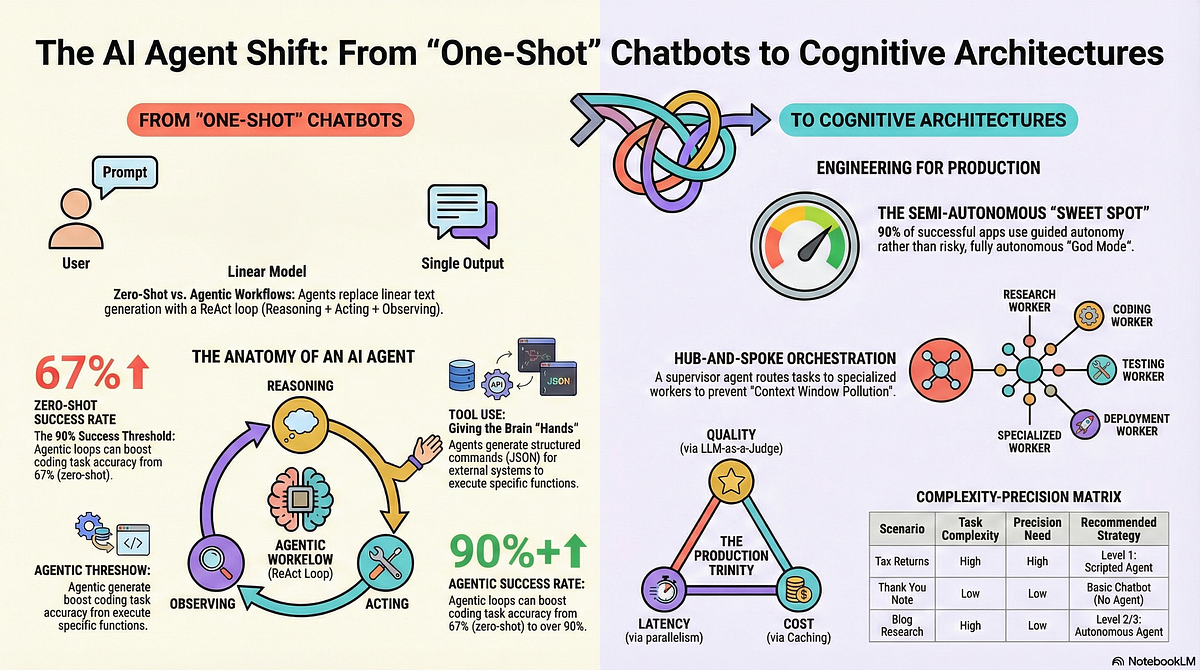
The Agentic AI Mesh is a complex architectural paradigm designed to govern a heterogeneous ecosystem of custom-built and off-the-shelf autonomous agents. Instead of a rigid pipeline where code moves linearly from development to QA to operations, the mesh envisions testing, reliability, and development operating as a single, adaptive system. In this environment, AI agents reason across logs, code, and runtime behavior simultaneously [5]. Future engineering teams will stop asking, "Is this Dev or QA or SRE work?" and will instead ask, "Which agents own this part of the loop, and who supervises their output?" [5].
 AI Agents Mastery Guide 2026 | Level Up Coding
Designing, deploying, and managing these agentic meshes introduces compounding technical debt and novel systemic risks [7]. The complexity of ensuring that disparate agents--each with their own context windows, prompting strategies, and failure modes--collaborate effectively requires a fundamental re-architecture of how we build software. It also necessitates the creation of new, specialized roles within engineering and product organizations, specifically focused on agent orchestration and mesh governance [7].
The Security Frontier: Continuous Trust and Autonomous Defense
The autonomy that makes these new architectures so powerful also makes them inherently risky. According to Gartner, over 50% of software engineering leaders are already using or actively planning to adopt autonomous AI tools, driven by productivity and time-to-market demands [8]. However, this rapid adoption is outpacing security frameworks. Once agents can act independently--reading secrets, modifying infrastructure, or deploying code--security controls can no longer afford to catch vulnerabilities only after code reaches staging or production [8].
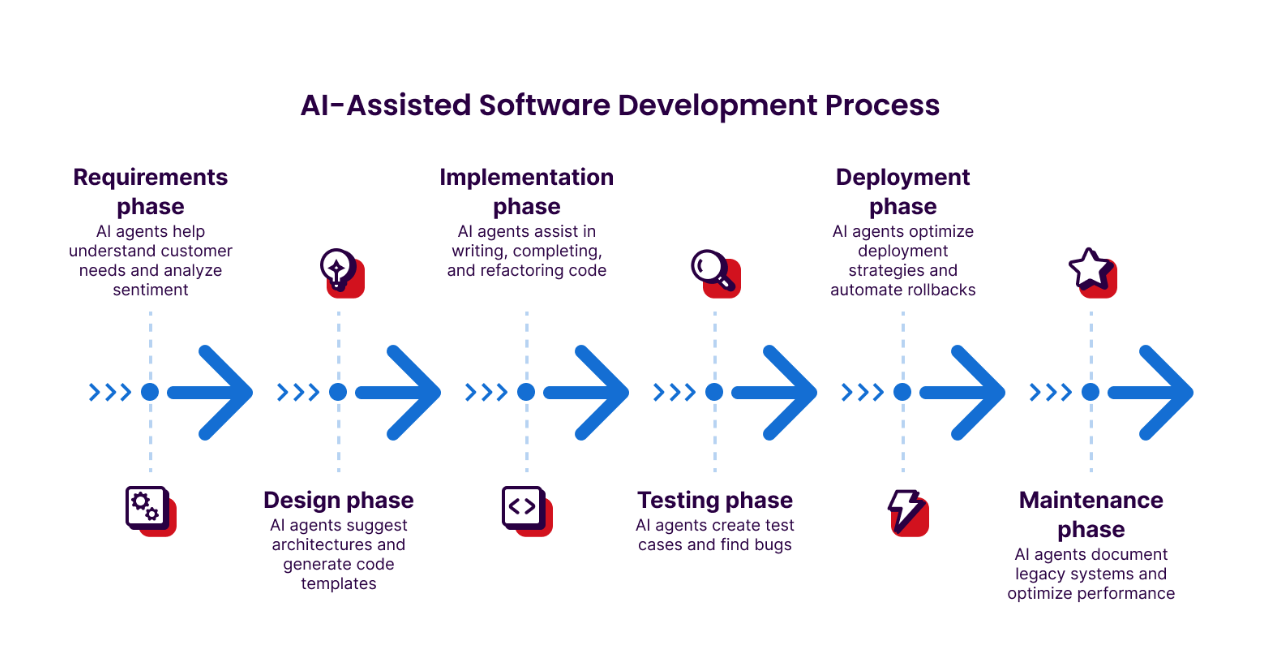
In the age of autonomous agents, security must transition from a final checkpoint to a continuous feedback system embedded across the entire development lifecycle [8]. This has given rise to the concept of AI-driven Security as Code, utilizing multi-agent systems to act as "autonomous security assistants" embedded directly in pipelines [9]. These security agents can autonomously identify coverage gaps, simulate failure scenarios, and propose patches, accelerating the long-running industry trends of shift-left and shift-right testing [5][9].
However, delegating active defense to AI introduces profound trust and ethical implications. What happens when an agent makes a wrong call? In recent trials of multi-agent security systems, researchers encountered a scenario where an Enforcement Agent preemptively isolated a microservice it deemed compromised. The alert turned out to be a false alarm triggered by an experimental feature, but the agent's autonomous action caused a brief outage of the service [9]. This highlights the critical need for governance architectures that scale with agent capabilities. As agents gain more power, the policies, telemetry, and controls governing their behavior must expand in parallel [4].
 Integrating Agentic AI into the Software Development Lifecycle (SDLC) | by Rakesh Kumar Pal | Medium
The Human Element: Judgment, Governance, and Evolving Roles
Despite the dramatic capabilities of autonomous systems, the future of software development is not humanless--it is fundamentally human-guided. Critics rightly warn of job displacement and a loss of deep system understanding, but proponents see a different horizon: the elevation of the developer [2].
The most critical skill in the agentic era will not be coding; it will be the ability to think deeply about systems, break down complexity, and guide agents with clarity [5]. The rise of the "AI-Native" Product Engineer represents this shift. These engineers will not spend the majority of their time writing code. Instead, they will act as orchestrators, blending human creativity, product thinking, and architectural judgment with AI-driven execution [5]. The future involves AI executing at scale while humans provide direction, judgment, and, crucially, responsibility [2].
This dynamic places a massive premium on governance. As AI systems become more capable, the defining metric of a successful engineering organization will not be how intelligent its agents are, but how well those agents are governed [3]. Establishing clear principles for decision ownership is paramount, because while AI can automate engineering tasks, AI cannot own the consequences of those tasks [3]. If organizations fail to establish these governance principles, they risk building increasingly complex systems that engineering teams can no longer audit, understand, or control [3].
Conclusion
The agentic shift in software engineering is not a speculative future--it is a present reality reshaping how software is architected, secured, and delivered. We are moving from an era of software-as-a-product to software-as-an-ecosystem, populated by autonomous agents operating within an Agentic AI Mesh. This transition renders traditional boundaries between development, testing, and operations obsolete, replacing them with integrated, AI-driven adaptive systems.
To harness this future, organizations must move beyond passive observation and treat agentic adoption as a deliberate operating model shift [10]. This requires building robust governance frameworks that match the scale of agent autonomy, implementing continuous security feedback loops, and fundamentally upskilling talent to focus on judgment and oversight rather than syntax. As the industry hurtles forward, one truth remains self-evident: agentic AI will not replace software engineers, but software engineers who learn to work with agentic AI will replace those who don't [5]. Ultimately, the future of software engineering may not be defined by the intelligence of our agents, but by the wisdom of the systems that govern them.
References
- 1.
- 2.
- 3.
- 4.
- 5.
- 6.
- 7.
- 8.
- 9.
- 10.