Introduction
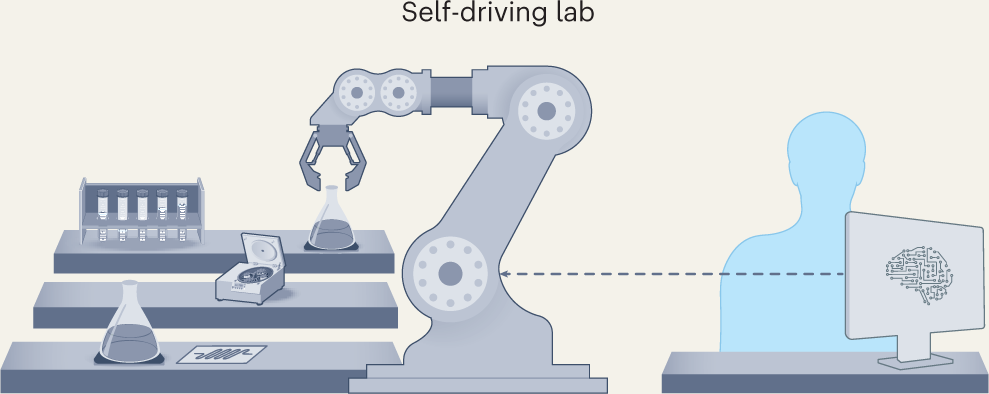
Few visions in modern science are as seductive as the self-driving laboratory: a facility where artificial intelligence proposes hypotheses, robots execute the experiments, and machine learning models digest the results to choose the next move--all without a human hand on the dial. Self-driving laboratories (SDLs) have been identified by Nature as one of the top technologies to watch, promising to compress discovery timelines from decades to months while slashing costs [1]. The field's rhetoric is expansive, with advocates envisioning platforms that "redefine what it means to be a scientist" [2].
At the center of this narrative stood the A-Lab at Lawrence Berkeley National Laboratory, a landmark effort integrating robotics, machine learning, and active learning for autonomous materials synthesis. In April 2023, the team reported in Nature that its system had autonomously synthesized dozens of novel inorganic materials in a matter of days [1]--a headline result that seemed to prove the entire paradigm. Major investments followed, including the Acceleration Consortium's Materials Acceleration Platforms initiative at the University of Toronto, championed by figures such as Alán Aspuru-Guzik, aimed at clean energy, sustainable infrastructure, and biodegradable products [3][1].
Then came the reckoning. A group of outside chemists publicly challenged the A-Lab's claims, disputing whether the products were genuinely new, correctly identified, and truly synthesized without substantial human intervention. In January 2026, the work received a formal Nature correction after those novelty claims were contested [4]. The episode has become the most consequential audit yet of autonomous discovery--and a stress test for an entire field's credibility. This article examines how the A-Lab controversy unfolded, what it reveals about the reproducibility paradox at the heart of SDLs, and whether the emerging ecosystem of standards, metrics, and adversarial review can separate durable capability from one-off demonstrations.
The Self-Driving Laboratory Dream
From Automation to Autonomy
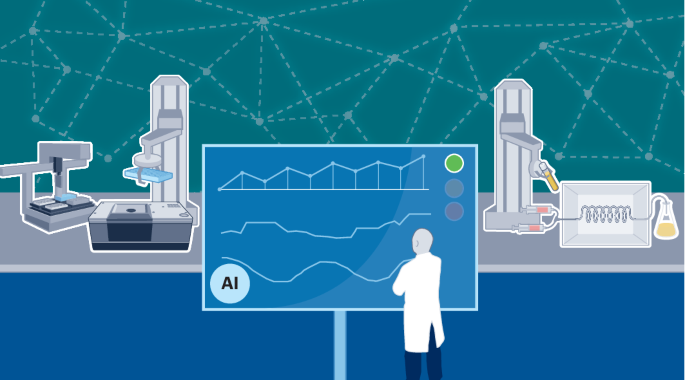
It is worth being precise about what distinguishes a self-driving laboratory from decades-old laboratory automation. As analysts in the pharmaceutical space have emphasized, SDLs are "a genuine, well-defined technical category": closed-loop systems in which an AI algorithm selects each next experiment, distinct from conventional automated liquid handling and high-throughput screening [4]. Reviews of next-generation experimentation describe this as the fulfillment of autonomous experimentation--supplying automated platforms with machine learning, natural language processing, knowledge management, and intelligent control so that the system learns from every previously conducted experiment [2].
The distinction matters because the promise rests on it. High-throughput experimentation has existed for decades; what is new is the closed loop, in which the machine--not the researcher--decides where to explore next [4][2]. When a lab claims autonomy, it is claiming that the intelligence guiding the science is the software, not a human chemist quietly adjusting the recipe.
The A-Lab's Landmark Moment
The A-Lab, led within the context of Berkeley Lab's materials pipeline, was presented as the paradigm's proof of concept. Its 2023 Nature paper, "An autonomous laboratory for the accelerated synthesis of novel materials," reported that the platform had synthesized 41 of 58 algorithmically proposed target compounds in just 17 days of operation--an unprecedented rate for solid-state materials discovery [1]. The most sophisticated autonomous laboratories employ hierarchical multi-agent architectures in which specialized AI agents coordinate complex experimental workflows, and the A-Lab was held up as the exemplar of this approach [1].
The result electrified the field. Reviews began citing SDLs as capable of 10x acceleration in materials discovery while maintaining high synthesis reproducibility rates above 80%, with demonstrated successes in complex chemistries such as perovskite nanostructures and nanoparticles [5]. Proponents argued that standardization efforts like the Materials Genome Initiative would make such systems interoperable and their outputs reusable [5]. Beyond speed, SDLs were framed as enablers of sustainable research--reducing reagent consumption, minimizing waste, and enabling intelligent multi-objective optimization [6].
 The past, present and future of self-driving laboratories | Nature Reviews Chemistry
Anatomy of an Audit: How the A-Lab's Claims Unraveled
The External Challenge
The trouble began when external solid-state chemists scrutinized the A-Lab's published products and methods. Their critique, published in Nature following the original paper, advanced three main lines of attack. First, they argued that several synthesized products had been misidentified--powder X-ray diffraction patterns were interpreted in ways that ambiguous data allowed, and some "successful" syntheses may have produced mixtures or known phases rather than the intended compounds. Second, they disputed the novelty claims: some of the materials counted as discoveries were, the critics argued, already known in the literature or trivially related to known compounds. Third--and most corrosive to the autonomy narrative--they contended that human experimenters had intervened in the workflow to a degree not fully acknowledged, meaning the celebrated successes were not purely the product of the AI's decision-making.
The A-Lab team disputed the criticisms and published a rebuttal, maintaining that the platform's data and methodology were sound. But the episode exposed a deeper epistemological problem: when a black-box algorithm "decides" an experiment and a human interprets ambiguous characterization data, the boundary between autonomous discovery and human-assisted discovery becomes genuinely difficult to draw--and easy to blur in a headline.
The Correction and What It Changed
The saga reached a formal resolution in January 2026, when the A-Lab's work received a Nature correction after outside chemists challenged its novelty claims [4]. Whatever the correction's precise scope, its symbolic weight is enormous: the single most scrutinized case study in the SDL field--the poster child for autonomous discovery--now carries an asterisk [4].
Yet the response from the research community has been notably mature. As industry analysts observe, "the research community itself is becoming more self-critical, as the A-Lab correction demonstrates," and the expectation now is more rigorous, adversarial peer review of headline autonomous-discovery claims going forward [4]. In that sense, the correction may strengthen the field rather than wound it: it establishes a precedent that extraordinary autonomy claims require extraordinary, independently auditable evidence.
What "Autonomous" Really Means
The A-Lab affair forces the field to define terms it had left comfortably vague. Does "autonomous" mean no human touched the instrument, or that no human chose the experiments? Does a "novel material" include new compositions of known structure types? Who validates that the product is what the algorithm intended? Researchers proposing shared definitions and performance metrics for SDLs argue that exactly these ambiguities--performance, precision, and robustness of autonomous systems--currently make it difficult to assess "how useful these technologies can be" [7]. Until autonomy is reported on a graded scale, with explicit accounting of human interventions and characterization confidence, every headline result will invite the question the A-Lab ultimately had to answer.
 Beyond the AI Scientist Building Defensible Value with Self-Driving Labs
The Reproducibility Paradox
Labs Built to Fix Reproducibility, Facing Their Own
There is a deep irony in the A-Lab controversy. One of the strongest theoretical arguments for SDLs is that they could solve science's reproducibility crisis: machines eliminate human error, maintain exhaustive records, and--crucially--document every failed experiment, not just the successes. Autonomous platforms can carry out thousands of experiments in a closed loop, producing "large, internally consistent, and structured datasets" in which every result, good and bad, is logged [8]. Yet the A-Lab demonstrates the paradox: while autonomous laboratories can potentially address reproducibility by design, improper implementation of digital workflow abstractions becomes technical debt against reproducibility [1]. A system whose decision logic is not transparently recorded and independently re-executable is no more reproducible than a wet lab notebook--perhaps less so, because its errors look authoritative.
The Measurement Gap
Compounding the problem, the field has lacked standardized ways to measure whether SDLs actually accelerate anything. That is now changing: researchers at NC State, including Milad Abolhasani, have proposed a suite of shared definitions and performance metrics intended to let researchers, non-experts, and future users compare what each self-driving lab does and how well it does it [7]. The motivation is candid: the community is "seeing some challenges in self-driving labs related to the performance, precision and robustness of some autonomous systems," and without standardized reporting, those weaknesses cannot be diagnosed or fixed [7].
The A-Lab audit also casts a critical light on the field's favorite statistic: the "acceleration factor." A 2025 preprint reported a median acceleration factor of 6 across SDL studies--but as an unreviewed preprint, that multiplier should be treated with caution [4]. Similarly, review frameworks promising "10x acceleration" with ">80% synthesis reproducibility" [5] read more like product benchmarks than audited science. While some SDLs have genuinely been shown to reduce material identification timelines from months or years to days [7], the gap between documented case studies and generalized claims remains the field's soft underbelly.
Why Auditing AI-Driven Discovery Is Hard
The structural challenges are documented across the literature. Synthesis knowledge remains locked in unstructured text, negative results are rarely published, and there is no universal format for representing experimental protocols--obstacles that make both machine learning and independent audit difficult [9]. Characterization itself is probabilistic: deciding whether a diffraction pattern indicates a new phase is a judgment call, and AI-assisted phase identification inherits that ambiguity while laundering it into apparent objectivity. The A-Lab controversy is, at bottom, a measurement problem: the claims rested on judgments--novelty, phase identity, attribution of agency--that the field had no agreed standards for adjudicating [4][9].
Systemic Challenges Behind the Headlines
The Technical Debt of Autonomy
A recent synthesis of the field's open problems reads like a checklist of the A-Lab's failure modes [9]. Data availability suffers from unstructured protocols and few published negative results, pointing toward FAIR (findable, accessible, interoperable, reusable) protocol standards and NLP extraction as remedies. Representation lacks community ontologies and benchmarking tools. Generalisability is hampered by domain shift and black-box models, motivating physics-informed networks and uncertainty quantification. Automation integration is stymied by hardware-software incompatibility, with proposed fixes including modular laboratory operating systems, human-in-the-loop safeguards, and fault recovery [9]. Each of these gaps degrades not just performance but auditability.
Governance, Regulation, and Industrial Adoption
The challenges extend beyond the bench. Reviews of self-driving laboratories flag unresolved issues in data management, reproducibility, autonomy, and governance, including how human-machine systems should be held resilient and accountable in policy terms [6]. For pharmaceutical adopters, a specific tension looms: GMP's expectation of fixed, validated procedures conflicts fundamentally with continuously learning AI models--a conflict buyers must resolve with regulatory affairs before scaling [4]. The industrial landscape is advancing but uneven: AstraZeneca's iLab, Lilly's Studio Lab, Recursion's REC-1245, and Insilico's LabClaw are frequently cited, but public disclosures describe automation or cloud-lab systems and AI-enabled programs that "should not be treated as equivalent evidence of verified autonomous next-experiment selection" [4]. Even market sizing diverges by billions of dollars across research firms, another caution against taking headline numbers at face value [4].
The Valley of Death
There is also a longer journey ahead: for materials science, the primary bottleneck to technological impact remains the transition from lab-scale synthesis to robust industrial-scale manufacturing--"the valley of death" where most promising materials perish [8]. Notably, the same review that catalogs this problem points to self-driving laboratories, including the A-Lab, as the ultimate long-term solution for generating the comprehensive, objective synthesis-property data that AI models need [8]. The field thus finds itself in a delicate position: the audited platform is simultaneously cited as the remedy for the very credibility problems it exposed.
From Demonstration to Durable Science
Standards, Metrics, and Adversarial Review
The most encouraging development post-A-Lab is the consolidation of a self-correction infrastructure. Shared performance metrics [7], FAIR protocol standards and community ontologies [9], and Materials Genome Initiative-style data practices [5] are converging into a framework under which SDL claims can be independently verified. Policy voices have gone further: the Center for Strategic and International Studies has recommended programmatically pairing research funding with an "SDL Grand Challenge," in which self-driving labs must demonstrate state-of-the-art material designs within specific chemistries and applications in set timeframes [1]. Demonstrations would thus be falsifiable by design--promises structured to yield proof.
The peer-review culture is shifting in parallel. Analysts now expect "more rigorous, adversarial peer review of headline autonomous-discovery claims," which should ultimately separate durable capability from one-off demonstrations [4]. The A-Lab correction, in this reading, is not the field's failure but its first successful audit.
SDL 2.0: Engineering for Trustworthiness
The field's forward-looking frameworks increasingly treat trust as an engineering requirement rather than an afterthought. A recent comprehensive review proposes six defining characteristics for "SDL 2.0": interoperable, collaborative, generalizable, orchestrated, safe, and creative--envisioning globally networked platforms that enable reproducible experimentation, accelerated innovation, and democratized access to advanced research infrastructure [10]. Modular design, AI reasoning, and community-driven standards are to be embedded in the core, while continued work on multi-agent coordination, uncertainty quantification, and human-in-the-loop governance addresses the failure modes the A-Lab revealed [9][1][10]. The long-term wager is circular but virtuous: autonomous labs generate the comprehensive, failure-inclusive datasets that make AI models better, which in turn make autonomous labs smarter [8]--provided the data provenance survives audit.
 The rise of self-driving labs in chemical and materials sciences | Nature Synthesis
Conclusion
The A-Lab story is neither the vindication its champions promised nor the debunking its critics hoped for. It is something more useful: a proof of concept for scientific self-scrutiny. A flagship autonomous-discovery claim was challenged by domain experts, subjected to formal correction, and absorbed into a field that is now racing to build the standards--shared metrics [7], FAIR protocols [9], interoperable data practices [5][10], and adversarial review norms [4]--that would have made the original claims auditable from day one.
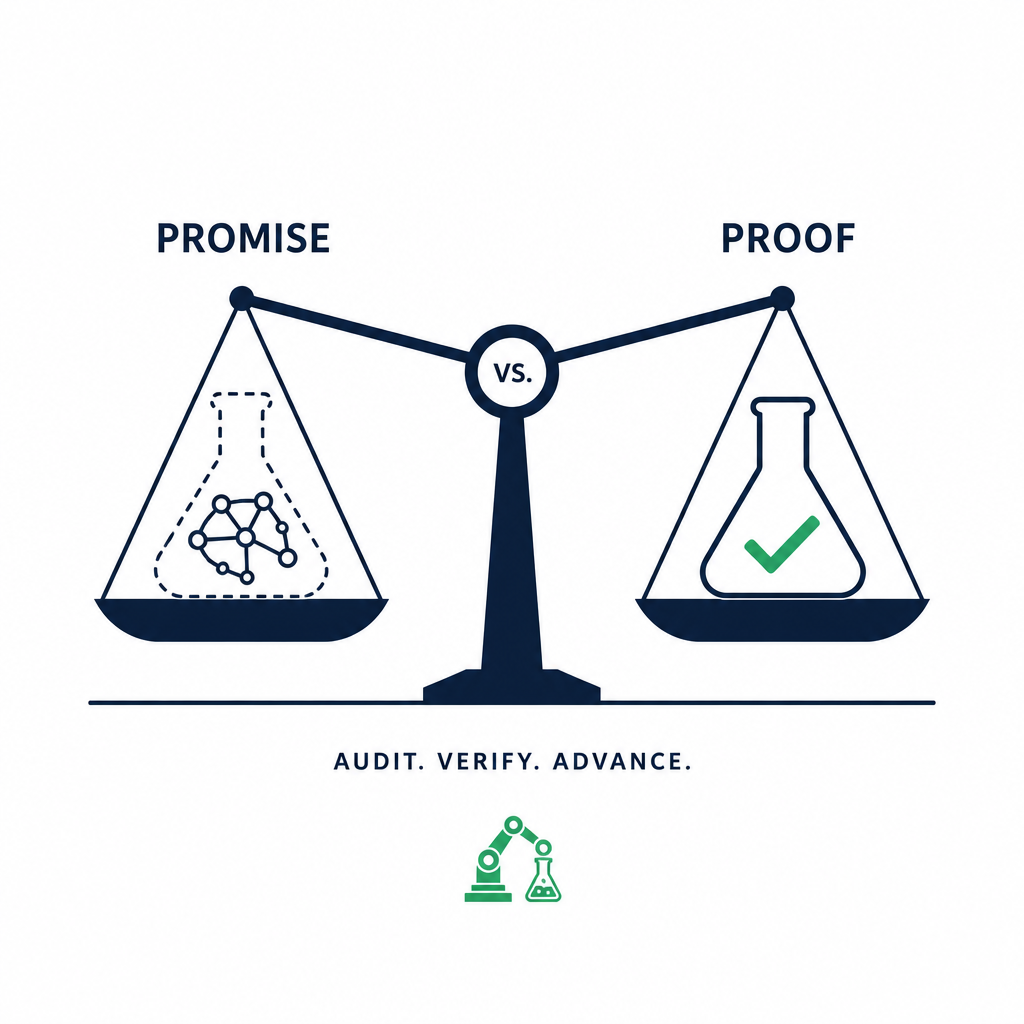
The distinction between promise and proof in autonomous discovery is, ultimately, a measurement problem. Self-driving laboratories can reduce discovery timelines from months or years to days [7], document their failures with unmatched fidelity [8], and relieve scientists of drudgery while expanding who can participate in research [2][10]. But until the field agrees on what "autonomous," "novel," and "successful" mean, and until acceleration claims are backed by independent replication rather than preprint multipliers [4], the burden of proof remains where the A-Lab left it. The labs of the future will not earn trust by declaring themselves self-driving. They will earn it by letting the rest of science look under the hood--and by building the hoods to be opened.
References
- 1.
- 2.
-
3.
Accelerating materials discovery by means of self-driving laboratories: The case for optoelectronic materials | Max-Planck-Institut für Mikrostrukturphysik. (n.d.). Retrieved https://www.mpi-halle.mpg.de/639635/accelerating-materials-discovery-by-means-of-self-driving-laboratories-the-case-for-optoelectronic-materials
- 4.
- 5.
- 6.
- 7.
- 8.
- 9.
-
10.
The Bright Future of Materials Science with AI: Self-Driving Laboratories and Closed-Loop Discovery - R Discovery. (n.d.). Retrieved https://discovery.researcher.life/article/the-bright-future-of-materials-science-with-ai-self-driving-laboratories-and-closed-loop-discovery/8f8f986704d337a288a53318a2bbfb28