Introduction
The integration of machine learning (ML) into healthcare represents one of the most profound technological shifts in modern medicine. Historically, medical diagnosis and treatment have relied heavily on human intuition, episodic patient data, and the subjective interpretation of clinical tests. Today, the healthcare landscape is characterized by the utilization of ML algorithms capable of analyzing thousands of data points--ranging from electronic health records (EHRs) to complex genomic sequences--at a speed and scale unattainable by humans [1][2]. This technological evolution is catalyzing a transition toward precision medicine, where treatments are increasingly tailored to individual patient profiles.
The financial and operational impacts of this transformation are staggering. The artificial intelligence in healthcare market is projected to reach $102.7 billion by 2028 [3]. This growth is driven by the urgent need to improve patient outcomes, enhance clinical decision-making, and optimize healthcare workflows [1]. By deploying advanced soft computing techniques such as neural networks and fuzzy logic, healthcare systems are uncovering hidden patterns in medical data that facilitate early disease detection and more efficient resource allocation [4][5].
Despite the immense potential, the journey toward ubiquitous ML adoption is complex. It requires navigating technical hurdles related to data interoperability, addressing ethical concerns regarding patient privacy, and overcoming the "black box" nature of complex algorithms [1]. This article provides a comprehensive analysis of how machine learning is currently deployed across clinical and administrative domains, the evidence supporting its efficacy, and the future trends that will define the next decade of medical innovation.
Transforming Diagnostics and Clinical Decision Support
The most prominent and mature applications of machine learning in healthcare reside in the realm of diagnostics and Clinical Decision Support Systems (CDSS). By leveraging supervised learning models, these systems provide clinicians with predictive algorithms, data visualizations, and real-time alerts [6]. Research indicates that half of all observed ML applications in hospital settings are integrated directly into EHR infrastructures as add-ons, seamlessly bringing predictive capabilities to the point of care [6][5].
Advanced Medical Imaging
Medical imaging has arguably benefited the most from ML integration. Algorithms excel at classifying discrete variables in images, identifying lesions, and detecting anomalies that may elude the human eye [7]. For example, Google has developed sophisticated deep-learning algorithms to identify cancerous tumors in mammograms, while Stanford University researchers are using similar techniques for skin cancer identification [7]. Furthermore, tools like SubtleMR utilize machine learning for denoising and resolution enhancement, improving the quality and sharpness of MRI scans. This technology allowed RadNet, a US imaging leader, to accelerate its MRI protocols by 33-45% [3]. Google's DeepMind Health is also actively collaborating with researchers to distinguish between healthy and cancerous tissues [7].
Early Disease Detection and Risk Prediction
Beyond imaging, ML is critical for identifying high-risk patients and predicting disease onset [3]. Predictive models analyze clinical parameters to foresee life-threatening conditions before they manifest severely. Notable applications include predictive modeling for early sepsis detection, lightweight techniques for cardiac arrhythmia risk prediction, and the classification of EMG signals for lower limb analysis [4]. In oncology, institutions like MD Anderson have developed deep learning algorithms to predict acute toxicities in patients receiving radiation therapy for head and neck cancers, enabling preemptive clinical interventions [5].
 The main applications of machine learning in healthcare. | Download Scientific Diagram
Precision Medicine and Genomic Analysis
Machine learning is the cornerstone of the burgeoning field of precision medicine. Traditional medicine often applies a one-size-fits-all approach, but ML facilitates a highly personalized strategy by aligning patient data with Sustainable Development Goals (SDG 3: Good Health and Well-Being) [4]. By analyzing vast datasets, ML models can validate a doctor's reasoning by finding patients with similar medical histories who benefited from specific treatments [8].
Decoding the Genomic Landscape
The intersection of ML and genomics is perhaps the most scientifically complex frontier in healthcare. Human DNA contains highly interconnected, nonlinear relationships that are nearly impossible to decode manually. Machine learning models can analyze how the genomic landscape interlinks to contribute to inherited cancer risk [9]. These models can interpret complex epigenetic factors--such as DNA methylation or acetylation--and copy number variations (CNVs) that indicate duplication or deletion events in the genome [9]. Integrating cognitive computing with genome-based tumor sequencing, as seen with IBM Watson Genomics, allows for rapid, precise diagnosis and the development of targeted therapeutic treatments in oncology [7]. Furthermore, platforms like P1vital's PReDicT are leveraging ML to create commercially feasible ways to predict patient responses to depression treatments [7].
Operational Efficiency and Administrative Automation
While clinical applications often dominate the headlines, machine learning delivers massive value by optimizing the business and operational sides of healthcare. Administrative workflow automation is a primary use case, driving significant cost savings and reducing human error [2].
Healthcare professionals spend a substantial portion of their time on manual tasks like medical billing, claims processing, appointment scheduling, and record management [2][5]. Through Robotic Process Automation (RPA)--a subset of ML that mimics human actions for data entry--medical companies can automate these repetitive tasks [8]. This automation allows physicians to dedicate an estimated 17% more time directly to patient care [3]. Additionally, ML tools like Viz.ai optimize care coordination by streamlining communication between frontline providers and specialists, resulting in faster case resolution and optimized healthcare resource management [1][3].
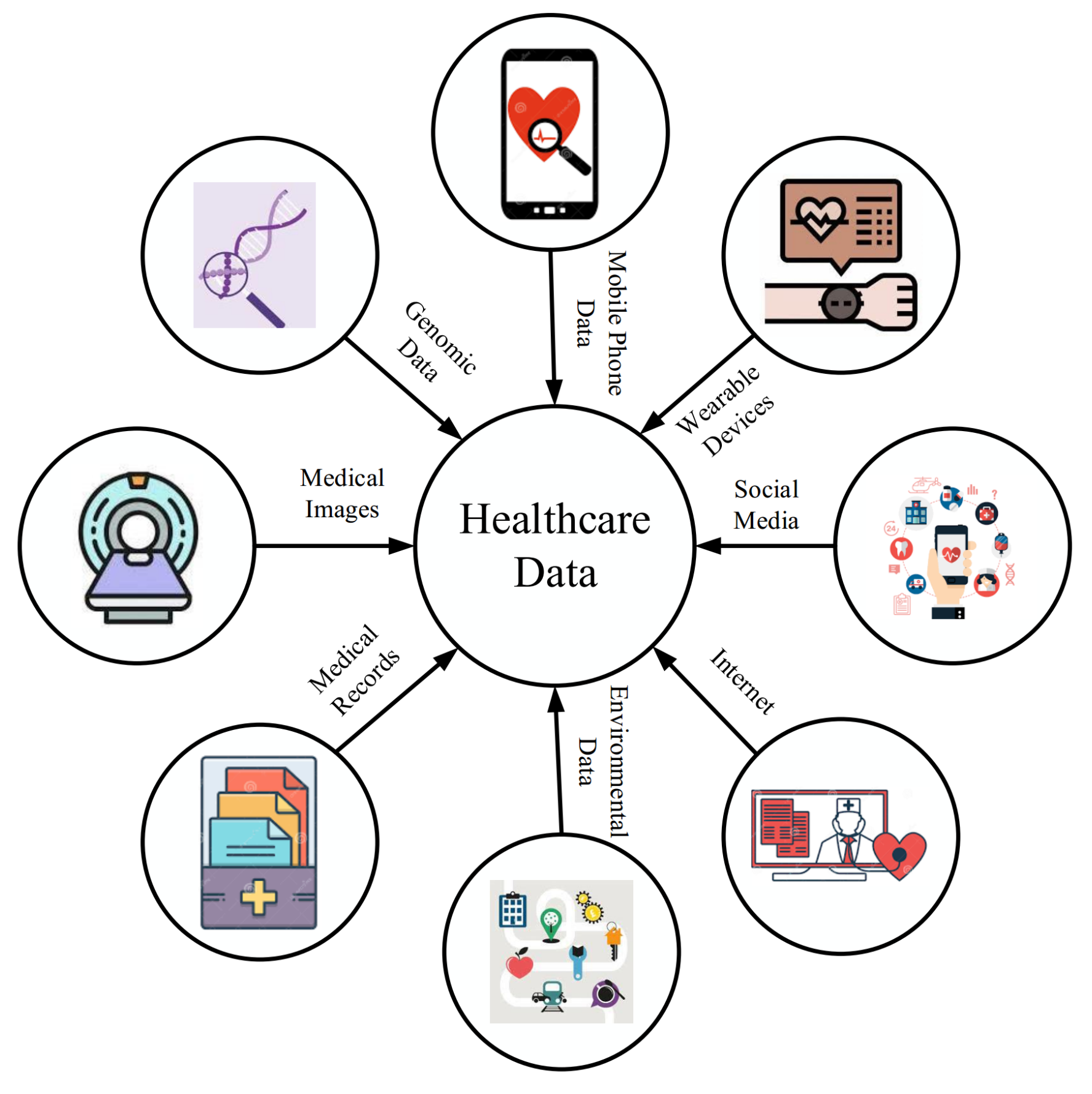 Machine Learning (ML) in Medicine: Review, Applications, and Challenges
Implementation Challenges and Future Trends
Despite the proven benefits, the widespread integration of ML faces significant hurdles. A survey by Sermo revealed that while 91% of healthcare decision-makers agree ML will be foundational within five years, only 25% have actively adopted these systems [2]. Much of this hesitation stems from the complexity of integrating ML into legacy healthcare systems and concerns regarding data privacy [1]. Furthermore, the "interpretability" of complex deep learning models remains a barrier; clinicians are often hesitant to trust recommendations from "black box" algorithms without robust validation processes [1].
Looking forward, the future of ML in healthcare is geared toward continuous and preemptive care. A major emerging trend is the integration of wearable devices and remote monitoring. Smart healthcare systems, such as IoT-based ECG monitors, will leverage ML to provide continuous, real-time patient care outside the traditional hospital setting [1][4]. Multi-modal sensor fusion utilizing deep learning is already being tested for real-time healthcare environment monitoring [4]. As these technologies mature, predictive analytics will increasingly preemptively identify health issues before they become acute, solidifying ML's role as an indispensable tool in modern medicine.
Conclusion
Machine learning is fundamentally redefining the healthcare landscape, transitioning the industry from reactive treatment protocols to proactive, predictive, and personalized care. From the precise identification of anomalies in medical imaging to the complex decoding of the human genome and the automation of administrative burdens, ML applications are improving patient outcomes and streamlining clinical operations. While challenges related to data privacy, algorithmic transparency, and institutional adoption persist, the trajectory is undeniable. As wearable technology becomes ubiquitous and integration with existing EHR systems deepens, machine learning will move from an emerging trend to the foundational core of global healthcare delivery.
---REFERENCES--- [1] Journal of Artificial Intelligence General science (JAIGS). "Machine Learning Applications in Healthcare: Current Trends and Future Prospects." JAIGS. https://ojs.boulibrary.com/index.php/JAIGS/article/view/33 [4] Springer Nature Link. "Machine Learning and Its Applications to Healthcare." Springer. https://link.springer.com/book/10.1007/978-981-95-4831-6 [3] Grand View Research / Itransition. "A Comprehensive Guide to Machine Learning In Healthcare." Itransition. https://www.itransition.com/machine-learning/healthcare [6] Journal of Medical Internet Research. "Implementation of Machine Learning Applications in Health Care Organizations: Systematic Review of Empirical Studies." JMIR. https://www.jmir.org/2024/1/e55897 [2] Sermo. "Machine Learning in Healthcare: Applications, Benefits & What Physicians Should Know (2026)." Sermo. https://www.sermo.com/resources/machine-learning-in-healthcare [5] Foreseemed. "Machine Learning in Healthcare: Guide to Applications & Benefits." Foreseemed. https://www.foreseemed.com/blog/machine-learning-in-healthcare [10] Nix United. "Machine Learning in Healthcare: 12 Real-World Use Cases to Know." Nix United. https://nix-united.com/blog/machine-learning-in-healthcare-12-real-world-use-cases-to-know [8] Coursera. "What Is Machine Learning in Health Care?." Coursera. https://www.coursera.org/articles/machine-learning-in-health-care [7] Flat World Solutions. "Top 10 Applications of Machine Learning in Healthcare." FWS. https://www.flatworldsolutions.com/healthcare/articles/top-10-applications-of-machine-learning-in-healthcare.php [9] Brody Lab. "Applications of Machine Learning in Healthcare." Brody Lab. https://brodylab.eng.uci.edu/files/2021/09/72044.pdf
References
- 1.
- 2.
- 3.
- 4.
- 5.
- 6.
- 7.
- 8.
- 9.
- 10.