Introduction
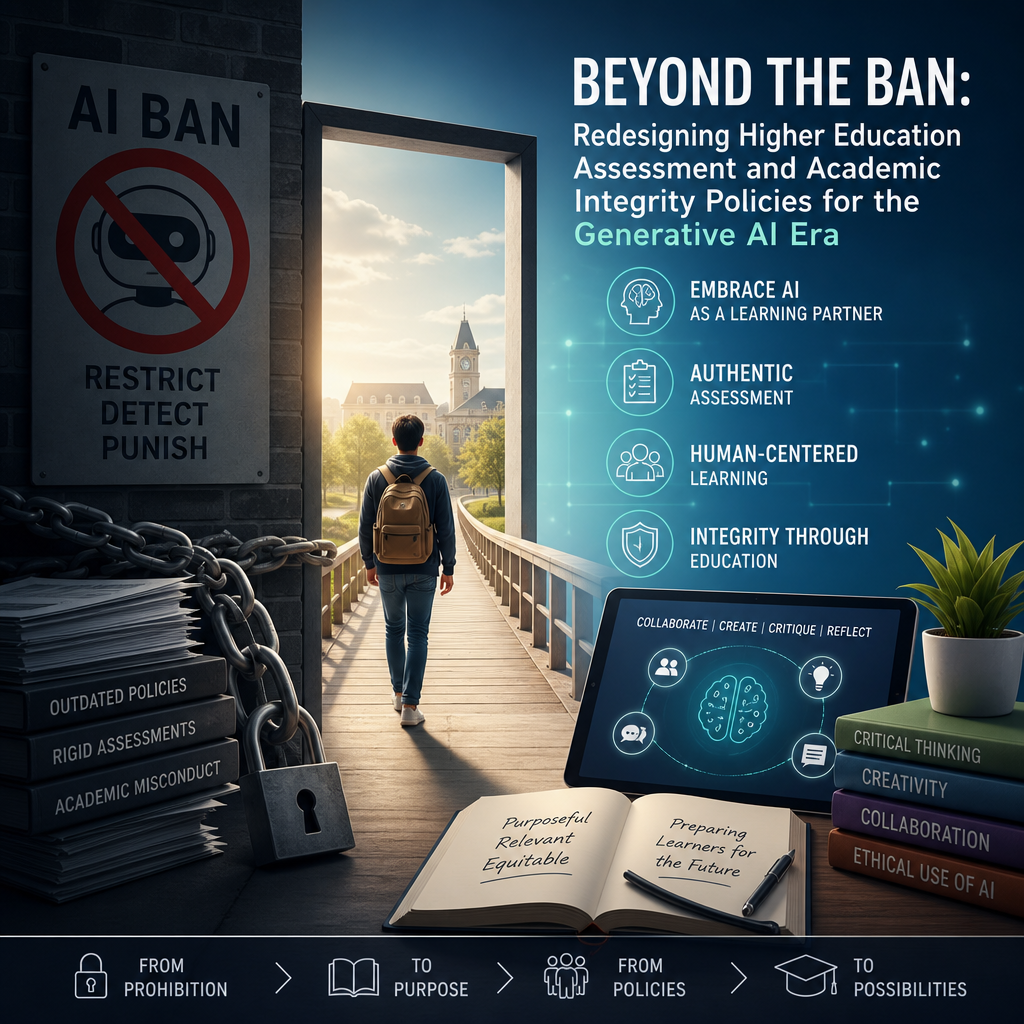
When generative AI tools like ChatGPT first exploded onto the higher education scene, the immediate institutional reflex was defensive. Panic over AI-generated essays led to a wave of abrupt bans and a heavy reliance on AI-detection software. However, as the dust settles in 2025, a growing consensus among researchers and educators suggests that this reactionary approach is not only unsustainable but fundamentally misguided. The challenge of generative AI in universities is not merely a new iteration of the plagiarism problem; it is a revelation that traditional assessment systems were already misaligned with meaningful learning outcomes [1].
Educators find themselves navigating a difficult middle ground. Some advocate for a regression to highly secure, proctored exams, while others push for a complete overhaul of teaching and learning paradigms [2]. Yet, returning to pre-internet assessment methods ignores the reality of the modern workplace, where AI proficiency is rapidly becoming a baseline competency. To maintain academic integrity while fulfilling their educational mandate, universities must move beyond the ban. They are now tasked with a complex but necessary transformation: redesigning assessments and academic integrity policies to foster critical thinking, transparency, and ethical AI integration.
The Fallacy of the Ban-and-Detect Paradigm
The initial response to the generative AI surge was characterized by strict prohibitions and an over-reliance on technological policing. Many instructors rushed to ban AI use outright and deployed automated detection tools to root out offenders. However, this "ban and detect" model is increasingly recognized as a flawed strategy. AI detectors have proven to be notoriously unreliable, plagued by false positives that can unjustly penalize innocent students. As the University of Kansas Center for Teaching Excellence points out, these tools were never intended to serve as sole indicators of cheating; they provide information, not indictments [3].
Rather than spending valuable instructor time playing a technological game of cat-and-mouse, experts advocate for decriminalizing the use of AI in the learning process [3]. Attempting to forbid AI entirely is a futile endeavor that fails to serve students, who will inevitably enter an AI-augmented workforce. The U.S. Department of Education has emphasized that it is "imperative to address AI in education now to realize key opportunities, prevent and mitigate emergent risks, and tackle unintended consequences" [3]. Consequently, the conversation is shifting from punitive enforcement to proactive education, treating AI not as a villain to be defeated, but as a partner to be understood [3].
 Beyond Bans: Rebuilding Teaching for a World With AI - Faculty Focus | Higher Ed Teaching & Learning
Rethinking the Essay: From Static Product to Dynamic Process
For centuries, the traditional essay has been the bedrock of higher education assessment, prized for its ability to evaluate student knowledge, source engagement, and communication skills [4]. Today, however, its efficacy is being severely tested. Generative AI can effortlessly generate structured, articulate prose that often outperforms human efforts in vocabulary and organization [4]. If an assessment can be easily outsourced to a machine, it is no longer measuring the student's authentic intellectual contribution.
To salvage the pedagogical value of writing, educators must redesign essay assignments into dynamic, multidimensional tasks. This means shifting the focus from the final, static product to the process of creation. Researchers suggest centering assessments on research, reflection, and application alongside GenAI, effectively transforming the essay into a documented journey of critical thinking [4].
This process-oriented approach is championed by assessment experts like Daniele Di Mitri, who argues for mandatory process documentation where students log their prompts, iterations, and decision-making rationale [1]. Furthermore, instructors must be wary of "cognitive debt"--the phenomenon where students accumulate a deficit in their own critical thinking skills by over-relying on AI to do the heavy cognitive lifting [4]. By requiring students to submit reflective statements detailing exactly how they used AI to generate ideas, outline drafts, or summarize data, educators can ensure that the technology augments rather than replaces human cognition [3].
Architecting New Assessment Frameworks
Moving beyond the traditional essay requires building entirely new assessment architectures. A systematic review of generative AI and academic integrity highlights the urgent need to reassess assessment methods to promote higher-order thinking, creativity, and problem-solving [5]. Formats that are highly susceptible to AI assistance are giving way to project-based assessments, oral examinations, and in-class collaborative problem-solving [5].
One of the most promising frameworks emerging in 2025 is competency-based assessment. Rather than grading individual assignments on a linear scale, educators assess student progress across defined competencies such as user research, prototyping, collaboration, and communication [1]. In this model, assignments are mapped to specific skills, and grading becomes binary but iterative: a "Complete" means the learning objective is met, while a "Try Again" signals that revision is required [1]. This reframes higher education assessment as formative, iterative, and growth-oriented rather than purely summative, aligning strongly with digital university models and making it exceedingly difficult for a student to rely solely on AI to demonstrate sustained competency [1].
For faculty hesitant to overhaul their entire curriculum, practical strategies exist to refine existing assignments. The California Education Learning Lab suggests making incremental adjustments, such as requiring students to apply course concepts to highly specific, localized contexts or current events that AI models lack the nuanced data to address [6].
 November | 2025 | Learning, Teaching and Leadership
Forging Trust-Based Academic Integrity Policies
As assessment methods evolve, so too must the policies that govern them. Generative AI is increasingly recognized as a "wicked problem"--one not amenable to simple fixes like prohibition, but requiring institutional permission to innovate, iterate, and even compromise [7]. The Quality Assurance Agency (QAA) and other regulatory bodies emphasize that institutions need sustainable assessment strategies that move beyond detection alone, calling for principled redesign rather than reactive policies [7].
Trust-based reform entails embedding purpose, capacity, and alignment into assessment practices [7]. This begins with clarity and collaboration, specifically involving students in co-creating norms surrounding AI use rather than dictating terms from atop an ivory tower [7]. Policies must acknowledge the variability of AI comfort levels among faculty, establishing a continuum that ranges from restricted use to full integration, depending on the learning objectives of a specific course [8].
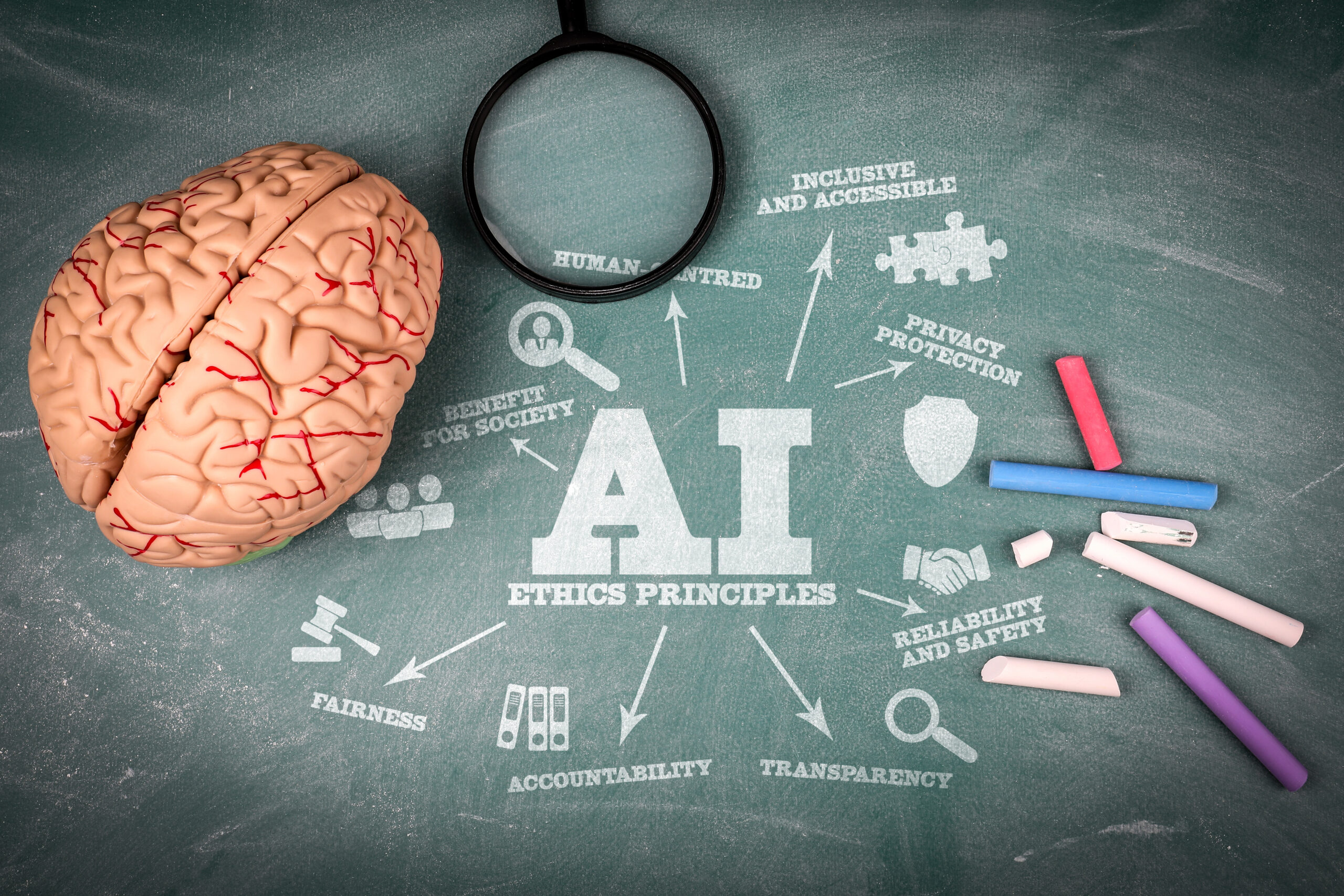
Crucially, updating academic integrity policies does not mean reinventing the wheel. Educators are encouraged to leverage existing frameworks from organizations like the International Baccalaureate, the MLA, and the APA, which have already established reliable guidelines for citing AI-generated content [9]. Just as students must cite traditional sources, they must be held to transparent standards when borrowing content from AI models [8]. Ethical guidelines should explicitly define what constitutes acceptable AI use--such as brainstorming, outlining, and feedback--versus unethical use, like submitting unedited chatbot output as original work [3].

Conclusion
The integration of generative AI into higher education is not a passing storm to be weathered, but a permanent paradigm shift to be navigated. The universities that will lead the next phase of higher education innovation are those that stop fighting AI and start designing assessments that demand human nuance, ethical reasoning, and iterative skill-building. By abandoning the flawed ban-and-detect paradigm, embracing process documentation, adopting competency-based frameworks, and forging trust-based policies with students, institutions can maintain rigorous academic integrity. More importantly, they can fulfill their ultimate mandate: preparing students not just to pass classes, but to think critically and act ethically in an AI-augmented world.
References
- 1.
- 2.
- 3.
- 4.
- 5.
- 6.
- 7.
- 8.
- 9.