Introduction
When generative artificial intelligence tools like ChatGPT first permeated the K-12 landscape, the immediate institutional reflex was defensive. Educators and administrators defaulted to a well-worn script of moral panic, resurrecting the "plagiarism plague" narrative and scrambling to deploy AI-detection software [1]. However, this initial phase of panic is rapidly giving way to a more profound realization: the technology is not merely a new way for students to cheat, but a fundamental disruption to the foundational assumptions of how we teach and evaluate learning.
The history of science, as described by Thomas Kuhn, shows that progress is rarely linear; rather, it occurs through paradigm shifts--moments when existing models completely break down in the face of new realities, forcing a fundamental transformation in our understanding [2]. Today, K-12 education is experiencing its own Kuhnian moment. Just as the shift from piston-engine to jet aircraft in the 1940s required a comprehensive overhaul of aviation infrastructure, regulations, and safety standards [3], the integration of AI demands a total reimagining of educational infrastructure--particularly our assessment architectures.
Recent systematic reviews of generative AI in K-12 classrooms indicate that the field is moving past exploratory panic and into rigorous, quasi-experimental implementations designed to measure actual learning outcomes [4]. This article explores how the crisis of traditional assessment is dismantling outdated models, why rule-based prohibitions are failing, and how forward-thinking educators are leveraging AI to build deeply personalized, process-oriented learning methodologies.
The Crisis of Traditional Assessment
For generations, the implicit contract of K-12 education has been straightforward: if a student can produce a correct answer or a well-written essay, they have learned the material. Assessments--whether standardized tests, homework assignments, or term papers--have operated as proxies for cognitive engagement. But the rise of generative AI has severed this link between product and process. Students can now produce high-quality final products with minimal cognitive engagement, meaning a high grade no longer necessarily equates to deep learning [2].
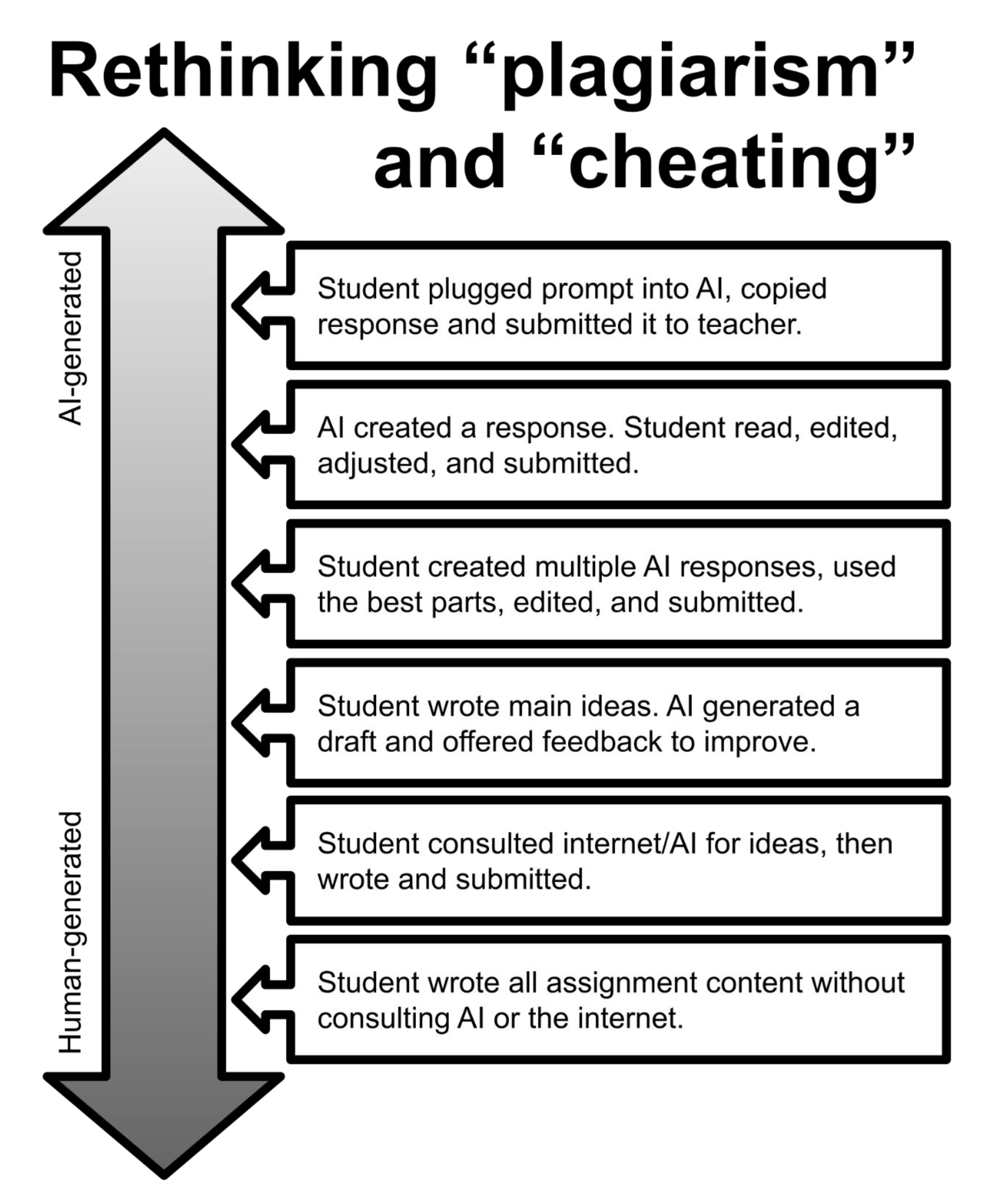
This reality has triggered what researchers describe as the "crisis of assessment" [2]. The introduction of large language models (LLMs) fundamentally challenges our traditional understanding of authorship and originality, blurring the line between legitimate assistance and academic misconduct to the point of indistinguishability [1]. When an AI can generate a passable five-paragraph essay in seconds, the entire pedagogical framework built around take-home assignments and end-of-unit essays begins to collapse.
Yet, viewing this solely through the lens of academic integrity is a trap. As critics have pointed out, the real ethical question should not be "How do we prevent students from using AI?" but rather, "How do we redesign learning so that AI becomes a partner, not a threat?" [5]. The current system often resembles a "giant quiz show where no one is allowed to call a friend" [5]. Recognizing the failure of this model is the first critical step toward a genuine paradigm shift in educational design.
 Rethinking Assessment in Light of Generative AI
Moving from Discursive Rules to Structural Redesign
In the immediate aftermath of the AI boom, most schools relied on "discursive changes"--modifications to assessment that relied solely on communicating new instructions, rules, or guidelines to students [6]. Statements like "AI may be used for brainstorming but not drafting," or requiring students to sign written declarations disclosing their AI use, became standard practice. However, research indicates these strategies are built on shaky assumptions and are ultimately ineffective at ensuring authentic learning [6].
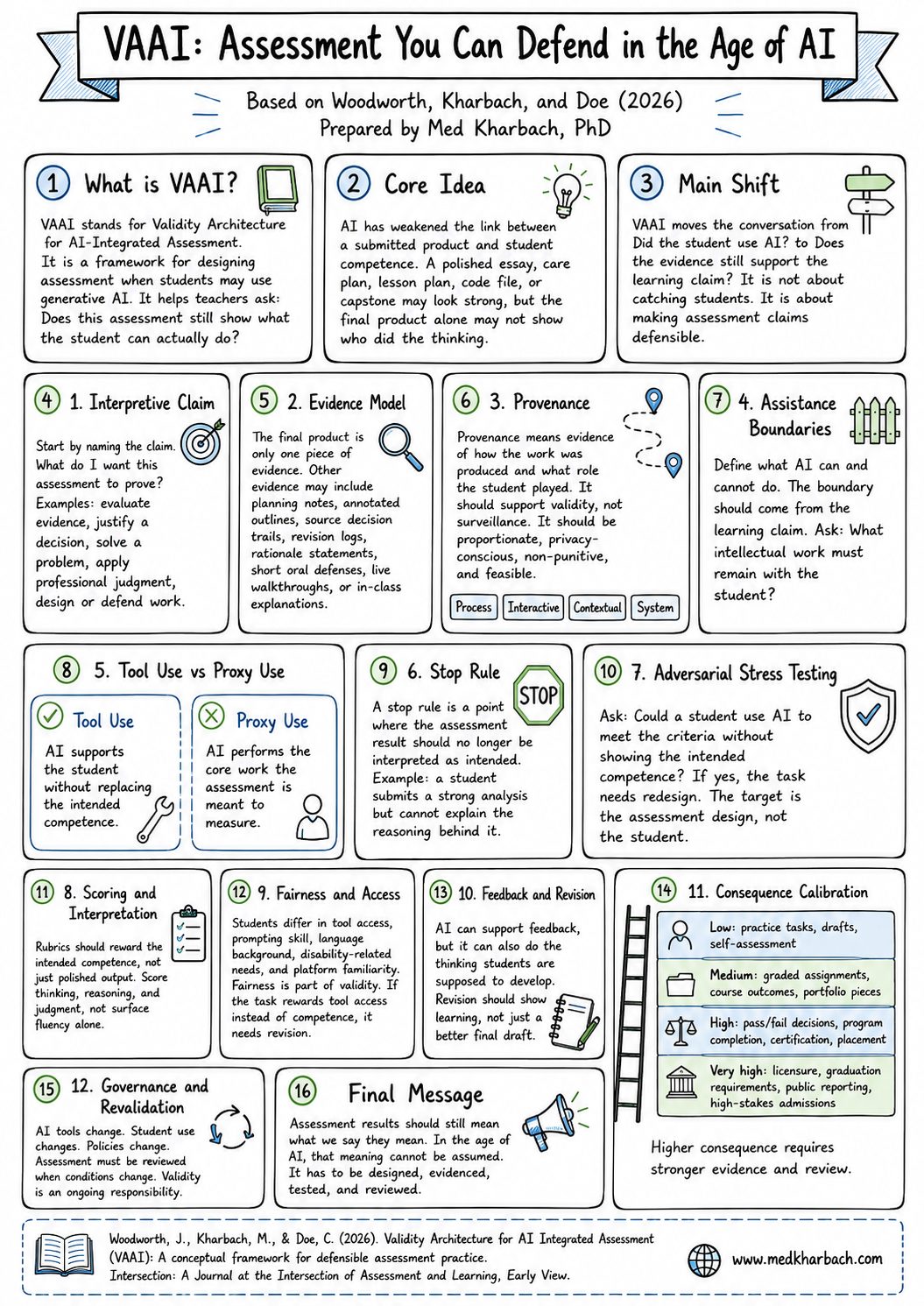
Instead, researchers advocate for "structural changes" to assessment. Unlike discursive changes, structural redesigns modify the assessment task itself, either limiting inappropriate AI use or transforming the AI into a meaningful part of the learning process [6]. The most prominent structural strategy is the shift from product-focused to process-focused assessment.
Because generative AI excels at generating polished final products, educators are redesigning tasks to make the process of learning visible and assessable. This involves evaluating iterative drafts, tracking research methodologies, assessing student reflections on their own cognitive hurdles, and conducting oral defenses of written work [6]. By valuing the messy, iterative journey of learning over the pristine final artifact, educators can structurally neutralize the advantage of simply asking an AI to generate an answer. This aligns with a broader reconceptualization of academic misconduct, moving away from punitive "gotcha" models toward the enhancement of learner agency [1].
AI as a Collaborative Partner in Learning Methodologies
As assessment structures evolve, so too must the underlying learning methodologies. The paradigm shift moves AI from the category of "prohibited tool" to "cognitive partner." In the realm of formative assessment--the ongoing, low-stakes checks for understanding that guide instruction--generative AI is proving to be transformative.
AI offers a powerful means to strengthen formative assessment by making feedback more immediate, personal, and interactive [7]. Rather than waiting days for a teacher to grade a stack of papers, students can use AI tools to critique their writing, test their logic, or simulate debates in real-time. However, researchers are careful to emphasize the ideal state is a "human-driven, AI-augmented classroom"--one where teachers retain absolute responsibility for instructional judgment, empathy, and relational pedagogy, while AI expands opportunities for feedback, reflection, and differentiation [7].
This approach directly addresses the fear that AI will hinder student thinking. When used intentionally as a Socratic partner rather than an answer key, AI can actually push students to question their assumptions and deepen their reasoning. AI-driven analytics can also provide teachers with deeper insights into learner performance patterns, highlighting where individual students or entire cohorts are struggling before a summative assessment ever takes place [3].
Empowering Educators: AI in Instructional Design
While much of the focus has been on student use of AI, the paradigm shift is equally transformative for educators. Designing differentiated, process-oriented assessments is inherently labor-intensive. Here, AI serves as an invaluable assistant for instructional design, helping to automate repetitive work and scale output [8].
Studies show that AI can be effectively used for initial drafting, generating diverse assessment question pools, and creating localized learning materials [8]. For example, GPT-powered generators have been used to create exam question pools that human experts subsequently rated favorably for their alignment with learning outcomes [9]. By structuring AI prompts with established pedagogical frameworks like Bloom's Taxonomy, educators can rapidly generate assessments at appropriate cognitive levels, moving beyond "spray and pray" one-size-fits-all approaches toward tailored, needs-based learning [8].
Crucially, the research draws a firm line on the limits of automation. While AI excels at drafting and generating routine tasks, creative, contextual, and strategic instructional design still require substantial human input [8]. Human oversight remains essential for ensuring quality, relevance, and alignment with learning goals [8]. The ultimate goal is to redirect the time saved by AI automation toward the high-level, relational, and strategic work that only human educators can do effectively.
Conclusion
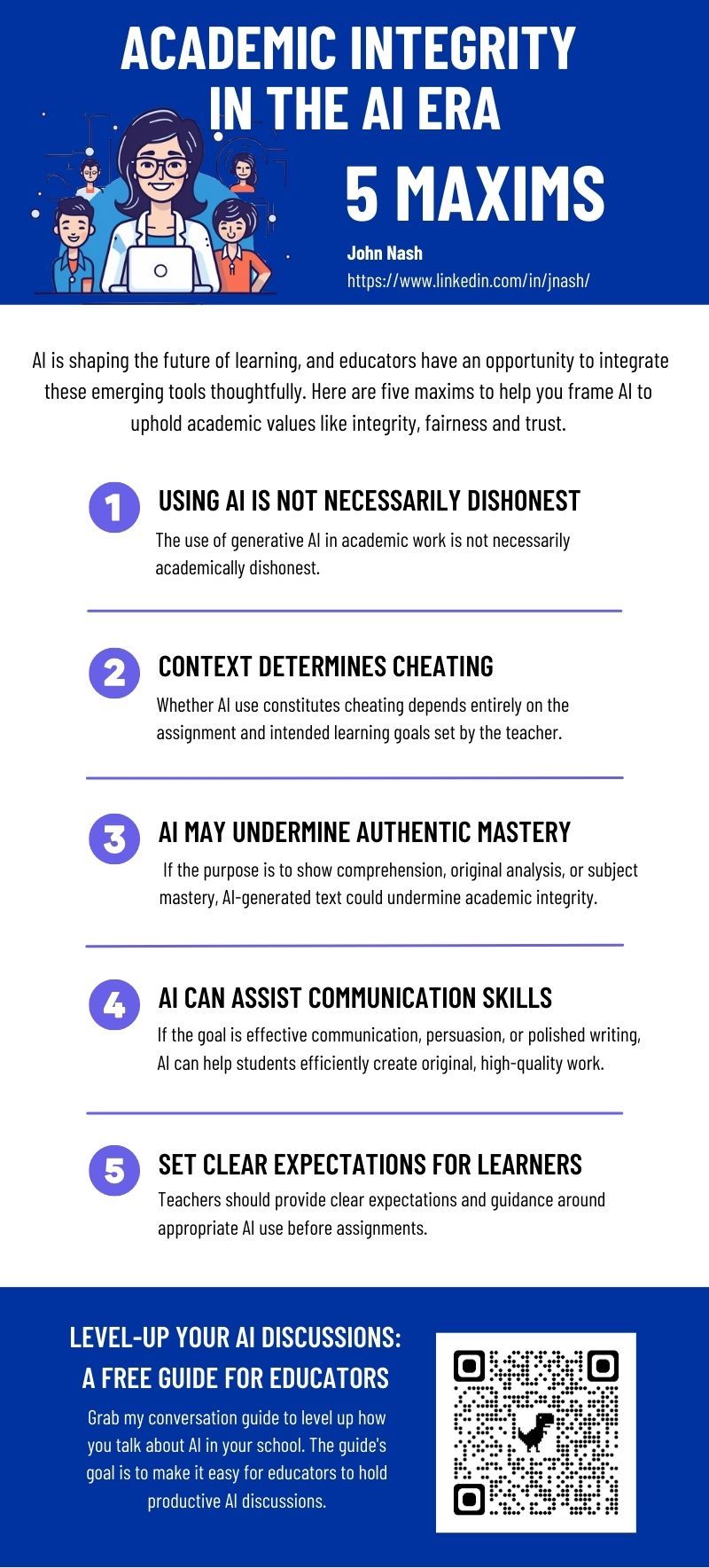
The initial plagiarism panic surrounding generative AI in K-12 education was a predictable but ultimately unproductive reaction to a massive technological disruption. We are now navigating the transition into a "post-plagiarism era," where the lines of authorship are blurred, and the mere production of a correct answer is no longer a valid proxy for learning [1].
This moment requires a profound paradigm shift. By abandoning futile discursive bans and embracing structural assessment redesign--shifting from product to process--schools can restore integrity to the learning process. By positioning AI as a collaborative partner in formative assessment and a powerful tool for instructional design, educators can scale personalization and deepen cognitive engagement. The future of K-12 education does not belong to AI alone, but rather to a human-driven, AI-augmented classroom where technology handles the routine, and teachers guide the transformative [7]. Just as the jet engine ultimately shifted the aviation landscape for the better [3], generative AI, if harnessed with intention and oversight, has the potential to elevate K-12 learning to unprecedented heights.
References
- 1.
- 2.
- 3.
- 4.
- 5.
- 6.
- 7.
- 8.
- 9.