Introduction
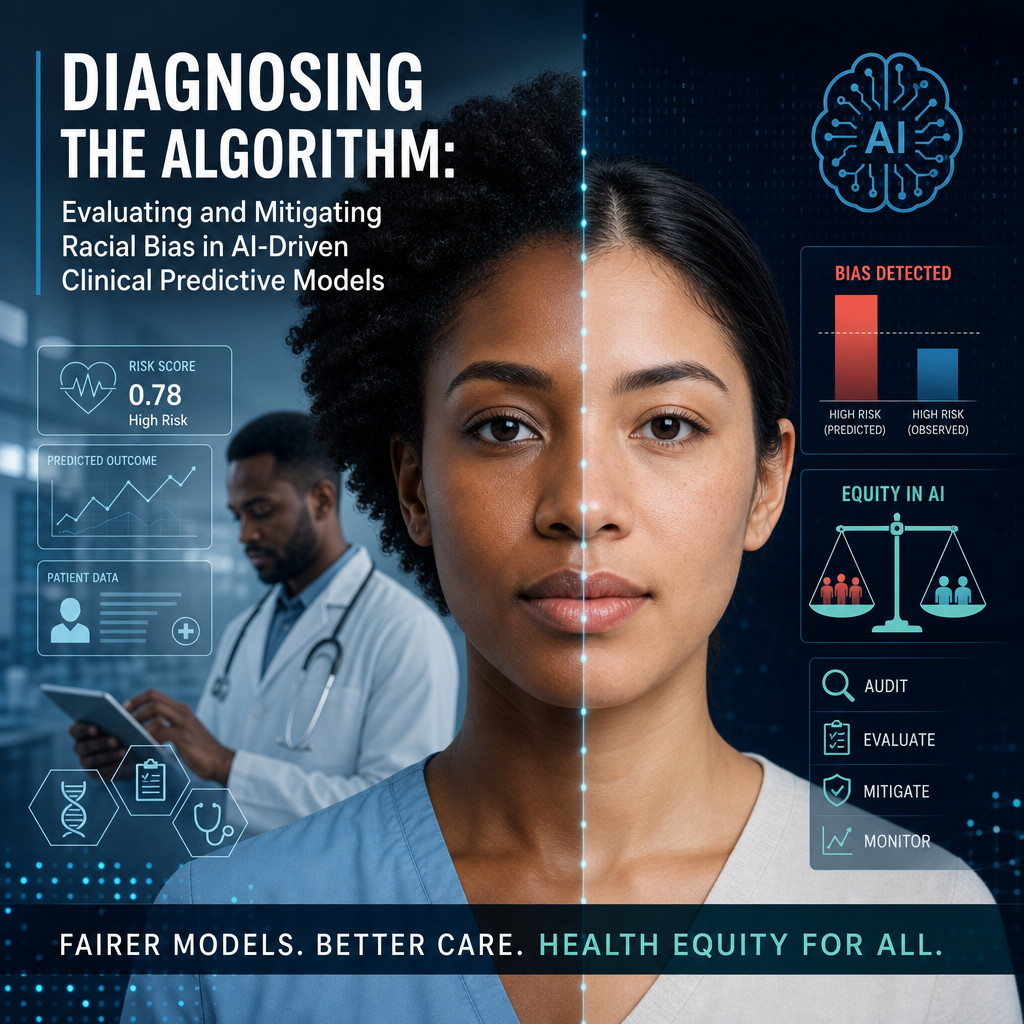
Artificial intelligence (AI) and machine learning (ML) are rapidly transitioning from theoretical promise to clinical reality. Today, algorithms are being deployed to diagnose conditions, predict patient outcomes, interpret medical images, and guide critical clinical decision-making [1]. Proponents argue that these tools have the potential to objectively process vast amounts of data, potentially overcoming human cognitive biases and addressing deep-rooted health inequities and socioeconomic determinants of health [2][3]. However, this optimism is tempered by a mounting body of evidence suggesting that AI in healthcare is not inherently neutral; rather, it often serves as a mirror reflecting and magnifying the systemic racism embedded in the medical system.
The social costs of inaccurate or biased predictions are substantial, particularly as racial divides in healthcare access and outcomes persist [2]. When an algorithm makes an error, people tend to evaluate AI as relatively autonomous, assigning it blame similar to that of a human clinician, which can profoundly impact patient trust and institutional accountability [2]. As medical ML applications approach widespread adoption across a multitude of clinical settings, the potential for these systems to perpetuate the under-serving of marginalized populations has become a primary ethical concern [1][3]. To prevent patient harm and the propagation of healthcare inequities, the medical community must urgently confront how racial bias is built into clinical models and develop rigorous frameworks for evaluation and mitigation.
The Anatomy of Algorithmic Bias: How Bias Enters the System
Racial bias in clinical AI is rarely the result of a explicitly programmed prejudice; instead, it is subtly baked into the algorithmic pipeline during data collection, feature selection, and model training [2][4]. One of the most well-documented mechanisms is the use of flawed proxy variables. In a landmark 2019 study analyzing a nationally circulated algorithm used to manage population health, researchers discovered that the algorithm equated healthcare costs with health needs [3]. Because the healthcare system historically funnels fewer resources toward the care of sick Black patients, their care costs less. The algorithm incorrectly interpreted this lower cost as an indicator that Black patients were healthier than equally sick white patients, systematically leading to the under-allocation of extra care to Black patients [3].
Beyond flawed proxies, the very nature of what data is collected and prioritized introduces bias. Machine learning models tend to favor discrete, structured, physiological data due to its reliability and abundance [2]. However, by excluding socioeconomic information--such as income, housing stability, and social support, which are deeply correlated with race--models can exacerbate bias by treating all data sources as equal. Disadvantaged patients are more likely to present later in their disease progression, have fewer data collection points due to less access to primary care, and face barriers to following up on recommended care [2]. When algorithms are trained on this incomplete data, they become racially biased, yielding less accurate diagnoses and prognoses for the very populations that often need the most medical attention.
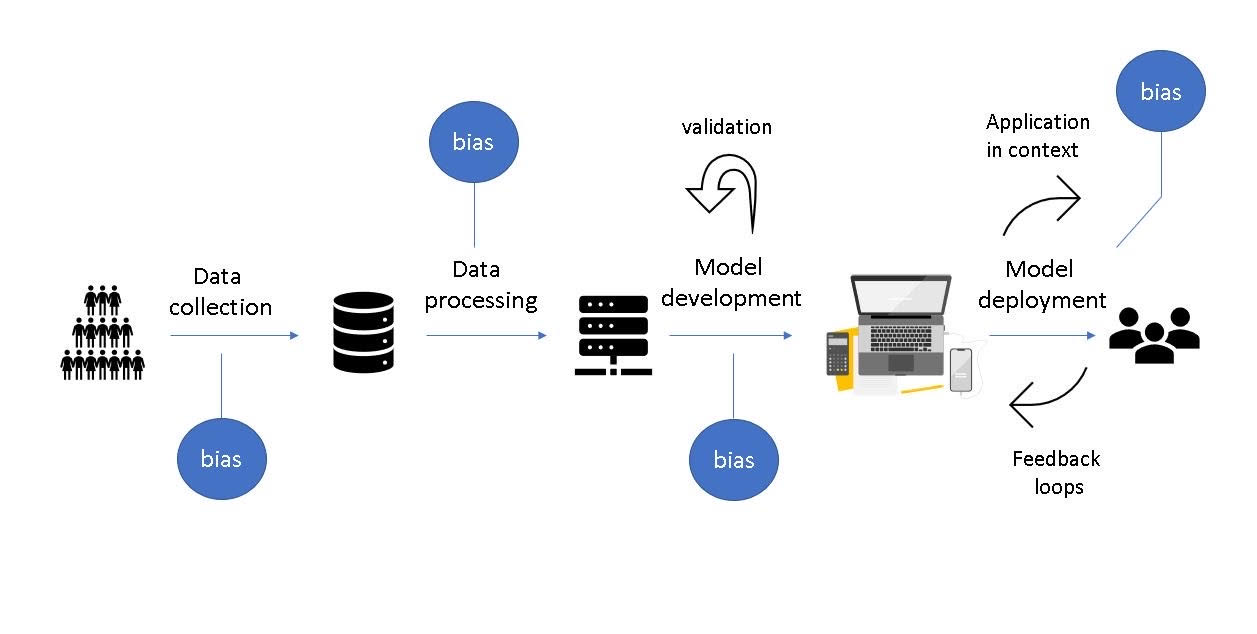 Misguided Artificial Intelligence: How Racial Bias is Built Into Clinical Models | Published in Journal of Brown Hospital Medicine
Real-World Casualties: Bias Across Clinical Domains
The theoretical risks of algorithmic bias have materialized into tangible harms across nearly every medical specialty. A systematic review of AI models in the cardiovascular domain found that a staggering 82% of existing models demonstrated different accuracy levels across racial and ethnic groups [5]. Similarly, researchers have pointed to cancer-detection algorithms that are markedly less effective for Black patients and cardiac risk scores that consistently underestimate the amount of care needed by Black patients [6].
Maternal health has been particularly impacted by algorithmic inequities. Until recently, the Vaginal Birth after Cesarean (VBAC) algorithm was widely used to predict the likelihood of a successful vaginal birth. However, the algorithm predicted lower success rates for pregnant people of color, directly contributing to disproportionately higher C-section rates among women of color--a surgical intervention that carries higher risks of complications and longer recovery times [6].
The advent of Large Language Models (LLMs) has introduced a new frontier of clinical bias. A recent Cedars-Sinai study evaluated four major LLMs on hypothetical psychiatric cases and found that while diagnoses remained relatively consistent regardless of a patient's race, treatment regimens did not [7]. When African American identity was stated or implied, the LLMs proposed dramatically different treatment recommendations for the same psychiatric illnesses, with the most evident disparities appearing in cases of schizophrenia and anxiety [7]. As researchers noted, these LLMs exhibit racial bias simply because they reflect the extensive biases found in the human-generated content used to train them [7].
The Evaluation Imperative: Inconsistent Metrics and Nascent Standards
Despite the clear evidence of bias, the field lacks a standardized approach to evaluating algorithmic fairness. A scoping review of clinical machine learning models evaluating racial bias found that of the 12 studies analyzed, 67% concluded that racial bias was present, 17% concluded it was not, and 17% only assessed mitigation strategies without comparing them to a baseline model [1]. Worryingly, 75% of these models were only internally validated, with just one model (8%) described as being in routine clinical use and two (17%) having been prospectively validated [1].
A major driver of this inconsistency is the ad-hoc application of fairness metrics. The scoping review revealed that the metrics used to assess algorithmic racial bias were highly inconsistent across studies [1]. The most commonly observed metrics were equal opportunity difference (used in 42% of studies) and standard accuracy (used in 25% of studies) [1]. Relying solely on overall accuracy can mask severe disparities in performance across different subgroups--a model can achieve high overall accuracy while simultaneously failing minority populations.
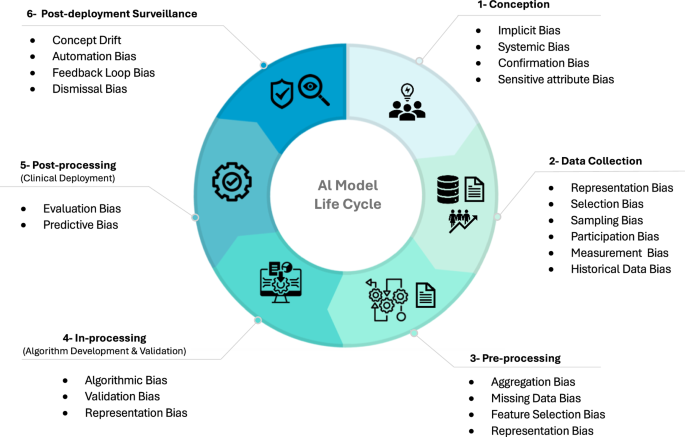 Bias recognition and mitigation strategies in artificial intelligence healthcare applications | npj Digital Medicine
To bring order to this fragmented landscape, researchers are beginning to propose comprehensive evaluation frameworks. For instance, a 2024 empirical assessment of hospital readmission models proposed a structured process for bias evaluation. This process involves explicitly selecting appropriate bias measures, carefully interpreting the results, determining the real-world disparity impact of any detected bias, and mapping out potential mitigations [8][9]. Establishing and adopting such standardized frameworks is critical before models are approved for clinical deployment.
Strategies for Mitigation and the Path Forward
Mitigating racial bias in clinical AI requires interventions at every stage of the algorithmic lifecycle. First and foremost is the recognition that race and ethnicity (R/E) data is often inappropriately utilized as a biological proxy in clinical prediction models, which can encode and propagate medical racism [10]. Developers must critically evaluate whether and how R/E variables are included in their models, shifting away from using race as a crude stand-in for genetic or environmental factors.
On a structural level, algorithms must be trained on datasets that include diverse populations and, crucially, that accurately capture the socioeconomic realities of patients' lives [3]. As demonstrated by the cost-proxy error, training algorithms not to conflate healthcare spending with actual health needs can immediately undo significant biases [3]. Furthermore, there is an urgent need to develop LLM architectures that actively resist demographic bias, alongside establishing standardized protocols for clinical bias testing before these generative AI tools are integrated into clinical workflows [7].
Ultimately, algorithmic fairness in clinical ML cannot be an afterthought. The adoption of algorithmic fairness principles in medicine remains nascent, and researchers, developers, and journal editors must emphasize standardized reporting and data availability in ML studies [1]. Improving transparency will allow the broader scientific community to interrogate models, replicate findings, and iteratively improve fairness metrics.
 Assessing racial bias in healthcare predictive models: Practical lessons from an empirical evaluation of 30-day hospital readmission models - ScienceDirect
Conclusion
Artificial intelligence stands at a critical crossroads in healthcare. It possesses the unparalleled capacity to process complex medical data and improve patient outcomes, yet it simultaneously harbors the dangerous potential to automate and scale structural racism at a velocity human clinicians never could. From cardiovascular risk scores to psychiatric LLMs, the evidence is clear: biased data in inevitably produces biased care out. Moving forward, the medical and data science communities must transition from merely identifying bias to proactively engineering it out of systems. By standardizing fairness evaluations, demanding transparent data practices, and fundamentally rethinking how socioeconomic and racial variables are handled, we can ensure that the algorithms guiding our clinical futures are wired for equity rather than exacerbating the inequities of the past.
References
- 1.
- 2.
- 3.
- 4.
- 5.
- 6.
- 7.
- 8.
- 9.
- 10.