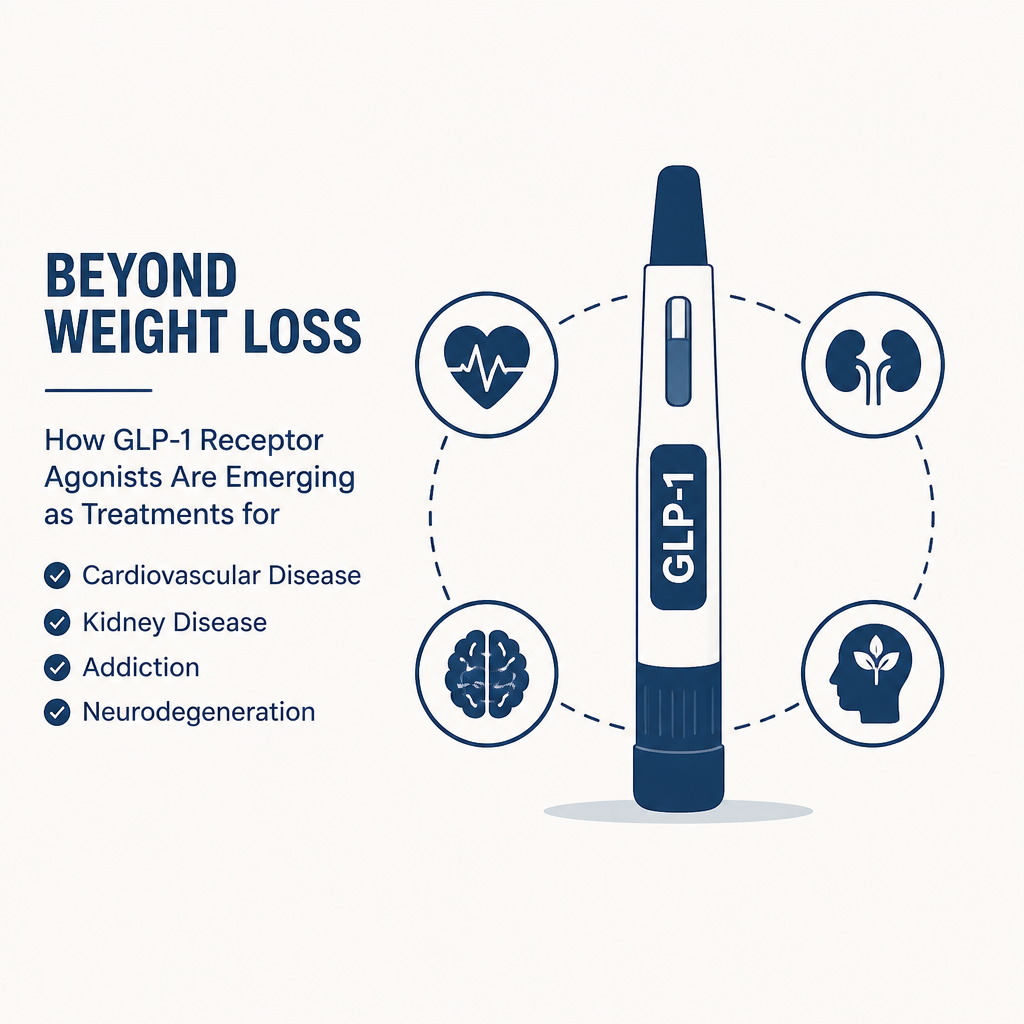
Introduction
Few drug classes have traveled as far, as fast, as the glucagon-like peptide-1 receptor agonists (GLP-1 RAs). Originally engineered to mimic an incretin hormone and improve glycemic control in type 2 diabetes, these agents--now household names in the form of semaglutide and tirzepatide--transformed obesity medicine with unprecedented weight-loss results. But the story is no longer about the scale. A convergence of large cardiovascular outcomes trials, renal studies, and early-phase neuroscience research suggests that GLP-1 RAs are something more than diabetes and weight-loss drugs: they may be genuine multi-organ protective therapies.
The context makes this expansion urgent. In 2024, the World Health Organization reported that nearly 1 billion people worldwide are living with obesity, underscoring the need for scalable interventions that can reduce the morbidity and mortality flowing from cardiometabolic disease [1]. Yet what has caught researchers' attention is that the benefits of GLP-1 RAs appear to extend beyond what weight loss alone can explain--including to patients who lose little or no weight at all [2].
This article reviews the evidence propelling GLP-1 RAs into four frontier areas: atherosclerotic cardiovascular disease and heart failure, chronic kidney disease, neurodegeneration and neurological disorders, and addiction medicine. It also examines the mechanisms proposed to explain these effects, the safety considerations that demand ongoing scrutiny, and the questions that will shape the next decade of research.
 8 Benefits of GLP-1's Beyond Weight Loss - Dr. Richard Lipman M.D.
From Gut Hormone to Multisystem Therapy
GLP-1 is a peptide hormone secreted by intestinal L-cells in response to food intake. Its canonical actions--glucose-dependent insulin secretion, suppression of glucagon, and slowed gastric emptying--explain the original diabetes indication. But the GLP-1 receptor is expressed far beyond the pancreas and gut, in cardiovascular tissue, the kidneys, the liver, and the central nervous system, a distribution that presaged the drug class's surprisingly broad effects [3]. As recent mechanistic reviews have emphasized, GLP-1R is a genuinely multifunctional therapeutic target, involved in processes ranging from inflammation control to neuroprotection [3].
Clinically, the repositioning has been swift. Recent narrative reviews describe GLP-1 RAs as key components in the long-term management of interrelated cardiometabolic conditions--obesity, atherosclerotic cardiovascular disease (ASCVD), heart failure with preserved ejection fraction (HFpEF), chronic kidney disease (CKD), and metabolic dysfunction-associated steatotic liver disease (MASLD)--conditions whose pathologies overlap and reinforce one another [1]. The field has also moved pharmacologically beyond single agonism: dual GLP-1/GIP and GLP-1/glucagon agonists, and even triple agonists, are approved or in advanced development, consistently outperforming single RAs on glycemic and weight outcomes while raising new questions about whether superior systemic efficacy might translate into stronger effects on metabolic-inflammatory disease pathways [4].
Cardiovascular Protection: Benefits That Outrun the Bathroom Scale
The cardiovascular story began as a regulatory obligation. When regulators required diabetes drugs to demonstrate cardiovascular safety, GLP-1 RA trials unexpectedly delivered evidence of cardiovascular benefit, including reductions in major adverse cardiovascular events (MACE). A meta-analysis by Badve and colleagues found that GLP-1 RAs reduced the risk of MACE alongside renal endpoints, leading the authors to conclude that the results support "an important role for GLP-1 receptor agonists as kidney-protective and heart-protective medications" in addressing the global burden of non-communicable disease [5].
The most provocative finding, however, is what the benefit does not correlate with. In an accompanying editorial, Priya Sumithran of Monash University and Jamy Ard of Wake Forest University observed that "a narrative is starting to emerge suggesting GLP-1 receptor agonists are more than just effective diabetes and obesity medications," noting that the cardiovascular benefits appear independent of improvements in glycemia and weight loss, and may instead be mediated by anti-inflammatory, anti-atherogenic, and direct vasodilatory effects [5]. This reframing has practical consequences: it suggests patients at high cardiovascular risk might benefit from GLP-1 RAs even if they do not need, or do not achieve, substantial weight reduction [2].
The cardiology evidence base continues to broaden. Reviews now highlight robust trial data across the cardiometabolic spectrum, with particular interest in HFpEF--a condition with few effective therapies and strong links to obesity--and in ASCVD risk reduction, with additional trials underway to consolidate and extend the evidence [1].
 The expanding role of GLP-1 receptor agonists: a narrative review of current evidence and future directions - PMC
Kidney Disease: Slowing the Road to Dialysis
If cardiovascular protection was the first surprise, renal protection is fast becoming the second. The same body of evidence documenting MACE reduction also demonstrated that GLP-1 RAs reduce the risk of CKD progression and end-stage kidney disease (ESKD), a finding with enormous public health implications given the intersecting epidemics of diabetes, obesity, and kidney failure worldwide [5].
The mechanisms proposed mirror those in the vasculature: reduced inflammation, improved endothelial function, favorable hemodynamic effects, and--critically--benefits that persist after adjusting for weight and glucose changes [5]. For clinicians, the emerging picture positions GLP-1 RAs alongside SGLT2 inhibitors as pillars of kidney-protective therapy, particularly for patients with type 2 diabetes, CKD, overweight, or obesity [5]. For health systems, the prospect of a single injectable therapy that simultaneously blunts cardiovascular and renal trajectories in high-risk populations is a rare alignment of clinical and economic incentives--though cost and access remain formidable barriers to realizing that vision.
The Brain: Neurodegeneration, Stroke, Sleep, and Pressure
Perhaps the most ambitious frontier is the central nervous system. Neurodegenerative diseases--Alzheimer's, Parkinson's, dementia with Lewy bodies, multiple system atrophy, Huntington's, ALS, and multiple sclerosis--are collectively projected to surpass cancer as the second leading cause of death by 2040, and current therapeutics modify symptoms rather than disease course [4]. GLP-1 RAs have entered this space because the diseases share interlocking "hallmarks"--pathological protein aggregation, mitochondrial dysfunction, impaired proteostasis, synaptic failure, and neuroinflammation--and GLP-1 receptor signaling plausibly touches several of them, particularly insulin resistance, mitochondrial stress, and inflammation [4]. Preclinical and early clinical work suggests GLP-1 RAs may slow disease progression in Alzheimer's and Parkinson's disease, and their anti-inflammatory properties have generated interest well beyond neurology, including osteoarthritis and rheumatoid arthritis [3].
The translational challenges, however, are sobering. Traditional clinical endpoints often lack the sensitivity to detect disease-modifying effects over short trials, and the drugs' signature weight loss and gastrointestinal side effects risk unblinding participants and inflating placebo responses. The field increasingly argues for innovative trial designs--active comparators, adaptive frameworks, and biomarker-driven endpoints such as CSF and serum neurofilament light chain, phosphorylated tau, and microglial PET imaging [4]. Dual and triple agonists add another variable: their superior systemic efficacy raises the possibility of amplified neuroprotective effects, but this remains to be demonstrated [4].
Neurology's interest extends beyond classic neurodegeneration. GLP-1-based therapies now span ischemic stroke prevention, obstructive sleep apnea (OSA), idiopathic intracranial hypertension (IIH), and migraine--conditions unified by obesity, vascular dysregulation, and neuroinflammatory signaling [6]. The headline development came in December 2024, when the FDA approved tirzepatide for moderate-to-severe OSA in adults with obesity--the first pharmacotherapy ever approved for the condition--based on the SURMOUNT-OSA 1 and 2 trials, in which tirzepatide reduced the apnea-hypopnea index by roughly 25-30 events per hour, with treatment differences versus placebo of -20 and -24 events per hour at 52 weeks, alongside improvements in blood pressure and sleep quality [6]. In IIH, where roughly 10% weight loss is disease-modifying, there is early evidence of a direct intracranial pressure-lowering effect: GLP-1 receptor expression has been demonstrated at the choroid plexus, and the GLP-1R agonist exendin-4 acutely lowered ICP by approximately 35% within 30 minutes in a rat model of hydrocephalus, an effect sustained over 24 hours [6].
 The expanding scope of GLP-1 receptor agonists: Six uses beyond diabetes - PMC
Addiction Medicine: Quieting the Craving Circuit
One of the most unexpected chapters in the GLP-1 story is unfolding in addiction science. The hypothesis is elegant: the same hormonal system that governs craving for food appears to overlap with the circuitry governing craving for alcohol, nicotine, opioids, and even behaviors such as gambling and sex, suggesting GLP-1 RAs could modulate reward processing at a fundamental level [7]. Early clinical studies and case series report reductions in alcohol cravings and addictive behaviors, generating genuine optimism that GLP-1 RAs could become pharmacotherapies for substance use disorders (SUDs)--a field desperately short of effective medications [8], [9].
Practice is already running ahead of the evidence. Physicians are prescribing GLP-1 RAs off-label for SUD and other addictions, even as researchers work to define which substance use disorders respond and which do not [7]. The picture is decidedly mixed: notably, preclinical work has found that GLP-1 receptor agonist treatment does not reduce abuse-related effects of opioid drugs, a caution against assuming class-wide efficacy across all addictions [7]. Specialized research groups, including those led by Lorenzo Leggio and colleagues, are working to build a rigorous endocrinological framework for GLP-1 therapeutics in alcohol and substance use disorders, and IUPHAR reviews now formally recognize GLP-1 as an emerging pharmacotherapeutic target in SUDs [7].
The addiction research agenda also reinforces a broader theme running through the entire field: GLP-1 RAs appear to modify the natural history of disease--in this case addictive behavior, and in the cognitive arena, potentially the trajectory of age-related impairment--rather than simply treating downstream consequences [2].
Liver, Musculoskeletal Disease, and the Wider Canvas
Beyond the four headline areas, the GLP-1 footprint continues to widen. MASLD--formerly NAFLD--sits at the intersection of obesity, diabetes, and cardiovascular risk, and GLP-1 RAs have shown meaningful benefits in hepatic fat and liver-related outcomes, with dedicated trials ongoing [1]. Mechanistic reviews also document anti-inflammatory effects relevant to musculoskeletal disease, including osteoarthritis and rheumatoid arthritis, adding yet another organ system to the map [3]. Taken together, these indications suggest the class's defining feature is not any single organ effect but a systemic influence on the metabolism-inflammation axis that underlies many chronic diseases [3].
Open Questions: Safety, Access, and Prescribing Logic
Rapid expansion demands equally rigorous scrutiny. Early concerns about pancreatic and thyroid cancer have been substantially attenuated by recent evidence, but other signals warrant continued investigation: gallbladder and biliary disorders, psychiatric safety, and perioperative aspiration risk related to delayed gastric emptying [10]. Gastrointestinal side effects--nausea, vomiting, diarrhea--remain common though typically mild and transient, and rare serious events such as pancreatitis persist as low-frequency concerns [3].
Equally important is a prescribing paradox. If cardiovascular, renal, and hepatic benefits accrue independently of weight loss, then the conventional logic of reserving GLP-1 RAs for patients who need to lose weight may be incomplete. Experts argue that patients at high risk for cardiometabolic, renal, hepatic, or neurodegenerative disease may warrant consideration regardless of body weight, and that patients who lose little weight on therapy may still be deriving substantial organ protection [2]. Answering these questions--how the drugs produce their non-weight benefits, who benefits most, and whether benefits persist in the absence of weight change--is now the field's central scientific mandate [2], [5]. Layered atop the science are formidable real-world barriers: cost, inconsistent insurance coverage, supply constraints, and the challenge of lifelong therapy for chronic disease.
Conclusion
The GLP-1 receptor agonists are undergoing a profound identity shift--from diabetes drugs, to obesity Blockbusters, to something closer to systemic modifiers of chronic disease. The evidence base is strongest and most mature in cardiology and nephrology, where reductions in MACE, CKD progression, and ESKD now rest on large trial data and are increasingly understood to operate through anti-inflammatory, anti-atherogenic, and vasodilatory mechanisms distinct from weight loss [1], [5]. The neurological and addiction frontiers are earlier-stage but conceptually compelling, buoyed by a first-ever FDA approval for OSA, provocative preclinical neuroprotection, and early signals in alcohol and substance craving [8], [6], [4].
What unites these threads is a single reframing: weight loss, however valuable, is no longer the sole lens through which GLP-1 RAs should be evaluated or prescribed [2]. The coming decade will be defined by biomarker-driven neurodegeneration trials, definitive studies in substance use disorders, resolution of safety questions around biliary and psychiatric events [10], [4], and hard decisions about pricing and access. If the current trajectory holds, GLP-1 receptor agonists may come to be seen less as weight-loss injections and more as one of the most consequential multi-organ therapies of the century--an outcome that would have seemed improbable when the class was first approved simply to lower blood sugar.
References
- 1.
- 2.
- 3.
- 4.
- 5.
-
6.
Beyond Neurodegeneration: GLP-1 Receptor Agonists Find Their Footing in Stroke, Sleep, and Intracranial Pressure Disorders | NeurologyLive - Clinical Neurology News and Neurology Expert Insights. (n.d.). Retrieved https://www.neurologylive.com/view/beyond-neurodegeneration-glp-1-receptor-agonists-find-their-footing-stroke-sleep-intracranial-pressure-disorders
- 7.
- 8.
- 9.
- 10.