Introduction
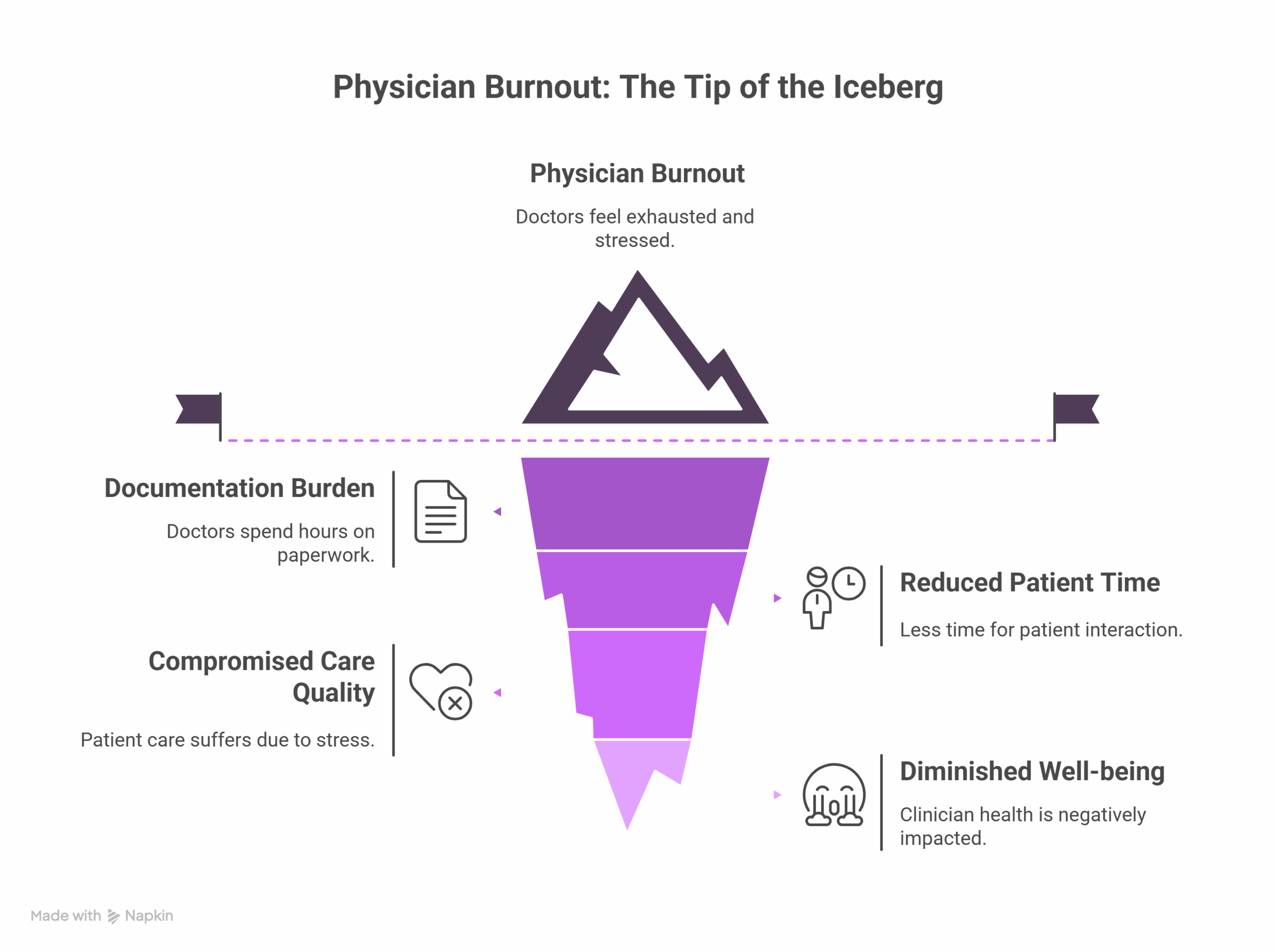
Few problems in modern medicine are as well documented--ironically--as documentation itself. Studies have found that for every hour physicians spend in contact with patients, they spend up to two hours working in the electronic health record (EHR), both during clinic hours and long after [1]. Physicians now devote more than half of their workdays to their computers, and the hours spent completing notes, orders, and reviews after normal working hours--colloquially known as "pajama time"--have steadily eroded job satisfaction, interfered with patient relationships, and pushed clinicians, particularly in primary care, out of practice altogether [2][3].
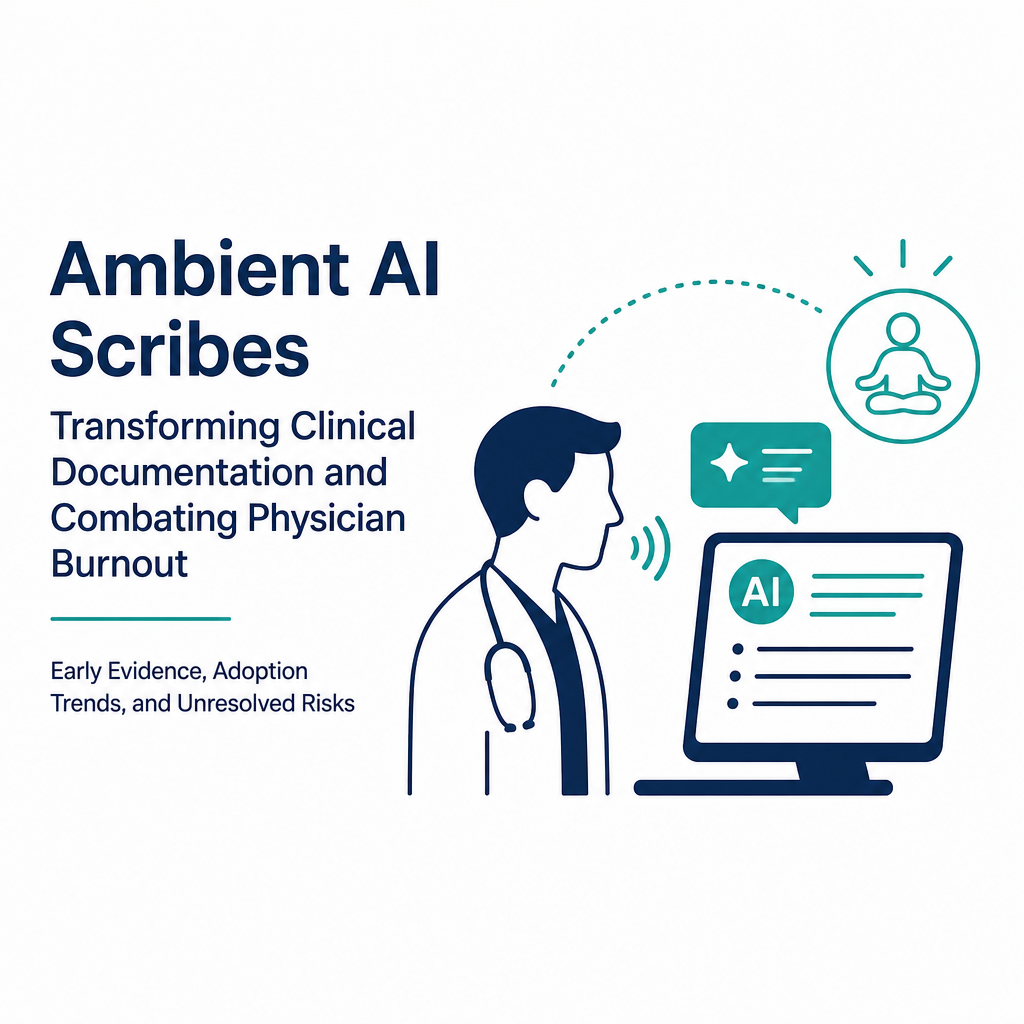
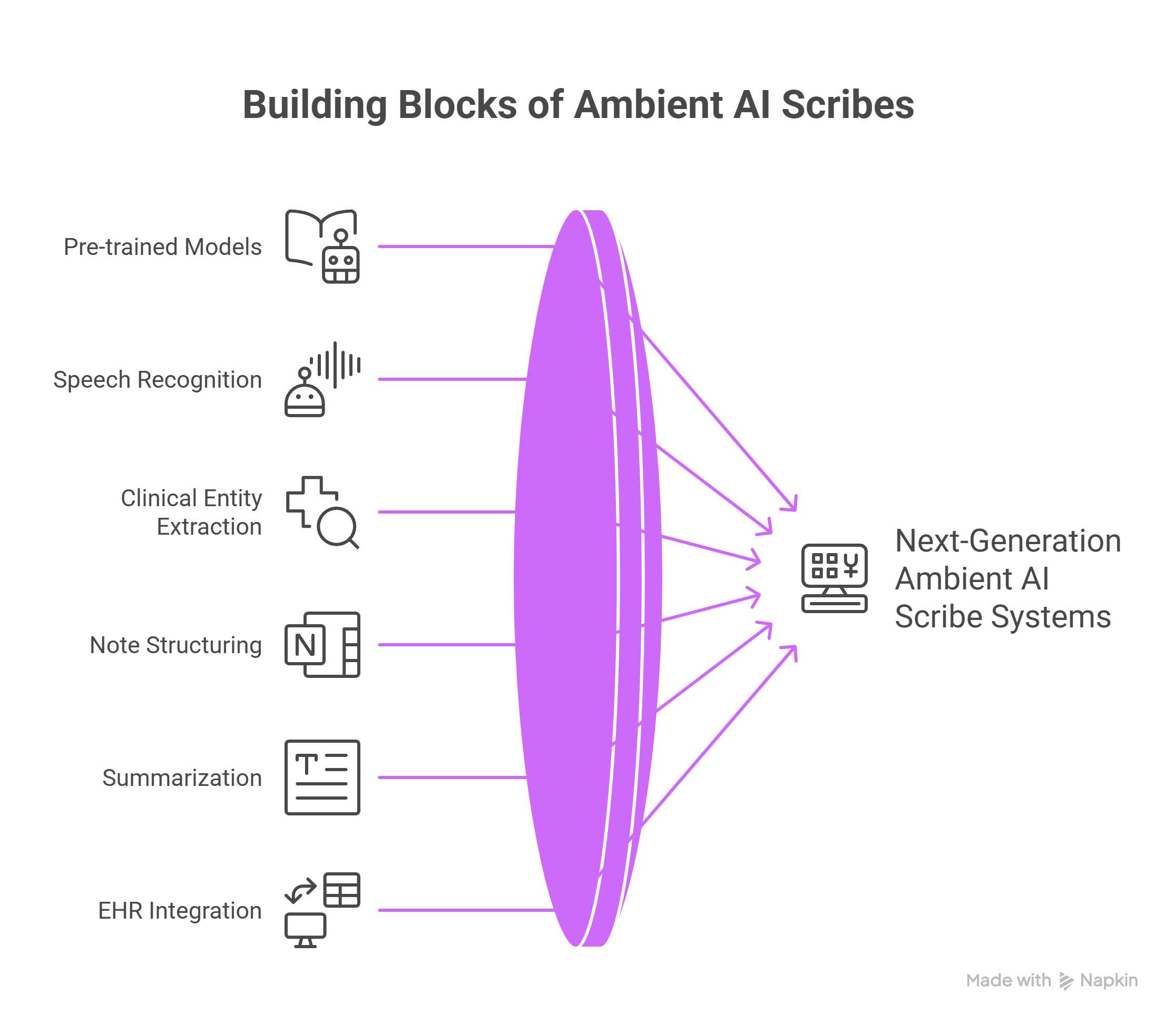
Into this crisis has stepped the ambient AI scribe: a technology that listens passively to the patient-clinician conversation and generates a draft clinical note for the clinician's review, revision, and approval [4]. Powered by automated speech recognition (ASR), natural language processing (NLP), and large language models (LLMs), these systems promise to un-tether clinicians from the keyboard, restore face-to-face interaction, and reclaim precious personal time [5]. Adoption has been extraordinary--roughly 30% of physician practices now use AI scribes, with major EHR vendors embedding the capability directly into their platforms [6].
But the speed of adoption has outpaced validation, transparency, and regulatory oversight [6]. While early evidence shows meaningful gains in efficiency and even reductions in measured burnout, researchers caution that time savings alone do not guarantee relief from the deeper cognitive and emotional drivers of exhaustion--and that questions of accuracy, consent, privacy, and governance remain fundamentally unresolved [1][4]. This article examines what the early evidence actually shows, how adoption is unfolding, and where the risks lie.
 Ambient AI Scribes: Redefining Clinical Documentation & Burnout - John Snow Labs
The Documentation Crisis Behind Physician Burnout
Understanding why AI scribes have generated such enthusiasm requires understanding the scale of the problem they target. The EHR, originally heralded as a modernization tool, has become a primary driver of physician dissatisfaction. Part of the problem lies with the systems themselves: EHRs were built primarily to support billing and compliance rather than clinical care, meaning clinicians spend enormous effort producing documentation that serves regulatory and reimbursement purposes rather than the patient in front of them [1]. Reducing this charting load has direct potential to decrease cognitive load and improve clinician well-being [1].
The consequences extend beyond individual frustration. Physician burnout has been described by the American Medical Association as a public health crisis, with downstream effects on workforce retention, patient access, and quality of care [7]. Time spent outside normal hours completing documentation has become one of the most persistent and corrosive contributors [2]. Any technology that credibly promises to shrink that burden is therefore guaranteed an eager audience--which is precisely what the market has delivered.
How Ambient AI Scribes Work
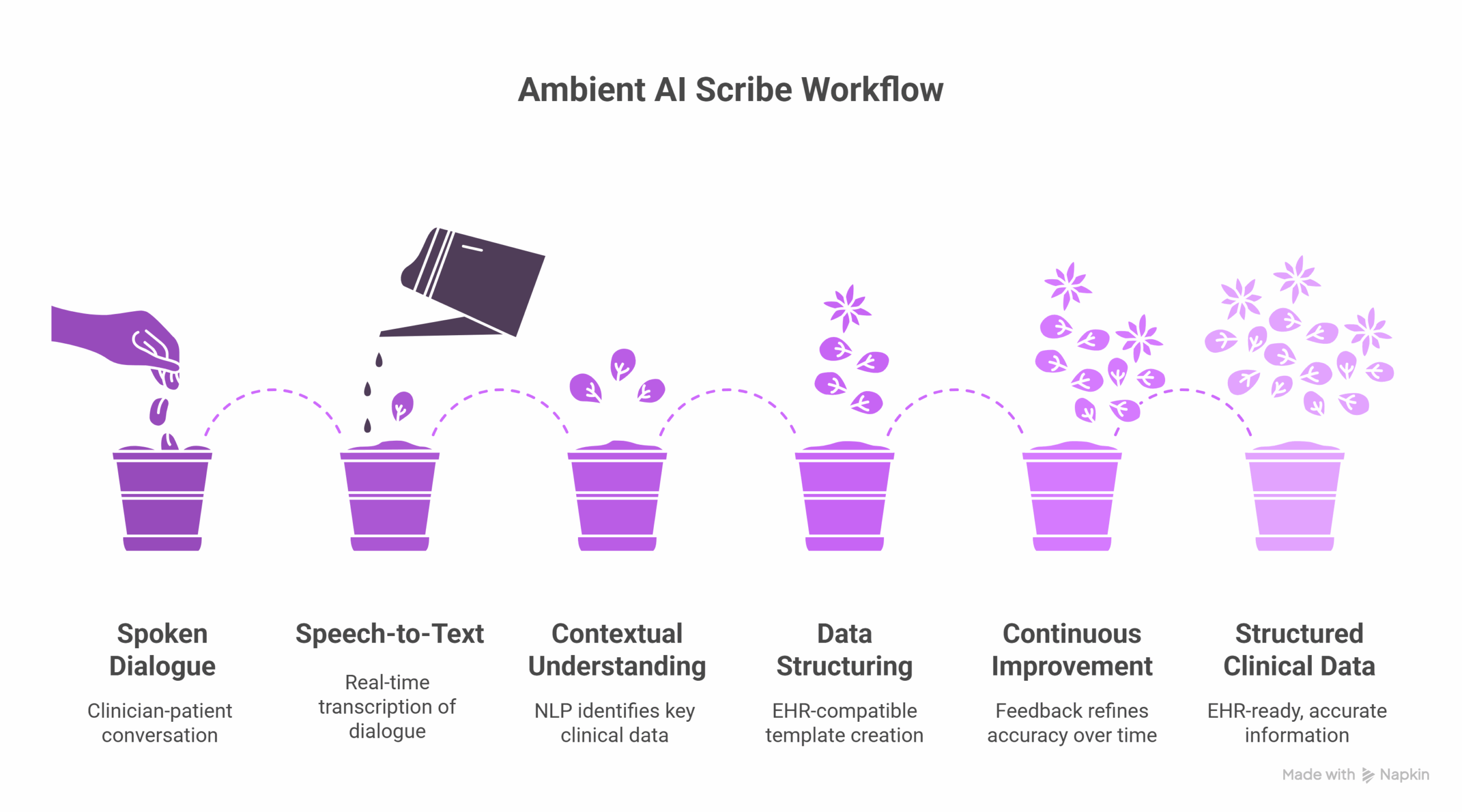
From Conversation to Structured Note
Unlike clinical decision support tools, ambient AI scribes do not offer diagnoses or treatment suggestions. Instead, they passively capture the visit conversation and produce a draft of the clinical note, which the physician must edit and approve before it enters the medical record [2]. Systems such as Nuance's Dragon ambient eXperience (DAX) combine automated speech recognition to transcribe the dialogue, natural language processing to interpret it, and generative AI to convert the raw provider-patient conversation into structured notes--often in the standard SOAP format (Subjective, Objective, Assessment, and Plan)--with minimal manual input [5].
The appeal, as Yale's Dr. Allen Hsiao puts it, is that "ambient AI... allows technology to fade into the background and allows care to come to the foreground," relieving physicians of the need to concentrate on screens and typing so they can focus fully on the patient [3].
A Fragmented Technology Landscape
Not all scribes are built alike. Some operate as standalone third-party applications that require manual transfer of content into EHR systems, while others integrate directly into major EHR platforms for seamless workflow. Processing approaches also differ: some tools offer real-time ambient listening during the encounter, while others process recorded conversations after the visit ends [6]. These design differences matter enormously for implementation, as workflow friction can determine whether efficiency gains actually materialize in practice.
 Transforming clinical documentation with ambient artificial intelligence (AI) scribes: a narrative review of technology, impact, and implementation - PMC
Early Evidence: What the Data Actually Shows
Time Savings and Efficiency
The most consistent finding across studies is measurable time recovery. Early studies broadly show documentation reductions in the range of 20% to 30%, suggesting meaningful relief from EHR burden [1][6]. A large multisite study published in JAMA--conducted across five academic medical centers and reflecting real-world implementation rather than a controlled pilot--found that clinicians using ambient AI reduced total EHR time by 13.4 minutes per encounter, with documentation time specifically decreasing by 16 minutes per visit. Over a full clinic schedule, this translated into a modest productivity gain of 0.49 additional patient visits per week [8].
Smaller studies reinforce the pattern. A quality improvement study of 45 clinicians across 17 specialties--including nurse practitioners and physician assistants--found a median documentation reduction of 2.6 minutes per appointment and a 29.3% cut in after-hours EHR work. An observational study of 119 allied health professionals, such as physiotherapists and occupational therapists, documented a 33% reduction in documentation time [6]. At the health-system scale, The Permanente Medical Group reported aggregate documentation time savings of more than 15,700 hours for AI scribe users over one year compared with nonusers--equivalent to roughly 1,794 working days [2].
Burnout Reduction: The Headline Findings
The most striking early results concern burnout itself. A quality improvement study of 263 physicians and nonphysician providers across six health systems--widely regarded as the first large, multicenter evaluation of AI scribes' effect on clinician experience--found that after just 30 days of use, burnout among ambulatory clinicians decreased significantly from 51.9% to 38.8%, representing 74% lower odds of experiencing burnout. Researchers also documented significant improvements in cognitive task load, after-hours documentation time, focused attention on patients, and even urgent access to care [7][3]. An invited commentary in JAMA Network Open noted the results were robust when controlling for demographic and site characteristics, with a net burnout reduction of 13.9 percentage points and a 6.2-point reduction in severe burnout across 186 clinicians [7].
Beyond the numbers, clinicians consistently report a qualitative shift: the improvement in patient-physician interaction, with physicians feeling genuinely more present during clinical encounters, is among the most reliably reported benefits [4][2]. Early adopters interviewed by the Peterson Health Technology Institute report the tools likely improve clinician burnout, and may enhance patient experience as well [9].
 Ambient AI Scribes: Redefining Clinical Documentation & Burnout - John Snow Labs
Adoption Trends: A Historic Ramp-Up
The scale of implementation is striking. One large healthcare system reported more than 7,000 physicians using AI scribes across over 2.5 million patient encounters in just 14 months, while Yale New Haven Health has more than 1,000 physicians regularly using the technology in clinical practice [6][3]. Major EHR vendors have integrated ambient documentation capabilities directly into their platforms, further accelerating uptake. According to the Peterson Health Technology Institute, adoption of ambient scribes by hospitals and provider groups is on track to be one of the fastest in recent healthcare history [6][9].
Notably, adoption is expanding beyond physicians. Because nurses and other healthcare professionals dedicate substantial time to documentation, researchers argue they could benefit from similar efficiency gains--and early studies of nurse practitioners, physician assistants, and allied health professionals already show promising results [6]. However, health system leaders caution that gaps remain in the evidence regarding productivity and financial performance; while clinical benefits appear real, the return on investment is still unclear, and savings may only be realized over time as technology and implementation mature [9].
The Limits of Efficiency: Why Time Saved Isn't Burnout Cured
Here the early evidence becomes more cautious. Burnout is a multidimensional phenomenon driven by loss of autonomy, moral distress, workload volume, and the erosion of meaning in work--not merely by minutes spent typing. As analysts at IHS note, reclaimed time may simply be absorbed by additional clinical or administrative demands rather than translated into genuine cognitive relief [1]. The JAMA multisite finding that clinicians used some recovered time to see 0.49 more patients per week illustrates the double-edged nature of efficiency: productivity gains can quietly become productivity expectations [8].
This is why experts increasingly frame AI scribes as a productivity tool rather than a comprehensive burnout solution. Outcomes vary depending on implementation and workflow design, and whether reclaimed time is protected from reassignment appears to be a decisive factor in whether clinicians actually feel relief [1]. The authors of the JAMA Network Open commentary put it plainly: "Using new technology to fix burnout created by older technology will require a concerted effort, including partnerships between health systems and industry" [7]. In other words, the technology is necessary but not sufficient; organizational commitment to protecting clinicians' time is what converts efficiency into well-being.
Unresolved Risks: Accuracy, Privacy, and Governance
Accuracy, Hallucination, and the Need for Review
The benefits documented so far are counterbalanced by persistent concerns about the accuracy, consistency, language use, and style of AI-generated notes. Studies documenting errors, omissions, and hallucinations caution that diligent clinician review remains non-negotiable [4]. In a field where even small documentation errors can have downstream consequences for patient care, oversight and validation are essential--a point emphasized in the World Health Organization's governance framework for clinical AI [8]. Review itself, however, takes time; if AI drafts require heavy editing, part of the promised efficiency erodes.
Consent, Privacy, and Regulatory Gaps
Beyond accuracy, adoption raises unresolved issues involving patient consent, data privacy, and regulatory compliance [1]. Unlike traditional human scribes, AI scribes passively record sensitive conversations at scale, raising questions about how patients are informed, how audio is stored and processed, and how vendors handle protected health information. Critics note that the speed of adoption has outpaced validation, transparency, and regulatory oversight [6]--a governance gap that health systems will need to close deliberately if the technology's long-term value is to be secured. Existing studies have also not fully addressed questions of equity and reliability across diverse patient populations, dialects, and clinical settings [5].
 Ambient AI Scribes: Redefining Clinical Documentation & Burnout - John Snow Labs
Conclusion: A Productivity Tool, Not a Panacea
The early evidence on ambient AI scribes tells a genuinely encouraging story: measurable documentation savings of 20-30%, multicenter reductions in burnout of nearly 14 percentage points within a month of adoption, tens of thousands of clinician-hours recovered, and a widely reported restoration of the human side of medicine [7][8][2]. At leading systems, the technology has already demonstrated that it is not a futuristic ideal but a present-day solution with human-centered benefits [2].
Yet the same evidence counsels restraint. Burnout reductions remain early and potentially fragile--dependent on whether reclaimed time is protected rather than reallocated--and the technology's risks, from hallucinated note content to unresolved questions of consent and privacy, are far from settled [1][4][6]. The consensus emerging across the literature is that AI scribes are best understood as powerful productivity tools whose ultimate value will depend less on raw efficiency gains than on whether their deployment is paired with deliberate changes in workflow, governance, and organizational culture [1]. Technology helped create this crisis; whether technology, guided wisely, can help resolve it remains the defining question of the next phase of adoption.
References
- 1.
- 2.
- 3.
- 4.
- 5.
- 6.
- 7.
- 8.
- 9.