Introduction
Few drug classes have experienced the dramatic trajectory of the glucagon-like peptide-1 receptor agonists (GLP-1 RAs). Originally developed for the management of type 2 diabetes, agents such as liraglutide, semaglutide, and tirzepatide have transformed obesity medicine, delivering clinically meaningful weight loss of 15-20% in many clinical trials [1]. Yet the story of these medications is no longer one of glucose control or weight reduction alone. Researchers are now evaluating GLP-1 RAs for a strikingly diverse range of conditions -- cardiovascular disease, chronic kidney disease, metabolic liver disease, obstructive sleep apnea, osteoarthritis, polycystic ovary syndrome, neurodegenerative disease, and substance use disorders [1].
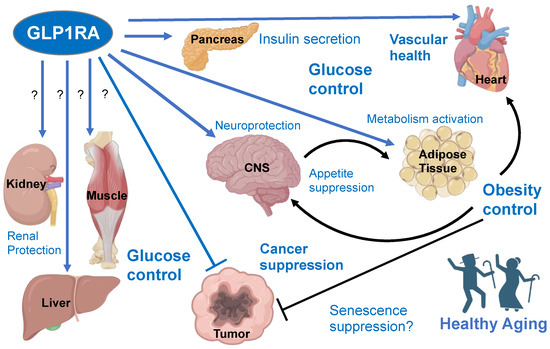
This expansion is not incidental. GLP-1 is a naturally occurring incretin hormone with receptors distributed far beyond the pancreas -- in the brainstem, hypothalamus, and mesolimbic reward circuitry, as well as in vascular tissue and the heart. This widespread receptor expression explains why a single drug class can influence appetite, reward-seeking behavior, inflammation, and cardiovascular physiology simultaneously. As one review noted, the therapeutic potential of GLP-1 RAs "extends to a range of conditions such as cardiovascular disease, liver disease, neurodegenerative disease, and substance abuse disorders" [1].
This article evaluates the evidence behind three of the most consequential frontiers for GLP-1 RAs: cardiology, where the class has arguably already earned its place in treatment guidelines; addiction medicine, where early data suggest a fundamentally new mechanism for curbing cravings; and Alzheimer's disease, where neuroprotective properties are being explored against one of medicine's most stubborn adversaries.
 GLP-1 Agonists For Obesity In Non-Diabetic Patients: Game Changer Or Overhyped? A Critical Analysis GlobalRPH
A Brief Pharmacological Foundation
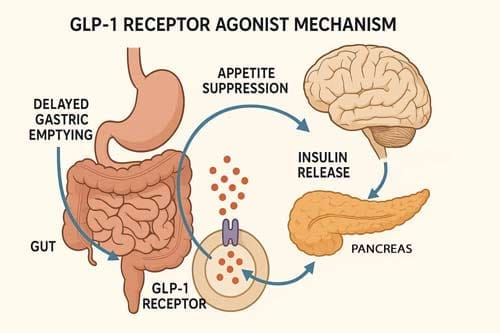
Understanding why GLP-1 RAs keep surfacing in new therapeutic areas requires a look at their mechanism. GLP-1 RAs mimic the incretin hormone GLP-1, stimulating insulin secretion in a glucose-dependent manner, suppressing glucagon, slowing gastric emptying, and acting on central appetite centers to promote satiety [2]. In practice, doses are titrated slowly to mitigate gastrointestinal effects, with rapid dose changes being a common trigger of nausea and intolerance [2].
Beyond these core actions, the class exhibits "extended physiological effects" with anti-inflammatory and neuroprotective properties that underpin many of the emerging applications discussed below [2][3]. Common adverse effects remain largely gastrointestinal, though less common but more severe risks -- including gallstones, gastroparesis, pancreatitis, and bowel obstruction -- have been documented and warrant clinical vigilance [2].
Cardiology: The Most Mature New Frontier
Landmark Outcome Trials
Of all the expanded indications for GLP-1 RAs, cardiovascular medicine rests on the firmest evidentiary foundation. Landmark cardiovascular outcome trials (CVOTs) -- including LEADER, SUSTAIN-6, and SELECT -- have demonstrated substantial reductions in major adverse cardiovascular events (MACE), heart failure events, and stroke [4]. These trials have established GLP-1 RAs as essential treatment options for patients with type 2 diabetes at high cardiovascular risk, and, critically, the SELECT trial extended benefits to patients with obesity but without diabetes -- signaling a role far beyond glycemic care [4].
The mechanistic explanation for these benefits is multifactorial. GLP-1 RAs display anti-atherogenic and anti-inflammatory effects, endothelial protection, and direct cardioprotective properties -- effects that operate alongside, and independently of, weight loss itself [4].
Heart Failure: A New Therapeutic Niche
Heart failure management is evolving alongside a deeper understanding of how metabolic dysfunction drives cardiac pathology, particularly in heart failure with preserved ejection fraction (HFpEF) associated with obesity. GLP-1 RAs improve weight, hemodynamic load, endothelial function, blood pressure, and systemic inflammation -- a convergence of effects that has proven clinically meaningful [5]. While early CVOTs provided positive signals, dedicated HFpEF trials confirmed efficacy in patients with obesity and/or diabetes, showing significant improvements in weight, heart failure symptoms, and heart failure events [5]. Current evidence now "strongly supports GLP-1 RAs in patients with HFpEF and obesity, with or without type 2" diabetes [5].
Clinical cardiology observers noted in 2025 that the class had decisively "established a role in cardiology," offering new hope for heart failure and related conditions well beyond the initial weight loss indication [6]. The dual GLP-1/GIP agonist tirzepatide demonstrates especially potent efficacy, and researchers are exploring precision medicine strategies to match patients with the therapies most likely to benefit them [4].
Emerging Signals in Inflammatory Disease
Recent data suggest the cardiovascular benefits may extend even to complex patient populations. An American Heart Association-reported analysis found GLP-1-based medications linked to fewer heart events in adults with obesity and coexisting autoimmune disease, including a striking 44% reduction in all-cause mortality. Obesity medicine researcher Fatima Cody Stanford described the finding as evidence that the drugs' benefits "extend well beyond blood sugar control and weight loss and may fundamentally alter the disease trajectory for some of our highest-risk patients" [7].
 Frontiers | Exploring the multifaceted roles of GLP-1 receptor agonists; a comprehensive review
Addiction Medicine: Quiet Signals of a New Mechanism
The Dopamine Hypothesis
One of the most intriguing frontiers for GLP-1 RAs lies in addiction. The connection is mechanistically intuitive: one way these drugs promote weight loss is by quieting the brain's urge to overeat through enhanced satiety signaling. Researchers suspected that the same circuitry could dampen cravings for substances ranging from alcohol to cocaine to opioids [8].
The underlying biology centers on the mesolimbic reward system. "We know dopamine is one of our main reward neurotransmitters," explains Patricia Grigson of Penn State College of Medicine, who is co-leading a study of GLP-1 RAs in opioid use disorder (OUD). "It's released when we consume food, alcohol, nicotine, etc. GLP-1 blocks that dopamine peak" [8]. Preclinical research supports this model, demonstrating that GLP-1 RAs influence addiction primarily by reducing dopaminergic activation in brain reward pathways [3].
From Food Cravings to Opioid Use Disorder
Early clinical and observational signals are provocative. A recent observational study found that after four months of treatment with semaglutide, the prevalence of food addiction in people with obesity fell from 57.5% to 4.2%, with significant improvements also seen in binge eating disorder [3]. A retrospective analysis of nearly 6,000 social media threads and comments about GLP-1 RAs found that over one in five commenters reported cessation of compulsive shopping, hinting at effects that may extend to behavioral addictions [3].
The most consequential research, however, targets opioid use disorder -- a disease that killed roughly 87,000 people in the United States in 2024. Co-investigator Scott Bunce frames the opportunity with measured optimism: for opioid use disorder, medicine currently has just three approved medications, compared with roughly 30 for depression. "It's a big difference, having this medicine that works on a different mechanism," he notes. "Is it going to work for everybody? No. But is it going to be useful for a lot of people? Yes, and we need it" [8].
Caveats remain substantial. Alcohol use disorder in particular presents a major treatment challenge with limited pharmacological options, and while GLP-1 RAs show anti-inflammatory and reward-modulating properties that suggest potential, experts emphasize the need for larger clinical trials to clarify mechanisms, long-term safety, and efficacy before the class can be recommended for addiction treatment [3].
 GLP1 Receptor Agonists--Effects beyond Obesity and Diabetes
Alzheimer's Disease: The Neuroprotective Gamble
The prospect of GLP-1 RAs slowing cognitive decline remains more speculative, but the biological rationale is compelling. Beyond controlling satiety and curbing cravings, the GLP-1 hormone appears to play a role in regulating inflammation and preventing cell death -- two processes central to neurodegeneration and cognitive impairment [8].
"I'm certainly open to the possibility that these kinds of drugs can have an impact on cognition and aging," says Ronald Petersen, director of the Mayo Clinic Alzheimer's Disease Research Center, citing the plausibility that these agents could "slow the rate of progression" through multiple mechanisms [8]. Preclinical work has explored GLP-1 RAs against the core pathology of Alzheimer's disease for years, and cardiovascular researchers have also flagged potential benefits for vascular dementia [2][4].
Still, Alzheimer's is a humbling field where promising mechanisms have repeatedly failed in late-stage trials. Given that anyone experiencing dementia-like symptoms is urged to seek evaluation early -- when intervention can meaningfully affect quality of life [9] -- the stakes for rigorous GLP-1 trials in this space are high. Dedicated human outcome trials remain the critical next step before any clinical claims can be made.
Challenges, Safety, and the Equity Question
The enthusiasm surrounding GLP-1 RAs must be tempered by unresolved questions. Early concerns regarding pancreatic and thyroid cancer have been largely attenuated by recent evidence, but other issues -- gallbladder and biliary disorders, psychiatric safety, and perioperative aspiration risk -- require ongoing investigation [1].
Durability is another concern. Observations of weight regain after treatment discontinuation and reductions in lean mass highlight the need for long-term, individualized strategies to sustain clinical benefits [1]. In cardiology, the very breadth of the class's effects complicates treatment algorithms, and implementation challenges persist alongside questions of long-term safety [4].
Perhaps the most pressing issue is economic. The high cost and limited access to these medications raise critical policy and equity challenges that experts in both cardiology and general medicine have flagged as central to any widespread expansion of use [1][4]. If GLP-1 RAs genuinely alter disease trajectories in heart failure, addiction, and dementia, questions about who can afford them will become only more urgent. Future research must address these gaps directly -- focusing on long-term safety, optimizing combination approaches, and evaluating the broader clinical and economic implications of widespread use [1].
Conclusion
The GLP-1 receptor agonist story illustrates a rare phenomenon in pharmacology: a drug class designed for one disease revealing itself as a systems-level therapy. In cardiology, the evidence is already mature -- landmark trials like LEADER, SUSTAIN-6, and SELECT have secured GLP-1 RAs a role in managing cardiovascular risk, and dedicated HFpEF studies have extended their reach into heart failure [4][5]. In addiction medicine, the dopamine-modulating mechanism offers something genuinely novel, though larger trials are needed before cautious optimism becomes clinical practice [8][3]. In Alzheimer's disease, anti-inflammatory and neuroprotective properties provide a plausible rationale, but proof awaits rigorous human data [8].
What unites these frontiers is the recognition that GLP-1 biology touches appetite, reward, inflammation, and vascular health simultaneously. Whether these medications can fulfill their expansive promise will depend on the next generation of trials -- and on whether health systems can make a demonstrably powerful drug class accessible to the patients who need it most.
 The expanding role of GLP-1 receptor agonists: a narrative review of current evidence and future directions - eClinicalMedicine
References
- 1.
- 2.
- 3.
- 4.
- 5.
- 6.
- 7.
- 8.
- 9.