Introduction
The global push to mitigate climate change has given rise to a complex web of environmental regulations, carbon markets, and sustainability reporting mandates. As governments and financial institutions demand stricter adherence to environmental, social, and governance (ESG) standards, the sheer volume of data required to verify compliance has outstripped human analytical capacities. In response, artificial intelligence has emerged as a critical infrastructure for climate governance, moving from theoretical research models into operational decision-making environments [1][2].
Algorithmic climate governance represents a paradigm shift in how humanity monitors, verifies, and enforces environmental commitments. By leveraging machine learning, remote sensing, and advanced data analytics, AI systems are being deployed to detect greenwashing, verify carbon credits, and parse intricate legal frameworks. From the boardrooms of corporations complying with the EU's Corporate Sustainability Reporting Directive (CSRD) to international climate summits like COP28, AI is increasingly viewed as an essential mediator between environmental promises and physical realities [3][1].
Yet, this technological revolution brings profound challenges. The integration of AI into environmental governance is advancing faster than the regulatory policies needed to govern the algorithms themselves. As AI begins to shoulder the burden of climate enforcement, critical questions regarding transparency, algorithmic bias, and the technology's own ecological footprint demand urgent attention [2][4].
Automating ESG Compliance and Eradicating Greenwashing
For years, the integrity of ESG reporting has been undermined by inconsistent methodologies, subjective metrics, and deliberate greenwashing. Algorithmic ESG verification is fundamentally altering this landscape by introducing an automated, systematic process to confirm the reliability and accuracy of sustainability data [5]. Rather than relying solely on self-reported corporate disclosures, these computational systems perform rigorous cross-sectional and time-series analyses, comparing reported metrics against physical data derived from remote sensing, transactional records, and public regulatory filings [5].
The expanding scope of global ESG regulations is the primary catalyst for this shift. Mandates such as the EU's CSRD and the U.S. SEC's climate disclosure rule require enterprises to collect, verify, and disclose extensive non-financial data spanning emissions, supply chain practices, and governance structures [3]. To meet these demands, companies are deploying AI-powered platforms that integrate data from energy meters, supplier compliance records, and waste tracking systems into centralized hubs [3]. By detecting anomalies, inconsistencies, and statistical deviations that signal potential data manipulation, algorithmic verification combats greenwashing and enhances the informational integrity of sustainability metrics for investors and regulators [5].
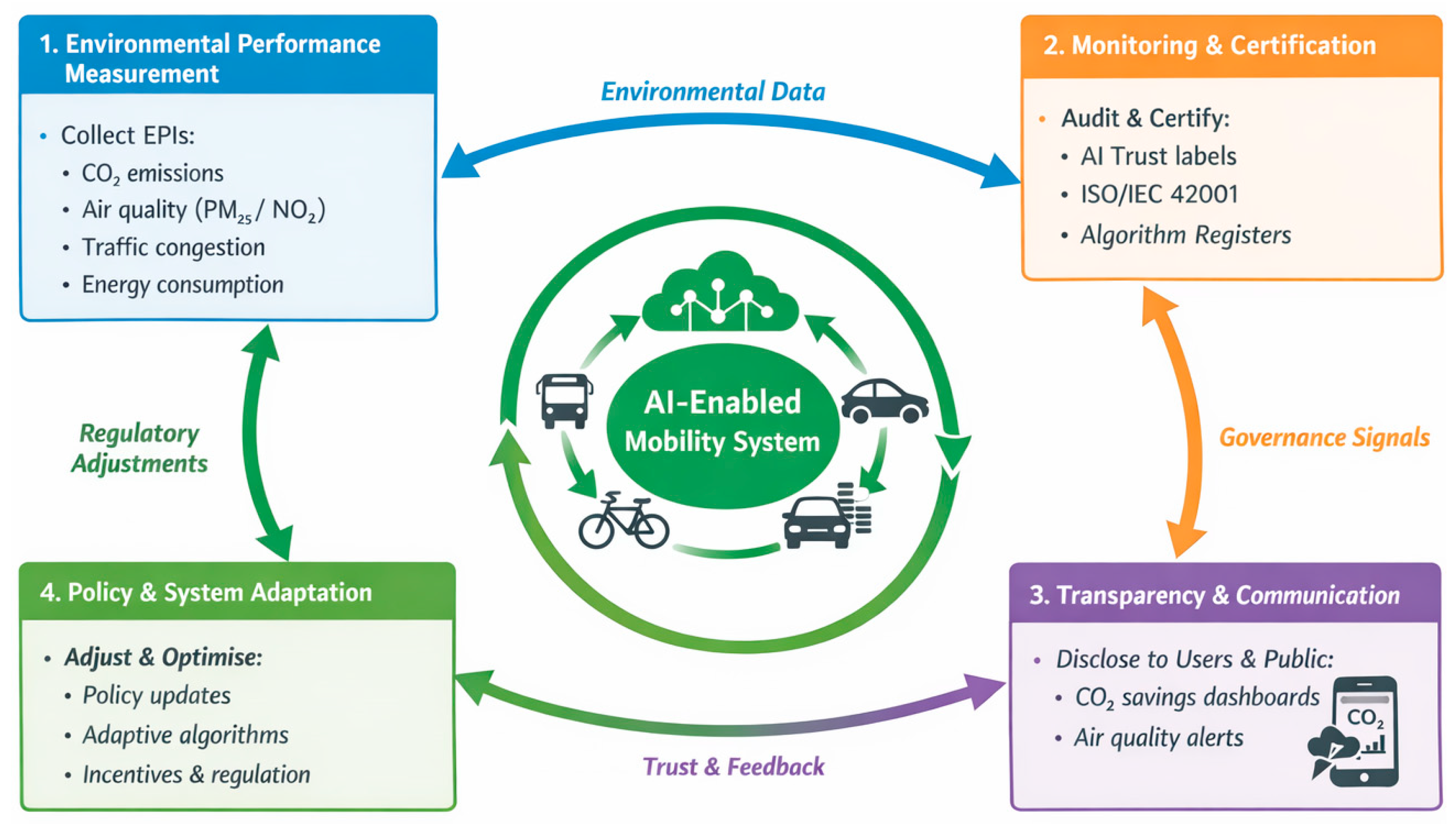 Systems Governance for Trustworthy AI: A Framework for Environmental Accountability
Enhancing Carbon Market Verification Through Remote Sensing
Carbon markets are highly susceptible to fraud, where phantom carbon credits or exaggerated emission reductions undermine the integrity of global climate finance. AI is proving indispensable in improving the Monitoring, Reporting, and Verification (MRV) processes that underpin these markets. By distilling vast amounts of raw, unstructured data into actionable information, AI can scale up annotations and analyses that would be prohibitively laborious for humans to perform [6].
A primary mechanism for this is the integration of AI algorithms with remote sensing technologies. AI systems can analyze high-resolution satellite imagery to monitor greenhouse gas emissions, pinpoint deforestation, and identify areas vulnerable to environmental degradation [6]. These real-time insights are crucial for verifying compliance with emission reduction commitments and understanding specific emission sources. For instance, AI-enhanced robots and drone networks are being deployed to detect hazardous gases like CO2 and methane in uneven environments with high accuracy, mapping gas locations in real-time to validate or refute carbon offset claims [1].
These technological capabilities are increasingly vital as the architecture of global carbon accounting evolves. Recent moves by standard-setters, such as the GHG Protocol and ISO, to consolidate corporate-level greenhouse gas accounting into a single, harmonized global standard will rely heavily on AI to process and audit the resulting massive datasets [7]. By establishing an immutable, data-driven trail of physical emissions, AI effectively serves as an independent auditor in volatile carbon markets.
AI in Environmental Policy Enforcement and Decision-Making
Beyond corporate compliance, AI is reshaping how governments formulate and enforce environmental policy. This shift is giving rise to what researchers term "eco-algorithmic governance"--an approach that uses AI and the Internet of Things (IoT) as predictive systems to monitor industrial impacts, turning environmental data into measurable, actionable information [8]. Government agencies are increasingly utilizing AI to manage high-volume workloads, applying risk-based principles to target enforcement actions and inspections where they are most needed [2].
In the realm of policy formulation, AI agents are being tested for their ability to navigate complex governance documents. New benchmarking frameworks evaluate AI's capacity for treaty interpretation, socio-political analysis, and adaptation policy reasoning using datasets grounded in UN Sustainable Development Goals and IPCC assessment pathways [9]. By analyzing comprehensive datasets on climate impacts and societal vulnerabilities, these systems support evidence-based policymaking, aiding governments in developing regulations that address localized challenges [1].
However, the migration of AI into operational decision-making has occurred without a corresponding evolution in governance policies. Regulators are increasingly relying on sophisticated models that lack clear documentation regarding data inputs, assumptions, or uncertainty factors [2]. For regulated entities, this raises serious legal implications: if an AI-generated insight triggers an enforcement action, it remains unclear how that insight can be reproduced, authenticated, or contested in a court of law.
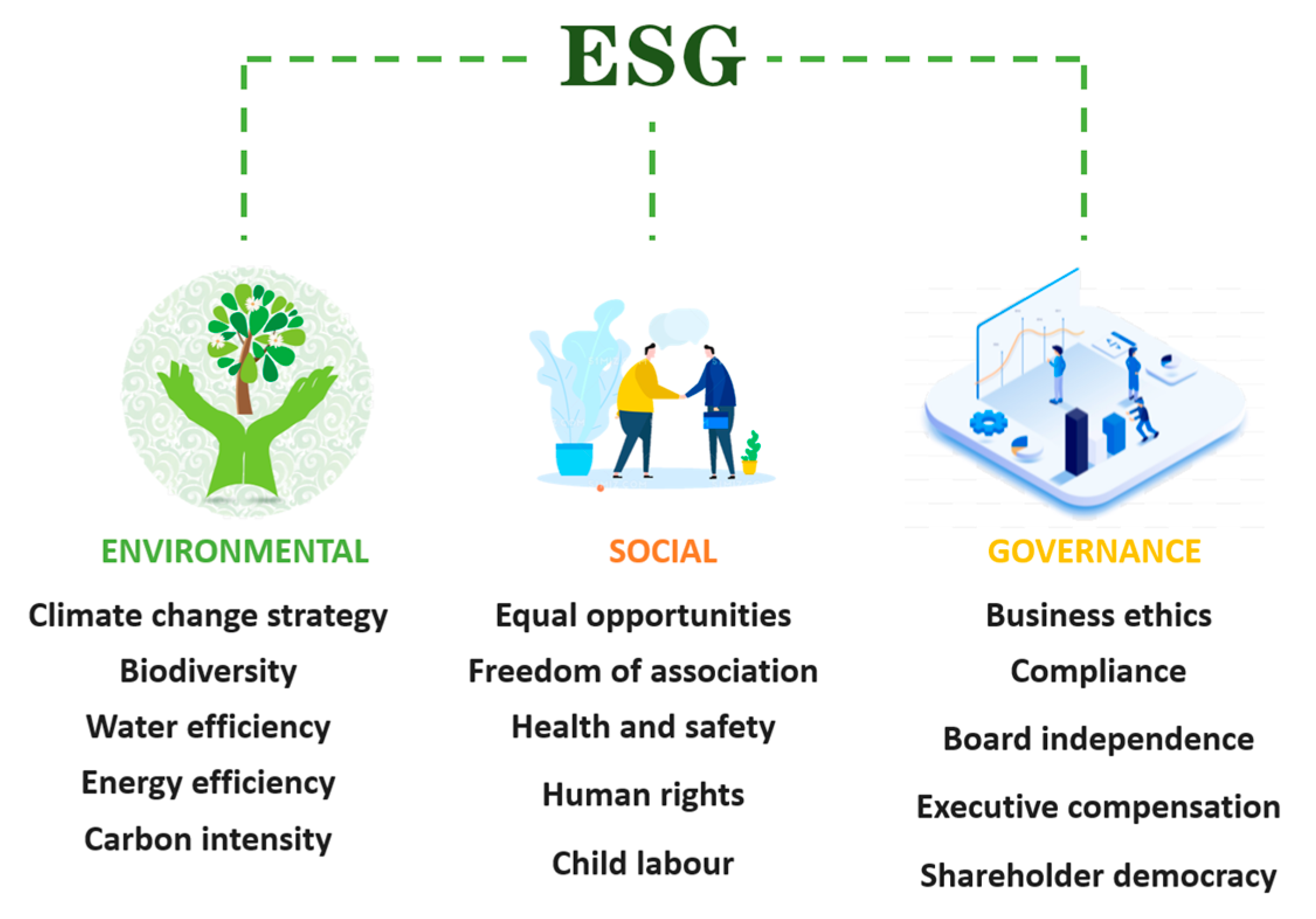 Evaluating the Influence of Environmental, Social, and Governance (ESG) Performance on Green Technology Innovation: Based on Chinese A-Share Listed Companies
The Governance Gap: Transparency, Bias, and Climate Justice
The rapid deployment of AI in climate governance has exposed a critical paradox: the technology used to enforce environmental accountability is itself operating in an accountability vacuum. A consistent theme across regulatory landscapes in 2025 is that AI adoption is accelerating far faster than the policy infrastructure needed to support it [2]. This temporal limitation means that current governance frameworks are provisional, potentially unprepared for the disruptions caused by next-generation autonomous AI agents [3].
Transparency is the most immediate hurdle. The opacity of AI models--often referred to as the "black box" problem--makes it difficult to determine whether algorithmic decisions are based on sound science or flawed training data [4]. Furthermore, biases in data and models can inadvertently prioritize certain groups or industries over others, limiting policy options and reducing public participation in environmental decision-making [8]. Without clear algorithmic impact assessments, similar to traditional environmental impact assessments, communities are left vulnerable to automated decisions that may lack contextual nuance [4].
Finally, the intersection of AI and climate justice cannot be ignored. While AI is a vital tool for reducing climate harm, the technology itself has a non-negligible environmental footprint. The ICT sector represents a growing percentage of global greenhouse gas emissions, driven by the computational energy, water, and materials required for both AI training and inference [6][4]. Without justice-centered policy guiding AI development, the adverse environmental externalities of training large models--coupled with the localized impacts of data centers--could disproportionately burden poor and marginalized communities, undermining the very goals of climate equity [4].
Conclusion
Algorithmic climate governance represents a transformative leap forward in humanity's ability to monitor emissions, enforce ESG compliance, and verify the integrity of carbon markets. By harnessing machine learning and remote sensing, regulators and financial institutions are finally gaining the upper hand against greenwashing and systemic data manipulation. Yet, the reliance on algorithmic systems to police the climate crisis is a double-edged sword.
As AI cements its role in environmental enforcement, the urgent priority for policymakers is not merely to expand the use of these tools, but to govern them effectively. Bridging the transparency gap, establishing standards for contestability, and mandating algorithmic impact assessments are essential steps to ensure that AI serves the public good. Ultimately, AI must be integrated into climate governance not as an autonomous authority, but as a collaborative instrument that enhances human oversight, scientific rigor, and global climate justice.
References
- 1.
- 2.
- 3.
- 4.
- 5.
- 6.
- 7.
- 8.
- 9.