Introduction
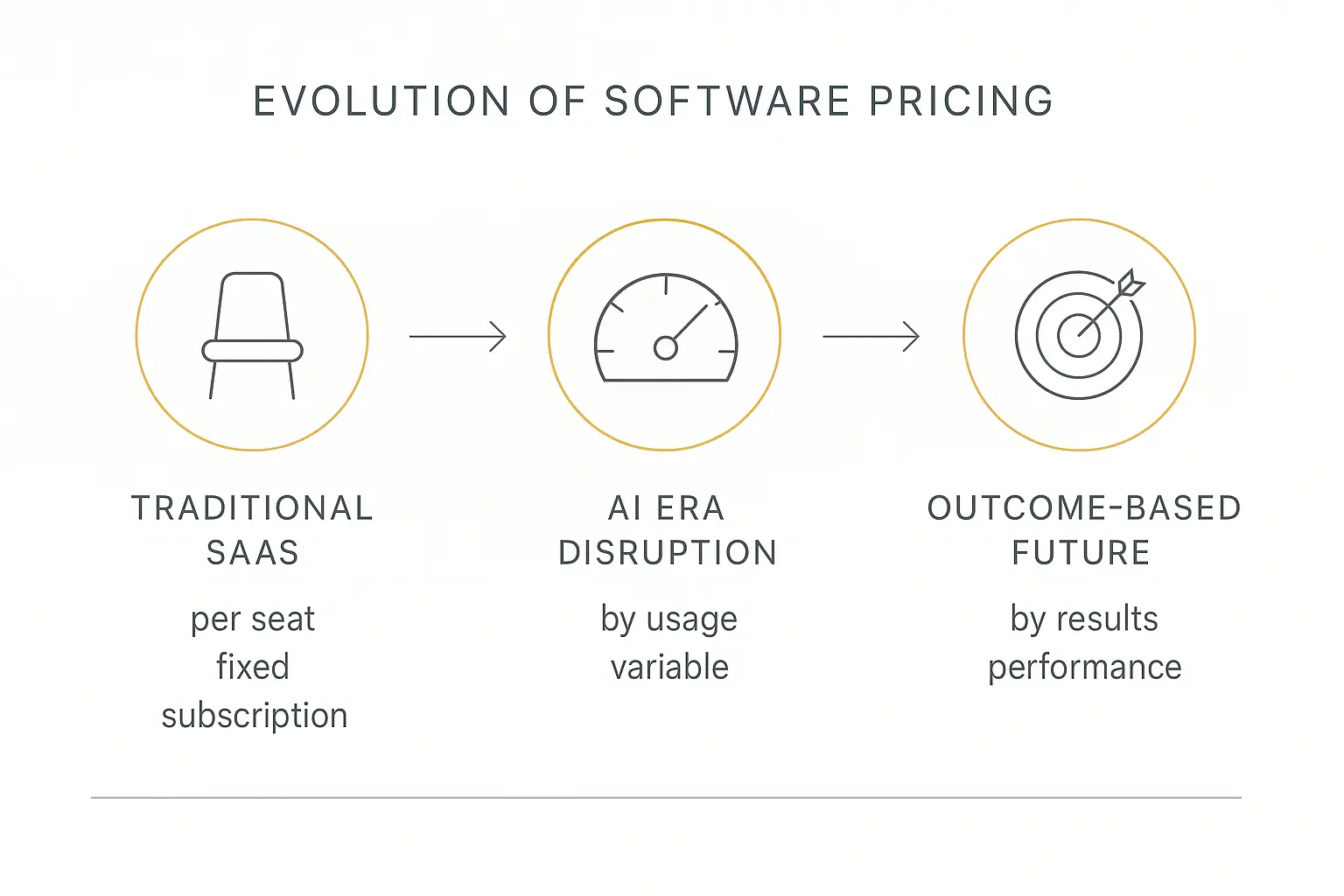
For two decades, the SaaS business model rested on a beautifully simple equation: one person equals one seat equals one predictable, recurring revenue stream. That equation financed an entire industry, powered software valuations, and made subscription revenue the most prized metric in enterprise technology. Agentic AI has just broken it. As autonomous AI systems move from passive tools to active agents that reason, decide, and act on a user's behalf, software is no longer something people log into--it is something that works independently, executing multi-step processes across systems without ever touching a user interface [1][2].
The consequences reach far beyond product design. When an AI agent resolves support tickets, processes invoices, or runs outbound sales sequences, the value delivered has nothing to do with how many humans hold licenses. Meanwhile, the cost side of the ledger has changed just as radically: every query, every tool call, and every reasoning step triggers variable compute spend that the vendor--not the customer--must absorb [3]. Flat-rate subscriptions and per-seat pricing, built on the assumption that serving the next customer costs roughly the same as the last, are failing on both the revenue and cost sides simultaneously [4][3].
This article examines the structural forces dismantling traditional SaaS pricing, the new monetization models emerging to replace them, and the difficult questions--around attribution, liability, and margin volatility--that the industry has yet to answer. What emerges is a picture of an industry in mid-transition: the old model is demonstrably broken, but the new one is still being invented in real time.
The Seat-Based Model Meets Its Breaking Point
The Math That No Longer Works
Traditional SaaS pricing assumes human-driven usage. Agentic AI shatters that assumption at both ends. A single customer may now run ten, a hundred, or a thousand agents, each generating variable workloads--and none of them occupying a seat in the billing model. Consider an AI sales development representative: a single deployment might send thousands of personalized outreach emails through a transactional email API and manage follow-ups across an entire prospect database, all without creating a single billable user [5].
The perverse result is that a customer extracting enormous value from the software may generate no additional revenue, while the vendor's compute spikes, API costs rise, and support burden grows. As Patrick Campbell, CEO of ProfitWell, puts it: "You can't just multiply a seat price by the number of agents. Resource use and value are no longer aligned" [5]. In effect, seat-based subscriptions hide the true value delivered by AI agents while exposing vendors to unbounded cost [5].
The problem becomes existential when agents successfully automate the very tasks that justified the seats. As RSM analysts note, if a vendor sticks to per-seat pricing while its product successfully automates the work of human users, it is "effectively engineering its own revenue decline"--the more the product succeeds, the less revenue it captures [6]. Outcome-based pricing, by contrast, removes the artificial ceiling that headcount imposes, allowing revenue to scale with the volume of work performed--invoices processed, tickets resolved, code generated--rather than the number of employees [6].
The Seat-Reduction Wave
This is not a hypothetical. Early deployments are already compressing seat counts across entire product categories. Sales development is a leading example: SDR teams were historically the heaviest users of sales engagement software, but one coordinated agent infrastructure can now do the work of an entire team. Back-office functions--accounts payable, data entry, compliance review, contract analysis--are being absorbed by agentic workflows operating inside existing systems without leaving a user footprint [7].
The speed and depth of compression vary by category. Some are seeing 30-40% seat reductions in the first wave of AI deployment; others are hitting the 80-90% threshold at which entire product categories become economically irrational to maintain [7]. Public markets have noticed: vendors with heavy per-seat enterprise exposure are experiencing valuation multiple compression and net revenue retention pressure, while early movers such as Salesforce and ServiceNow--which began transitioning their pricing models before the crisis hit--are better positioned to weather it [7].
 AI Is Driving A Shift Towards Outcome-Based Pricing (December 2024 Enterprise Newsletter) | Andreessen Horowitz
The Unit Economics Crisis Beneath the Surface
The Death of the Zero-Marginal-Cost Assumption
The deeper problem is not pricing aesthetics--it is unit economics. Classic SaaS economics assumed something close to zero marginal cost: once the software was built, serving the next customer cost roughly the same as the previous one, so flat-rate subscriptions produced expanding margins as the business grew. AI breaks that assumption at the foundation. Inference is variable and meaningful; every query, every agent action, every generated artifact triggers compute spend the seller pays for. When the pricing model doesn't track that variable cost, margin shrinks with adoption rather than expanding [3].
Agentic systems make this worse than copilots or chatbots, because agents dynamically choose their own tools and reasoning steps--and those decisions compound. A simple customer request may yield one visible result, but the vendor absorbs the cost of numerous internal inference calls to produce it [4].
The Hidden Cost Iceberg
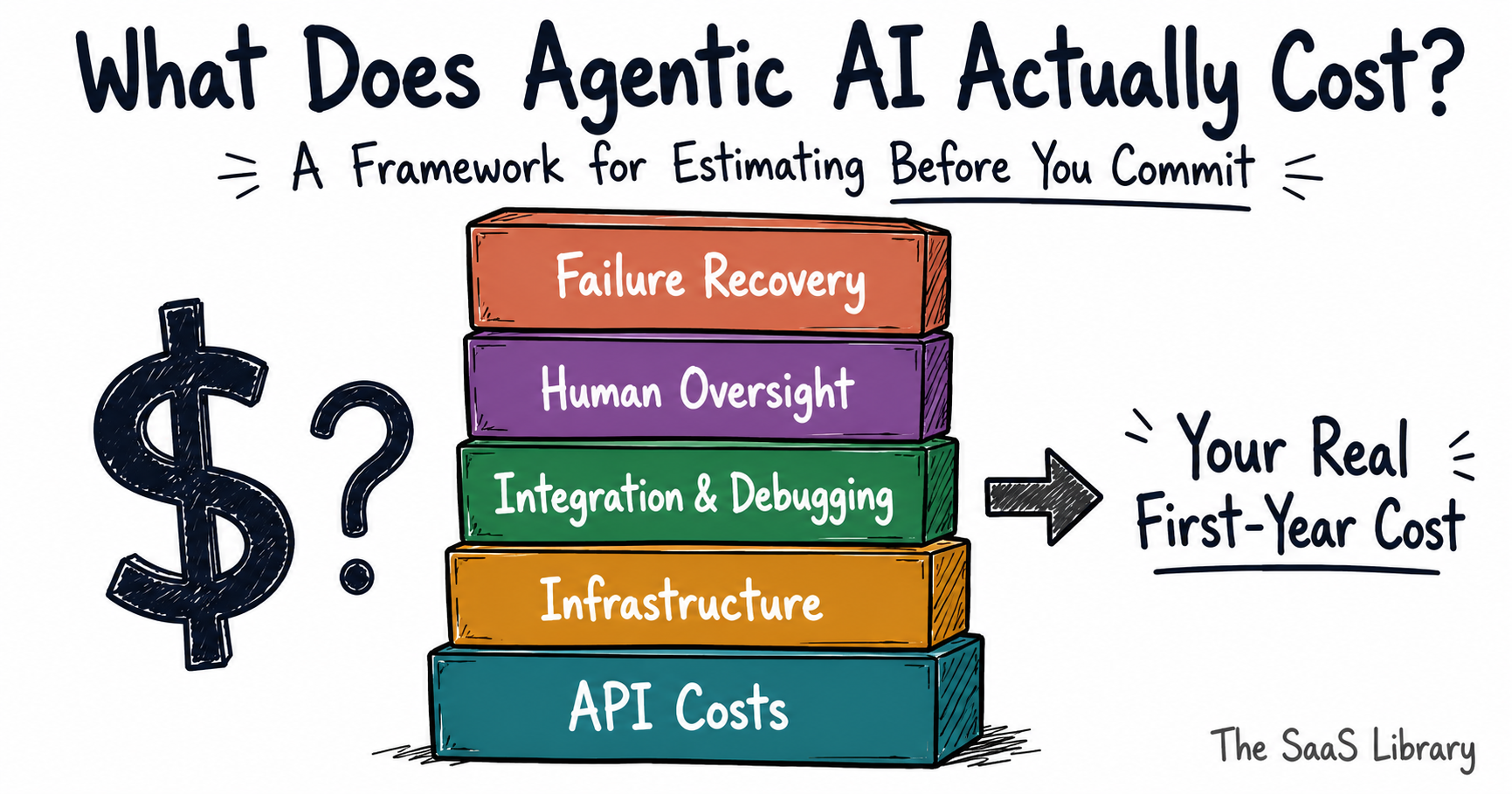
The visible model inference fee is only the tip of the iceberg. Beneath the surface sit memory and context storage, third-party API costs from tool calls, retries and error recovery, and the compute overhead of safety and guardrail systems [4]. Unlike traditional software, running an autonomous agent is fundamentally more expensive than hosting static code: every task requires computational power, API calls, and token processing [6].
The aggregate effect is what analysts are calling cost structure inversion. Infrastructure costs are now growing roughly four times faster than top-line revenue at AI-heavy SaaS companies. Without consumption-aligned pricing, even companies with healthy growing revenue see profitability collapse beneath the surface--and some customers become outright loss-leaders under per-seat billing [5]. Gross margins now fluctuate with usage intensity, making cost forecasting for finance teams nearly impossible [5].
 AI Agent Pricing Models Explained (2026) | Pickaxe
New Metrics for a New Reality
Unit economics this volatile demand new measurement. Industry analysts and practitioners are converging on metrics that track cost and value at the level of the individual agent run rather than the account: cost per resolved task, margin per agent run, and usage-adjusted lifetime value that incorporates actual usage distributions rather than assumed seat counts [4]. Vendors that cannot measure these numbers will struggle to price rationally--and to know which customers are profitable at all.
The New Pricing Playbook: Usage, Tasks, Outcomes, and Hybrids
A Spectrum of Alternatives
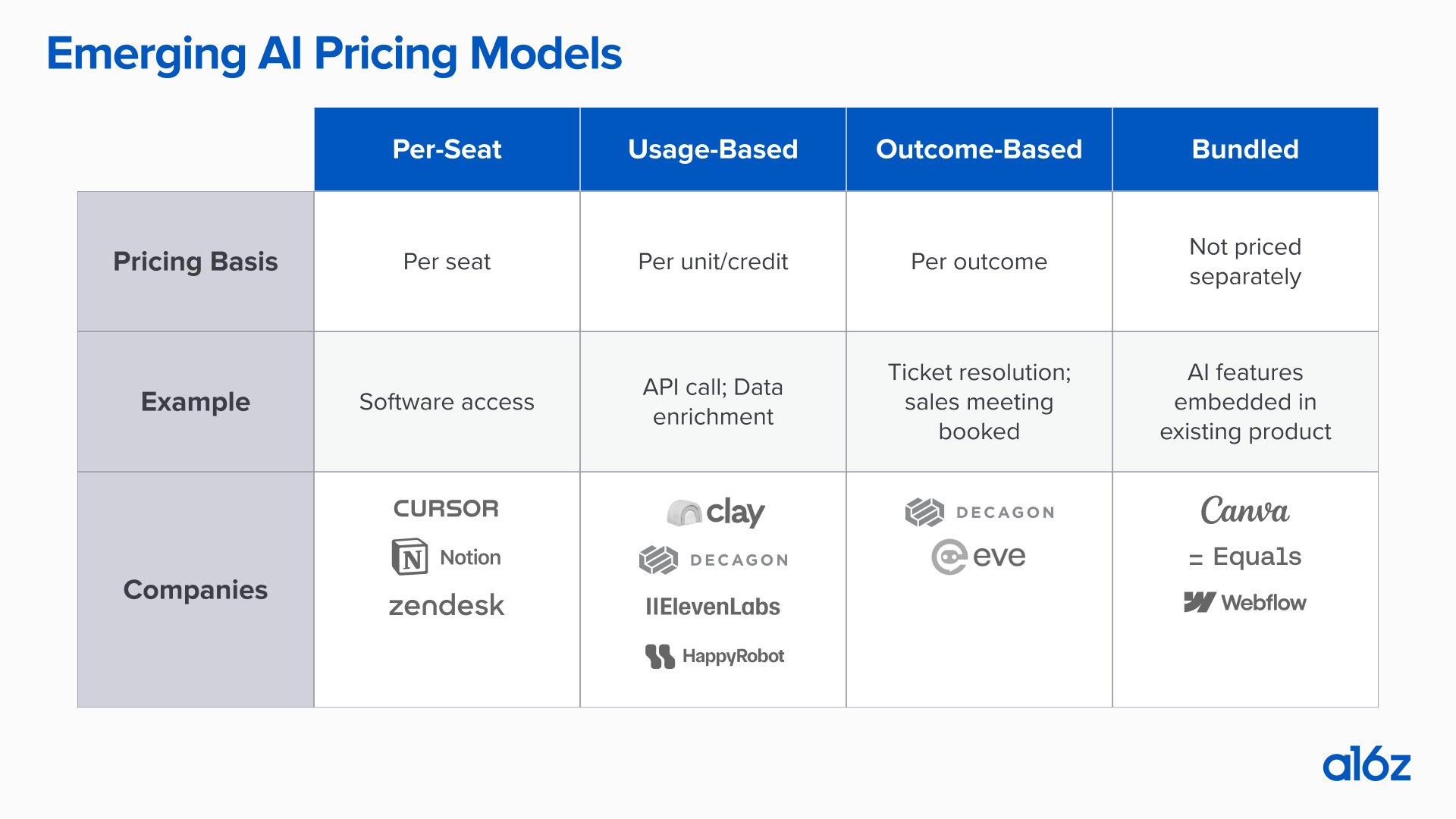
Three broad model families are competing to replace per-seat pricing, and none is perfect--but all beat the status quo for companies with significant agent exposure [7]:
- Usage-based / consumption pricing ties revenue to metered consumption--tokens, API calls, credits, or compute--aligning revenue with the vendor's variable costs. It has become the de facto standard among AI-native companies: Maxio reports that 83% of AI-native SaaS firms now offer usage-based pricing [8][9].
- Task-based pricing bills per discrete unit of work, such as a resolved ticket or a processed invoice. It is most tractable in high-volume, measurable workflows like customer support, back-office finance, and software development, where the unit of work is easy to define [6].
- Outcome-based pricing charges only for verified business results. Its logic is compelling but demanding: as Zuora's analysis explains, per-outcome pricing transfers cost variance from the buyer to the seller--if the AI consumes more compute than the outcome's price covers, the seller absorbs the gap. It only works when the seller has high confidence in its unit economics and the outcome is unambiguously measurable [3].
Early Movers and Market Evidence
The transition is no longer theoretical. In August 2024, Zendesk became the first major incumbent SaaS vendor to launch outcome-based pricing for AI agents, billing $1.50 per committed Automated Resolution--a support ticket resolved by AI with no human intervention and confirmed after 72 hours of inactivity--versus $2.00 pay-as-you-go [8]. Salesforce has taken a different route with its Agentic Enterprise License Agreement (AELA), giving enterprises unlimited use of Agentforce, Data 360, and MuleSoft for a fixed fee on two-to-three-year terms--arguably the most visible large-incumbent template for how enterprise AI pricing moves beyond per-seat metered billing [8]. Other experiments, from Intercom to ChatGPT, are supplying the industry's growing body of real-world lessons [4].
Frameworks for Choosing a Model
Because no single model fits every product, structured frameworks are emerging. The COMPASS framework, developed by Simon-Kucher & Partners with AWS and Zuora, maps the scope of work and value attributability to an optimal pricing metric, supported by tools like a Value Spectrum, a 3x3 decision matrix, and packaging strategies that reflect autonomy levels and governance requirements [2]. Zuora's version of the matrix is instructive: work that is task-scoped and diffuse points toward per-seat or per-activity pricing; goal-scoped, directly attributable work points toward per-outcome; process-level, medium-attributability work generally calls for a hybrid [3]. One pitfall the frameworks warn against consistently: cost-plus thinking. Pricing as a markup over inference cost ties revenue to the customer's compute consumption rather than the value delivered, exposes the cost mechanism, and caps willingness-to-pay at token economics--a fallback, not a strategy [3].
 What Does Agentic AI Actually Cost? (A Framework for Estimating Before You Commit) - The SaaS Library
The Market Stakes: A $234 Billion Reckoning
The scale of the disruption is now quantifiable. Gartner predicts that agentic AI will disrupt up to $234 billion in enterprise application software spending between now and 2030, as agents completing tasks across multiple systems reduce users' need to interact with traditional software interfaces--upending everything from legacy dashboards to pricing models [1]. By 2030, Gartner expects AI-driven market price adjustments alone to account for roughly 20% of enterprise SaaS spending [1]. Enterprise buyers, meanwhile, are de-emphasizing tools and dashboards in favor of outcomes, forcing SaaS companies to scale revenue even as operational complexity rises and margins tighten [1].
Other forecasts point the same direction. Deloitte's TMT Predictions 2026 anticipates that at least 40% of enterprise SaaS spend will shift to usage-, agent-, or outcome-based models by 2030, with seat-based revenue's share of the market declining from 21% to 15% [8]. The immediate disruption will concentrate in high-volume, measurable workflows--customer support, back-office finance, software development--where a unit of work is easy to define, while vendors that successfully leverage proprietary data and agentic add-ons stand to gain in retention and expanded product offerings [6].
For buyers, this creates an unusual negotiating window. The supply of usage- and outcome-based contracts already exists; the lag is on the buyer side. Vendors in transition are actively looking for design partners willing to commit on favorable terms in exchange for early access--a very different conversation from asking for a discount. Analysts suggest the window is open now and will close as models standardize, making 2025-2026 the critical transition period, especially at renewals where the emerging "AI Tax" on legacy contracts is already appearing [8].
Pitfalls, Paradoxes, and Open Questions
The Attribution and Liability Problem
Outcome-based pricing solves the seat problem but creates new ones around attribution, measurement, and AI liability that will take years to fully resolve [7]. Zendesk's experience is instructive: the vendor's definition of "resolved"--an AI-confirmed relevant response--is the vendor's definition until the buyer contractualizes their own. Agreeing contractually on what counts as a resolved outcome, via a formal Outcome Measurement Agreement, is the prerequisite most buying teams haven't yet worked through [8].
The Deflationary Counterargument
There is also a deeper irony lurking in the cost curves. Software was already deflationary; AI is making it exponentially so. As AI-driven cost curves plunge, the declining cost of delivering service could eventually undermine the very rationale for complex pricing models--if basic software capabilities become as cheap and ubiquitous as utilities, how do you charge for them at all? [10]. History counsels humility about any linear prediction: pricing models in this industry tend to zigzag rather than progress neatly, with an initial rush toward exotic outcome-based experiments likely to be followed by a practical rebound to hybrids--or even premium seat models for sales frictionlessness--before another swing once AI is trusted and pervasive [10]. The only universal, as one industry retrospective puts it, is the pressure of technology's deflationary economics, with the long arc bending toward more value for the customer's dollar [10].
What Buyers and Vendors Should Do Now
For vendors, the strategic imperatives are becoming clear. First, build the measurement infrastructure early: agent-ready software with access controls, audit trails, and trackable outcomes positions a product for any pricing model, and telemetry plus customer feedback should drive iterative pricing as capabilities evolve [2][7]. Second, pick the model that matches your work's scope and attributability rather than copying competitors--hybrids will dominate while trust in autonomous outcomes matures [3]. Third, remember that outcome-based pricing is a margin-protection mechanism as much as a revenue model: it aligns revenue with genuinely rising variable costs and unlocks headcount-independent growth [6].
For buyers, the leverage is real but time-limited. Enterprise customers hold unusual negotiating power right now, especially in seat-heavy contracts covering functions where agents are already competent [7]. The effective framing is forward-looking: acknowledge that seat-based pricing is in structural decline and negotiate contracts that reflect that trajectory, with transition terms written in at renewal--rather than waiting for pricing models to standardize and the design-partner window to close [8].
Conclusion
The shift from seats to outcomes represents the most significant disruption to SaaS business models since the move from on-premises to cloud [2]. The direction of travel is no longer in serious dispute: the per-seat model assumes human-driven usage, agentic AI eliminates that assumption, and every forecast--from Gartner's $234 billion disruption figure to Deloitte's projection of seat-based revenue shrinking to 15% of SaaS spend--confirms the reckoning is structural, not cyclical [1][8].
But the destination remains genuinely uncertain. Consumption, task, outcome, and hybrid models each carry distinct trade-offs between revenue alignment, cost risk, and sales friction, and the industry's pricing history suggests the path forward will zigzag rather than proceed in a straight line [10][7]. What is certain is that the vendors who thrive will be those who treat pricing not as a billing detail but as the expression of their unit economics--measuring cost per agent run, aligning revenue with value delivered, and contracting carefully around what "success" means. Software's next decade will be priced not by the person, but by the work.
References
- 1.
- 2.
- 3.
- 4.
- 5.
- 6.
- 7.
- 8.
- 9.
- 10.