Introduction
For decades, artificial intelligence in science played a supporting role: crunching numbers, simulating models, and visualizing data. That changed dramatically when AlphaFold cracked the fifty-year-old protein folding problem, giving biologists a tool that transformed structural biology almost overnight. But even AlphaFold, for all its revolutionary impact, answers questions that scientists already know how to ask. The deeper frontier is different: can AI generate the questions themselves--novel, testable scientific hypotheses that human researchers have not yet conceived?
In February 2025, Google introduced its answer: the AI co-scientist, a multi-agent system built on Gemini designed to generate, debate, and refine original research hypotheses [1][2]. The system's subsequent publication in Nature marked a milestone in the field, presenting not just benchmarks but end-to-end laboratory validations across three challenging biomedical domains [3][4]. Most strikingly, in one case the system independently proposed a mechanism that a human research group had discovered experimentally but had not yet published--effectively "predicting" a scientific finding before it entered the public domain [1][5].
The central question this raises is profound: are we entering an era in which large language models can serve as genuine partners in discovery, surfacing hypotheses that human bandwidth and bias would otherwise leave unexplored? The evidence, while still preliminary, is more compelling than skeptics might expect.
From Structure Prediction to Hypothesis Generation: The AlphaFold Prelude
To understand why the AI co-scientist matters, it helps to situate it in the trajectory that AlphaFold set in motion. AlphaFold 2 did not merely predict protein structures; it demonstrably accelerated science. An independent analysis by the Innovation Growth Lab found that researchers using AlphaFold 2 saw an increase of over 40% in their submission of novel experimental protein structures--evidence that AI-assisted insight translates into new laboratory work [6].
That productivity ripple extended into applied medicine. Scientists have employed AlphaFold to understand the structures of oncogenic proteins and identify cryptic binding sites for targeted cancer therapies, and Google has partnered with pharmaceutical firms including Eli Lilly and Novartis to combine AlphaFold's structural predictions with generative models that design candidate molecules [6].
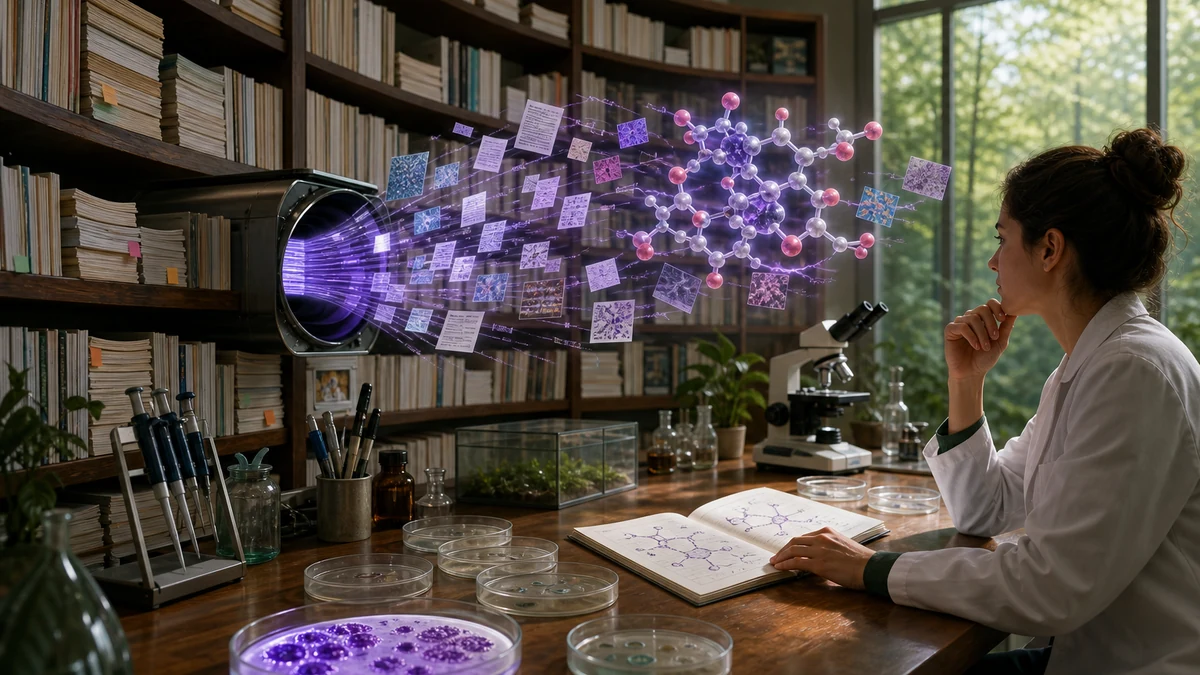
Yet AlphaFold remains, in essence, a deep but narrow specialist. John Jumper, one of its creators, has suggested that the future lies in combining AlphaFold's focused structural expertise with the broad reasoning capabilities of large language models--systems that can handle protein design, mutagenesis, and drug discovery simultaneously [6]. The AI co-scientist is a direct embodiment of that vision. Rather than replacing specialized tools, it treats them as instruments: the system can call on AlphaFold, along with web search and domain-specific databases, while composing and refining research proposals [7][8].
 Google's New AI "Co-Scientist" Aims to Accelerate Scientific Discovery - Unite.AI
Inside the AI Co-Scientist: A Multi-Agent Architecture
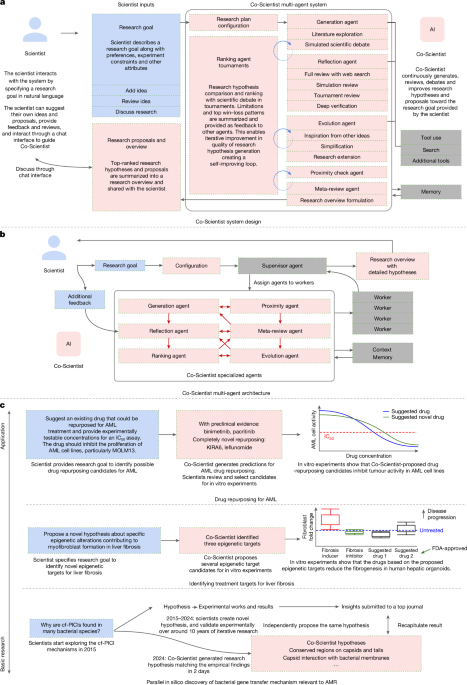
The AI co-scientist departs from the single-model paradigm that has dominated AI applications. Instead of one monolithic system, it coordinates a coalition of specialized agents, each modeled on a role in the scientific method itself: Generation, Reflection, Ranking, Evolution, Proximity, and Meta-review [7][5][9].
The workflow mirrors how an idealized research team might operate. Given a scientist's research goal specified in natural language, the Generation agent proposes hypotheses and experimental protocols; the Reflection agent critiques them for logical coherence and factual grounding; the Ranking agent prioritizes competing ideas; the Evolution agent iteratively improves the strongest candidates; and the Meta-review agent synthesizes feedback across the pipeline [7][5]. The architecture is asynchronous and model-agnostic, meaning it is built to benefit from continued advances in frontier and reasoning LLMs rather than being tied to a single model version [7][4][2].
Crucially, the system is designed to keep hypotheses grounded rather than hallucinated. The majority of its computation is dedicated to verification--deeply cross-checking claims against scientific literature and data through web search, specialized databases such as ChEMBL and UniProt, and advanced models like AlphaFold, which Google is testing in select research collaborations [8]. Scientists remain in the loop throughout, able to specify goals, impose constraints, provide feedback, and redirect the system's exploration through a natural language interface [7][5].
The system is evaluated against explicit criteria that encode scientific values: novelty (hypotheses must go beyond synthesizing existing information, a capability already handled by "deep research" tools), testability (outputs must be amenable to empirical validation within the scientist's constraints), and safety (controls to prevent enabling unsafe or harmful research) [3].
The Tournament of Ideas: Ranking, Evolution, and Test-Time Compute
Perhaps the most distinctive feature of the AI co-scientist is how it decides which hypotheses deserve attention. Rather than relying on a single evaluation pass, the system employs a tournament framework in which research proposals compete for priority through an Elo-based ranking system, using pairwise comparisons and simulated scientific debates between agent personas [7][8].
This competitive dynamic serves a dual purpose. It identifies the most promising hypotheses, but it also drives improvement: losing proposals are evolved and refined, and fresh knowledge is injected into the tournament to expand exploration of the hypothesis space [8]. The result is a self-improving cycle in which automated feedback continuously generates, evaluates, and refines outputs of increasing quality and novelty [5][9].
The system also demonstrates a property that has become a hallmark of modern reasoning models: benefits from scaling test-time compute. Automated evaluations show continued improvements in hypothesis quality as computation increases over time, suggesting that scientific hypothesis generation may be a domain where "thinking longer" genuinely produces better ideas [4][2].
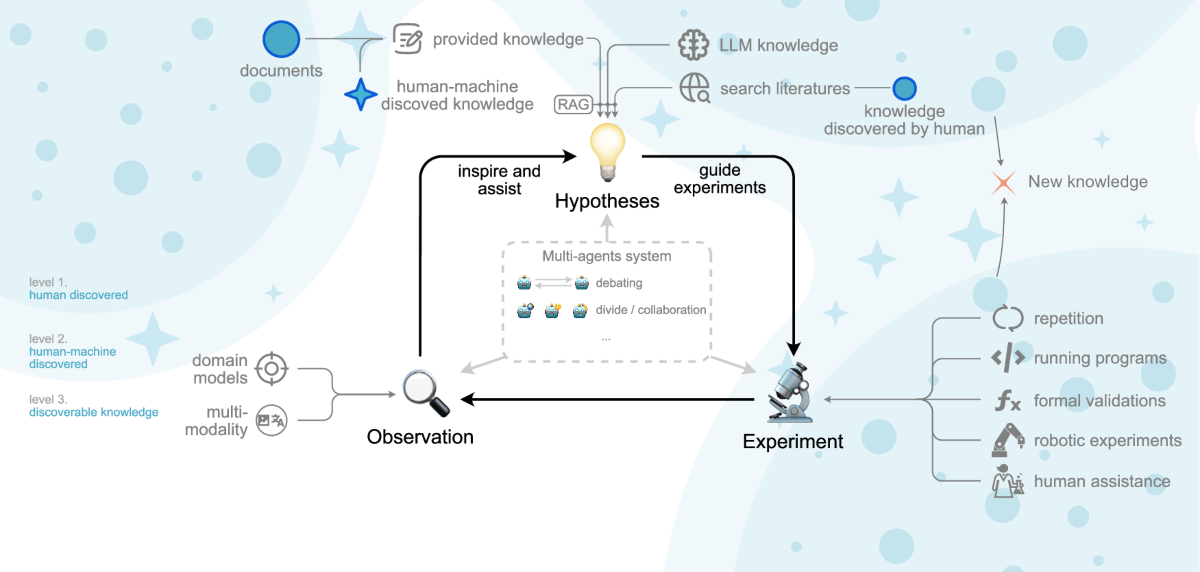 Exploring the role of large language models in the scientific method: from hypothesis to discovery | npj Artificial Intelligence
The Proof in the Petri Dish: Experimental Validation
Architecture and elegant rankings mean little if the hypotheses are wrong. What distinguishes the AI co-scientist's published report from much of the AI-for-science literature is validation through actual laboratory experiments across three biomedical applications [3][5].
Drug Repurposing for Acute Myeloid Leukaemia
In oncology, Co-Scientist identified drug-repurposing candidates and synergistic combination therapies for acute myeloid leukaemia (AML) that showed in vitro efficacy at clinically relevant concentrations [3][4][5]. This is a meaningful threshold: the proposals were not merely plausible-sounding ideas but experimentally tractable candidates that functioned in real cell assays at doses achievable in clinical practice.
Novel Targets for Liver Fibrosis
For liver fibrosis, the system proposed new epigenetic targets, leading to the experimental validation of several anti-fibrotic compounds--including one already FDA-approved drug [3]. The validation of a repurposing candidate with existing regulatory approval is particularly significant for translational medicine, since it dramatically shortens the path from hypothesis to potential clinical impact.
Rediscovering an Unpublished Discovery
The most striking demonstration came from microbiology. Researchers instructed the AI co-scientist to explore a topic that had already been the subject of novel discovery in their own group but had not been revealed publicly: explaining how capsid-forming phage-inducible chromosomal islands (cf-PICIs) exist across multiple bacterial species. Without prior knowledge of the unpublished findings, the system independently proposed that cf-PICIs interact with diverse phage tails to expand their host range--matching the experimentally validated mechanism the human team had discovered [5][9]. The findings are described in co-timed manuscripts with Google's collaborators at the Fleming Initiative and Imperial College London [5].
This "recapitulation test" is the strongest evidence to date that LLM-based systems can arrive at genuinely new mechanistic insights rather than merely remixing published knowledge. As one report on the project noted, the system can generate scientific hypotheses that match unpublished findings--sometimes before human researchers even publish them [1].
 Accelerating scientific discovery with Co-Scientist | Nature
Earlier Foundations and the Wider Ecosystem
Google's system did not emerge in a vacuum. An important precursor was MOOSE, a framework demonstrating--according to its authors, for the first time--that LLMs can generate research hypotheses judged both novel ("not existing in the literature") and valid ("reflecting reality") in the open domain of social science [10]. Notably, MOOSE's evaluation revealed surprisingly high consistency between human experts and GPT-4-based assessment, with average scoring differences of less than one point on a five-point scale--suggesting that automated evaluation of machine-generated hypotheses may be more reliable than critics assume [10].
The broader ecosystem is also accelerating. Tokyo-based startup Sakana AI developed "The AI Scientist," a fully automated pipeline for producing machine-learning research [6]. Legal commentators observe a growing consensus that AI can help satisfy patent law's enablement requirements by generating predictive data and structural insights--a development that could reshape intellectual property frameworks for AI-assisted invention [6].
Limitations, Safety, and Open Questions
Despite the impressive results, Google's researchers are candid about the system's current shortcomings. The report acknowledges the need for enhanced literature reviews, improved factuality checking, cross-checks with external tools, better auto-evaluation techniques, and larger-scale evaluation involving more subject matter experts with varied research goals [5][9].
Deeper conceptual questions also remain. The cf-PICI recapitulation demonstrates that the system can reach a known-but-unpublished answer, but skeptics will note that it was guided by experts who knew the destination existed--a subtle form of informed selection. Whether the system routinely surfaces discoveries that human researchers would genuinely miss, rather than accelerating findings already within reach, will require many more independent validations across diverse fields [3][5].
Safety considerations are explicitly built into the system's design, with output controls intended to prevent enabling unsafe, unethical, or harmful research [7][3]. As these systems grow more capable, the governance questions--about biosecurity, research ethics, and who controls access to discovery-capable AI--will only intensify.
Conclusion: Toward an Era of AI-Empowered Scientists
The trajectory from AlphaFold to the AI co-scientist tells a clear story about the evolving relationship between AI and science. AlphaFold proved that machines could solve problems humans had defined; the AI co-scientist offers preliminary but tangible evidence that machines can help define the problems themselves--and in at least one documented case, arrived at an experimentally validated mechanistic insight that human researchers had not yet published [3][5].
Google is now moving the technology beyond internal research, making the Co-Scientist system available to individual researchers through Hypothesis Generation, an experimental tool developed across Google DeepMind, Google Research, Google Cloud, and Google Labs [8]. Whether this ushers in an era of "AI empowered scientists," as the Nature paper's authors put it, will depend on rigorous independent replication, honest reckoning with limitations, and thoughtful safety governance.
What seems increasingly clear is that the bottleneck in science is shifting. If knowledge creation is no longer limited by human bandwidth--as the convergence of AlphaFold's structural insights, the AI co-scientist's hypothesis generation, and a growing ecosystem of AI research tools suggests [6]--then the defining scientific skill of the coming decade may not be generating hypotheses, but knowing which machine-generated ideas deserve the world's limited laboratory time.
References
- 1.
- 2.
- 3.
- 4.
- 5.
- 6.
- 7.
- 8.
- 9.
- 10.