Introduction
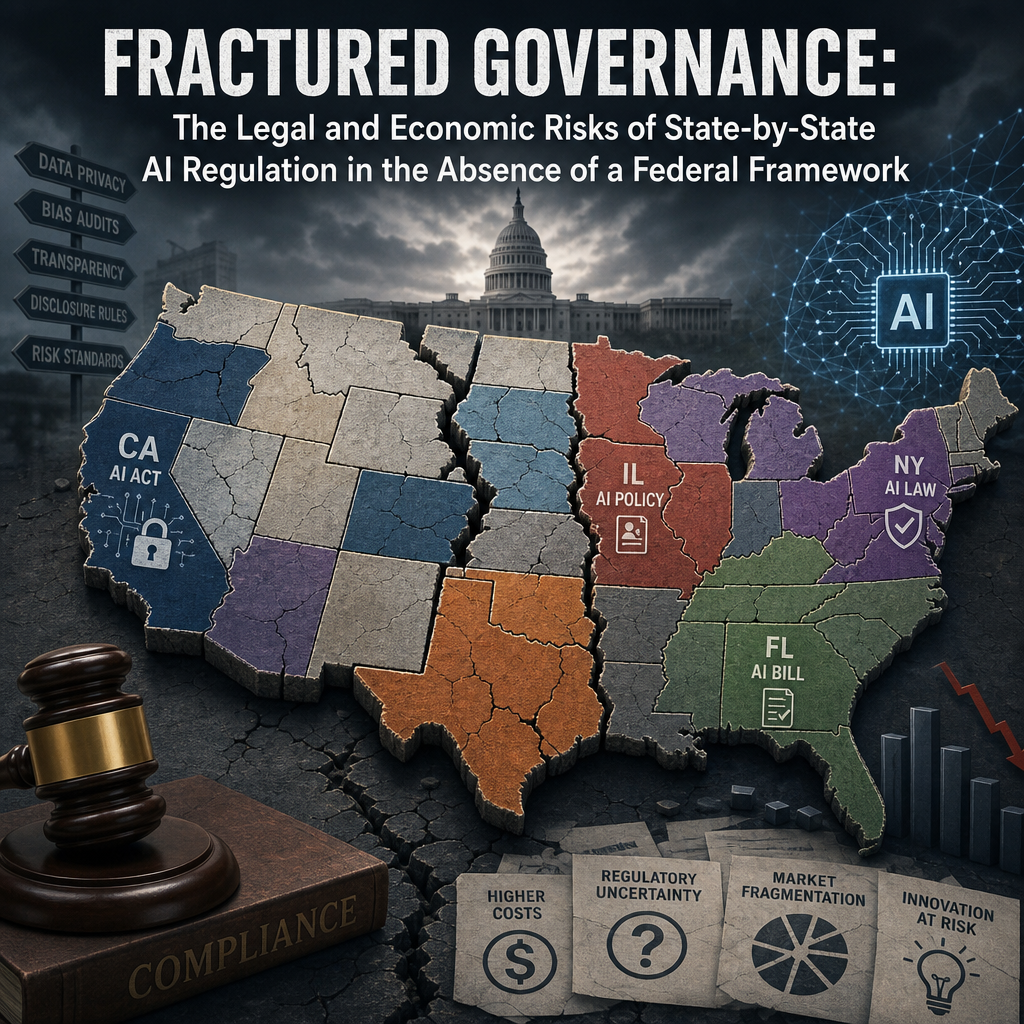
The rapid ascent of artificial intelligence has outpaced the plodding machinery of American policymaking. While AI systems are being deployed at scale across healthcare, finance, housing, and law enforcement, Congress has yet to pass a comprehensive federal regulatory framework to govern their use [1]. In this vacuum, states have stepped into the breach, driven by a imperative to protect their citizens from novel harms ranging from algorithmic discrimination to unauthorized facial recognition [2]. The result is a burgeoning, highly fragmented patchwork of state-level AI regulations that varies wildly from jurisdiction to jurisdiction [3].
This state-by-state approach, while politically responsive, has ignited a fierce debate over the optimal locus of AI governance. On one side, economists and industry advocates warn that a fractured regulatory landscape creates debilitating compliance costs and stifles innovation. On the other, civil rights advocates and local leaders argue that state and municipal governments are uniquely positioned to serve as first responders to localized algorithmic harms. As the federal government attempts to reassert control through executive action and legislative proposals, the battle over AI regulation is exposing deep fractures in American federalism.
The Rise of the Regulatory Patchwork
In the absence of federal legislation, state capitols have become the primary laboratories for AI policy. Momentum for state-level AI regulation is currently at an all-time high, with legislatures introducing a wide array of bills targeting specific applications of the technology [3]. These laws generally focus on high-risk use cases: protecting children from AI-generated exploitation, limiting the use of facial recognition by law enforcement, and prohibiting algorithms from discriminating against protected groups in housing, lending, and employment [2].
However, this localized approach inherently produces a disjointed legal landscape. By definition, state-by-state regulation creates a patchwork of fifty different regulatory regimes, forcing companies to navigate a labyrinth of conflicting statutory requirements [4]. What constitutes a compliant AI system in California may violate the law in Texas or Illinois. For companies stepping into the AI ecosystem, this creates a profoundly uncertain regulatory environment that complicates risk assessment and obscures the commercial potential of new use cases [3]. Furthermore, some state laws impermissibly attempt to regulate beyond their own borders, directly impinging on interstate commerce and drawing the ire of federal regulators [4].
 Utah is paving the way in AI regulation by implementing balanced policies," Margaret W. Busse and Jefferson Moss write.
The Economic Toll of Fragmentation
The economic implications of a fragmented regulatory regime are severe, particularly for an industry characterized by high upfront investments and uncertain technological pathways [5]. Direct compliance costs--encompassing legal fees, technical modifications to AI systems, and administrative overhead--act as a regressive tax on innovation. Because these costs are largely fixed, they represent a disproportionately heavy burden on smaller firms and new entrants, effectively entrenching the market power of established tech giants [5].
This dynamic creates a chilling effect on startups that lack the legal budgets of their larger counterparts. When a new AI company must design its core architecture to simultaneously satisfy the divergent demands of multiple state attorneys general, the barrier to entry rises dramatically. Analysts from the International Center for Law & Economics have characterized this fragmented regulation as "economically hazardous," warning that premature state-level mandates based on limited operational data impose costs that far exceed their immediate benefits [6]. Opponents of broad federal regulation often cite international competition, arguing that adding a layer of fractured domestic regulation on top of global market pressures could lead to negative economic and national security outcomes for the United States [1].
The Federal Counter-Offensive: Executive Orders and Moratoriums
Faced with this accelerating state-level activity, the federal executive branch has recently sought to wrest back control. In late 2025, the administration signed Executive Order 14365, marking a significant shift toward a centralized federal approach to AI regulation [4][7]. The EO aims to categorize state AI laws as either "onerous" or "not onerous." Strikingly, state laws that prohibit AI models from discriminating against protected minorities have been targeted as onerous, under the administration's view that such laws force developers to "embed ideological bias" within their models [2].
To enforce this categorization, the Executive Order leverages federal infrastructure funding--specifically the remaining Broadband Equity, Access, and Deployment (BEAD) funds. States with laws deemed onerous are prohibited from receiving these and other federal grants unless they repeal the offending legislation or pledge not to enforce it [2]. This aggressive tactic mirrors earlier legislative proposals on Capitol Hill, which briefly sought to implement a federal moratorium on state-level AI-specific regulations [6][8]. Proponents of such a moratorium point to the Commercial Space Launch Amendments Act (SLAA) of 2004 as a successful historical precedent. The SLAA instituted a "learning period" that restricted premature safety regulations, allowing companies like SpaceX and Blue Origin to develop without bureaucratic friction, ultimately yielding tremendous commercial growth [5][6].
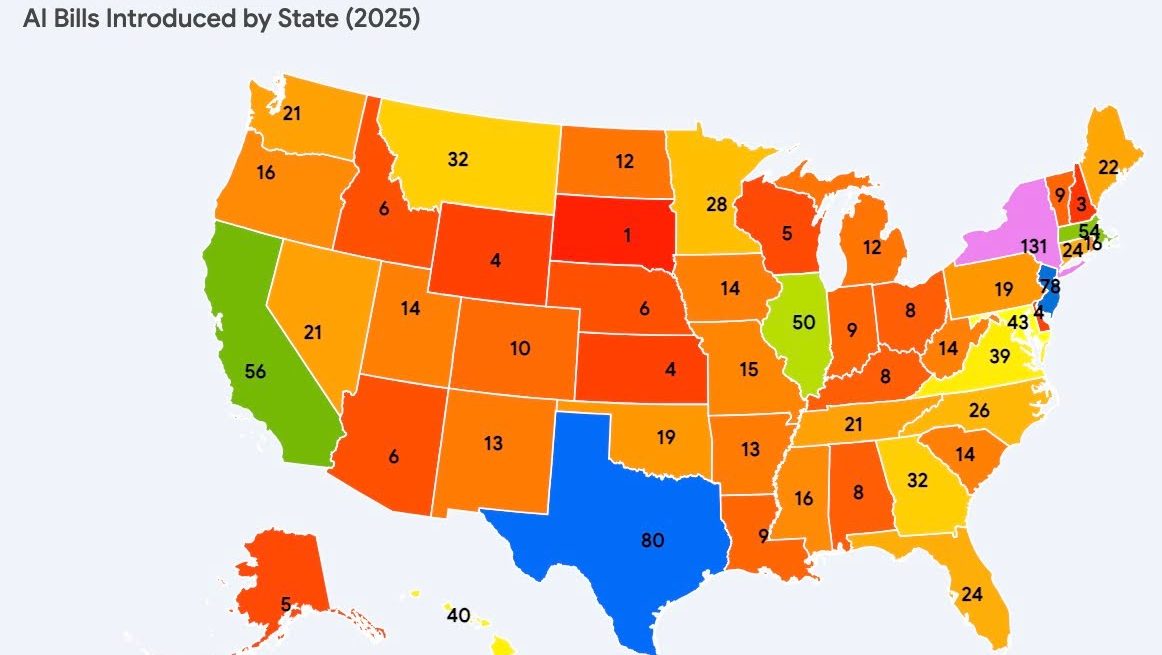 $600 Billion AI Abundance Dividend from Federal Preemption of State Laws - CCIA
Constitutional Fractures and the Limits of Preemption
The federal government's aggressive counter-measures are not without significant legal vulnerabilities. Executive Order 14365 is highly likely to face legal challenges on the grounds of federal preemption and the unconstitutional coercion of states [2]. Under longstanding constitutional principles, the federal government cannot compel states to enforce or abandon federal regulatory preferences by holding authorized funding hostage--a doctrine rooted in the anti-commandeering principles of the Tenth Amendment.
Beyond the legal mechanics of preemption, the federal moratorium debate has revealed deeper philosophical tensions regarding who is best equipped to govern AI. Critics of federal overreach argue that state and local governments provide essential, immediate guardrails against emerging risks [8]. Because AI tools are deployed in specific communities--determining welfare eligibility, child services interventions, or local hiring--municipal and state officials are often the first to identify patterns of harm and respond [8]. A blanket federal moratorium or preemption threatens to strip away these localized protections, leaving vulnerable populations without recourse.
Furthermore, analysts have criticized the framing of the AI governance debate as a strict dichotomy between state regulation and federal deregulation [1]. Many experts advocate for a mixture of targeted, flexible approaches that depend on the specific AI technology and its application, rather than a one-size-fits-all mandate from Washington [1].
Toward Co-Governance and Technology Neutrality
Resolving the fractured governance of AI may require looking past traditional top-down federal command-and-control frameworks. Legal scholars have increasingly championed the concept of "co-governance," an approach that maintains consistent national rules but actively incorporates regional knowledge and local preferences [9]. A reflexive, co-governance approach could be oriented and tailored to local circumstances without sacrificing the interstate uniformity that businesses desperately need [9].
Central to this emerging consensus is the principle of "technology neutrality"--the idea that laws should focus on harmful outcomes rather than the specific technological tools used to cause them [6]. Proponents of this view argue that the United States already possesses a robust legal toolkit, refined over decades, that is fully capable of addressing AI harms. Existing laws governing consumer protection, anti-discrimination, and privacy do not become obsolete simply because a machine learning model is involved [6]. By relying on existing legal principles while allowing time for a coherent, evidence-based national framework to emerge, policymakers can foster innovation while ensuring that essential consumer protections remain firmly in place [6].
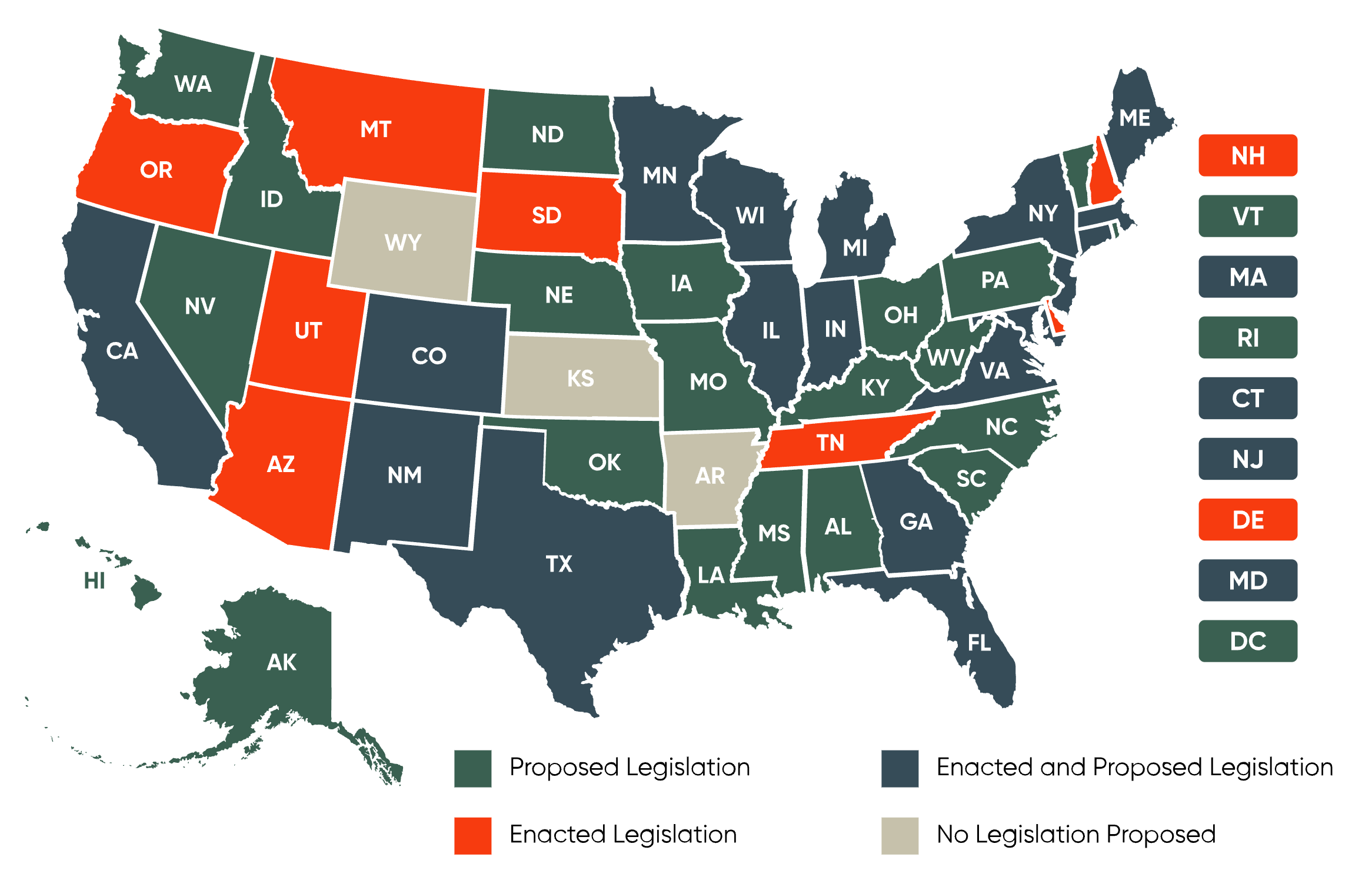 US state-by-state AI legislation snapshot | BCLP - Bryan Cave Leighton Paisner
Conclusion
The current state of AI regulation in the United States is a study in the perils of regulatory lag. As Congress deliberates, states have rightfully moved to protect their citizens, but the resulting patchwork of fifty divergent regimes imposes crippling economic costs and legal uncertainties on the nascent industry. The federal government's subsequent attempts to force compliance through executive funding threats introduce their own severe constitutional risks and threaten to dismantle vital local guardrails. Moving forward, the path to responsible AI governance lies not in a zero-sum battle between state capitols and Washington, but in embracing technology-neutral existing laws and innovative co-governance models that balance the need for national coherence with the imperative of local protection.
References
- 1.
- 2.
- 3.
- 4.
- 5.
- 6.
- 7.
- 8.
- 9.