Introduction
When ChatGPT burst into public consciousness in late 2022, the initial reaction across higher education was defensive: ban the tools, deploy detectors, and treat generative AI as the most sophisticated plagiarism machine ever built. Three years on, that defensive posture is collapsing under its own weight. AI-detection software has proven deeply unreliable, students continue to use these tools regardless of policy, and educators are confronting an uncomfortable truth--generative AI has not created an assessment crisis so much as it has exposed one that has been festering for decades.
The evidence for this shift is now global in scope. A systematic literature review of research from African higher education--primarily Nigeria and South Africa--found a significant disconnect between students' frequent use of AI tools and educators' awareness or preparedness, while also documenting a growing movement toward AI-inclusive assessment that fosters originality and higher-order thinking [1]. Meanwhile, in the United Kingdom, the Higher Education Policy Institute argues that traditional formats such as essays and timed exams "have long been outdated and have never been aligned to key capabilities such as critical thinking, synthesis or ethical judgement," and that what AI amplifies is the misalignment between assessment design and learning purpose [2].
This article examines how higher education institutions around the world are moving from a plagiarism-framing to a pedagogy-framing of generative AI. It explores why the detection-and-prohibition approach has failed, what emerging frameworks like the AI Assessment Scale and the "two-lane" model offer, and why the most promising responses treat assessment redesign not as a technical fix but as an opportunity to realign higher education with what genuinely matters: the learning process itself.
The Detection Dead End: Why Policing AI Has Failed
Unreliable Tools and Hybrid Authorship
The first line of institutional defense against generative AI--automated detection--has proven remarkably fragile. Unlike traditional plagiarism, which can be identified through text-matching software, generative AI presents a "hybrid form of authorship" that makes it genuinely difficult to distinguish between human- and AI-generated content. Current detection tools, educators and researchers agree, are still in their infancy, deeply unreliable, and problematic [3].
Faculty sentiment bears this out. In a study of educators' perspectives on generative AI's impact on learning and teaching, half of interviewees expressed little trust in Turnitin's AI detection capabilities, and none gave it positive feedback. One participant complained that the tool "is not super helpful and doesn't give you any opportunity to actually track it," while another captured the deeper futility: "the technology is changing so rapidly that any detection tool that is developed would be outdated within months" [4]. Detection, in other words, is not merely imperfect--it is structurally chasing a moving target.
The Institutional Cost of Doubling Down
Some institutions have nonetheless continued to invest in detection regimes, often driven by reputational anxiety rather than pedagogical reasoning. The HEPI analysis warns that mounting media coverage and regulator warnings are prompting calls for redesign rather than "doubling down on detection regimes"--but it also cautions that redesign undertaken merely to protect reputations tends to produce shallow changes. Substituting written assessments with oral presentations or similar surface-level modifications, the argument goes, ultimately reproduces "the same underlying problems in a different format." Universities need to revisit the purpose, design and resourcing of assessment, rather than treating redesign as a technical fix for reputational anxiety [2].
The practical consequences of the detection-first approach are visible in classroom behavior. In the educators' perspectives study, nearly two-thirds of survey respondents--63%--indicated they had not provided any information to students about how to use generative AI, even while a near-even split reported modifying their course design in response to it [4]. Institutions were changing assessments in the dark, without coherent guidance for the students those assessments were meant to serve.
 Rethinking Assessment in Light of Generative AI
AI as a Mirror: What Generative AI Reveals About Assessment
An Institutional Problem, Not a Technological One
Perhaps the most consequential reframing in current scholarship is the argument that generative AI is a diagnostic tool for higher education itself. "Generative AI hasn't created assessment problems - it has exposed them," as the HEPI analysis puts it. Traditional formats--essays, timed exams, standardised tasks--have never been well-aligned to the capabilities that matter most for graduates entering an AI-saturated workforce: critical thinking, synthesis, and ethical judgement [2].
This view is echoed internationally. The Manifesto for Teaching and Learning in a Time of Generative AI, published in Open Praxis by a collective of researchers, argues that GenAI pushes educators to confront long-established weaknesses in educational systems--from concerns about plagiarism to deeper questions about the role of educators themselves. The manifesto frames the moment not as one of improving efficiency but of re-focusing the purpose of education, moving beyond "a deterministic approach to knowledge, where the focus is on delivering 'correct answers'" [5].
Assessment as Pivotal Experience
What is at stake extends well beyond cheating statistics. Assessment, as the HEPI analysis emphasizes, "is not simply a procedural hurdle; it is a pivotal experience that shapes what students learn, how they engage with content and what universities and employers prioritise as valuable knowledge and skills" [2]. If reform is driven purely through compliance--if institutions simply make it harder to cheat--the opportunity to align assessment with the actual needs of an AI-era graduate will be lost.
This reframing also changes what counts as a legitimate response. The Manifesto argues that the challenge now is to design assessments "resilient to GenAI misuse, while promoting higher-order thinking skills, creativity, and ethical understanding"--a shift from output-based education to a reflexive, process-oriented model [5]. The question is no longer only "how do we stop students from using AI?" but "what evidence of learning would we now find persuasive, given that AI exists in the world?" As one AACE review frames it, the latter is "a far more difficult question--but a far more productive question" [6].
From Prohibition to Process: The Global Shift in Educator Responses
Four Camps, One Dilemma
Reactions to generative AI in higher education have tended to cluster into four camps: "Prompt Responsibly" advocates who embrace innovation and emphasize individual choice; harm-reduction advocates seeking to minimize ill-effects through deliberate education; prohibitionists calling for bans to protect academic integrity; and those calling for age-based or knowledge-based restrictions to protect the development of tech-independent expertise and cognitive growth [6]. Most institutions, in practice, are muddling through some combination of these positions.
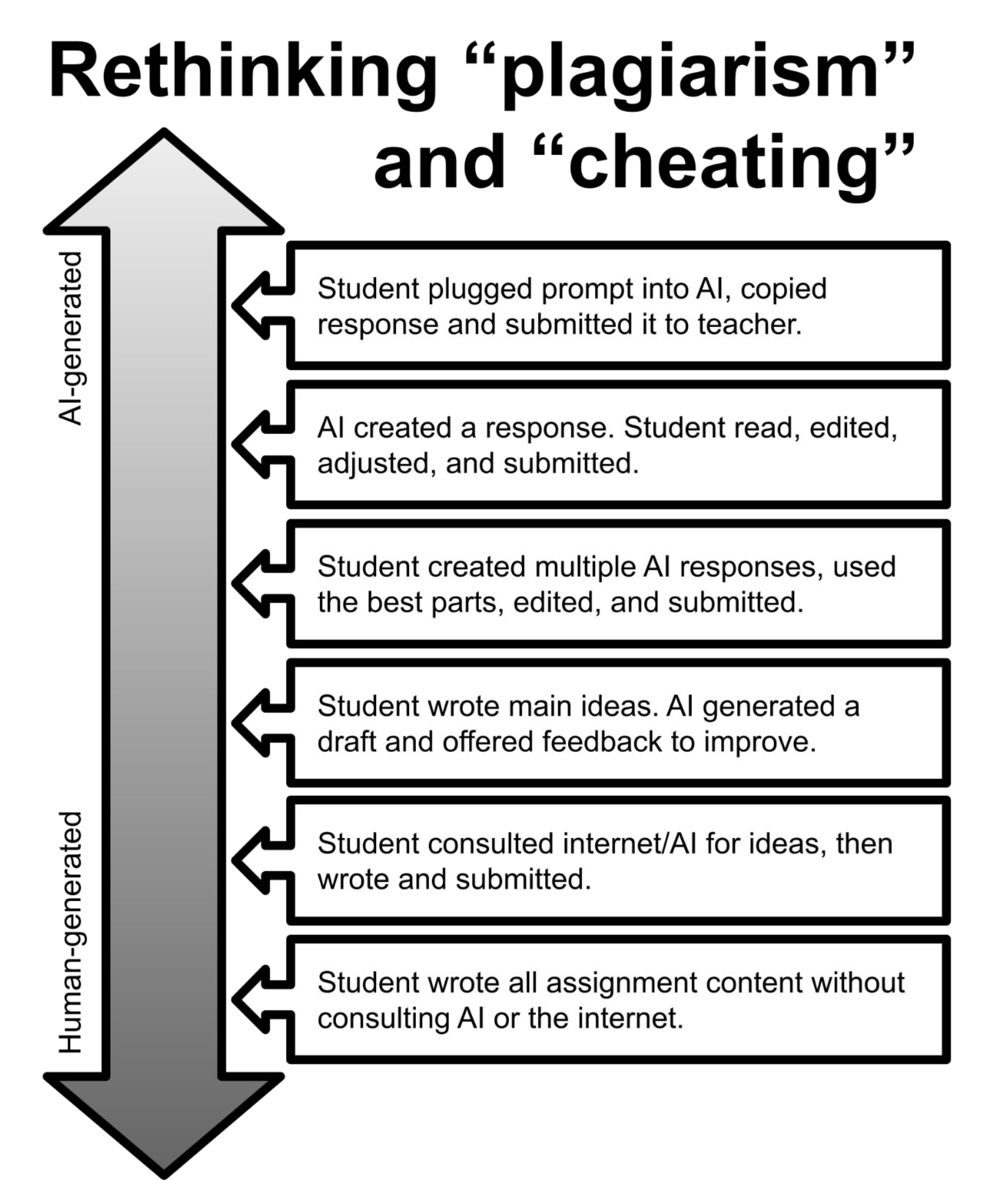
The educators' perspectives study illustrates this patchwork. Among survey respondents, roughly half had modified course design in response to generative AI, with modifications ranging from using a variety of assessment methods and new assessment questions, to changing essay topics to rely more heavily on fieldwork, to a genuinely creative inversion: having AI generate poor-quality written drafts that students are then tasked to improve [4]. Others made more dramatic pivots--one reported making a test closed-book with no devices; another described taking assessment "back to face-to-face, do it in the classroom again" [4].
Hodges and Kirschner, reviewing the landscape of institutional responses, argue that the central challenge is instructional design itself: rather than banning AI or integrating it without a clear pedagogical strategy, educators must rethink the design of instruction and assessment to ensure genuine learning occurs [3]. Their analysis also widens the ethical aperture beyond plagiarism, highlighting concerns about the accessibility of AI tools, the data they collect, the equity issues they perpetuate, and even the environmental impact of large-scale AI deployment--reminding educators that the assessment question sits within a much larger ethical landscape [3].
A Global Conversation with Regional Dimensions
The reassessment conversation is not confined to wealthy Western institutions. The systematic review of African higher education--drawing on empirical studies from 2023 to 2025 conducted mainly in Nigeria and South Africa--found faculty views ranging from concern about potential misuse to openness toward integrating AI to improve learning and feedback. Strategies reported in the literature include designing assignments that require critical reflection, using AI collaboratively, and promoting transparency in AI use [1]. Notably, the review concludes that AI-inclusive assessment approaches can foster originality, higher-order thinking, and academic resilience--findings that suggest the pedagogical opportunities of this moment are not the exclusive province of well-resourced institutions [1].
Research on how students actually use generative tools complicates the misconduct narrative further. Studies show students employ GenAI for "explaining concepts, summarising an article, suggesting research ideas, and structuring thoughts"--uses that sit closer to tutoring than to cheating [7]. The problem, increasingly, is not that students are using AI, but that assessments were never designed to distinguish between the learning that produces an essay and the output that merely produces one.
 Rethinking Pedagogy and Assessment in the Age of Generative AI | IntechOpen
Emerging Frameworks: The AI Assessment Scale and the Two-Lane Model
The AI Assessment Scale
Among the most widely adopted responses is the Artificial Intelligence Assessment Scale (AIAS), developed by Furze, Perkins, Roe and MacVaugh. The framework emerged from a decisive shift in perception: initially, the use of generative AI tools in academic settings was largely viewed as a form of plagiarism or misconduct, prompting strict prohibitions or wholesale switches to exam-based assessment. The AIAS instead treats AI as "an additive and transformational tool rather than as an aid to misconduct," while keeping in view higher education's overarching goal as "a space for developing human-knowledge relationships" [8].
The scale itself ranges from "no AI" use to "full AI" collaboration, with the purpose of guiding educators and students toward responsible GenAI practices. In a pilot implementation at British University Vietnam, findings showed a substantial decline in AI-related academic misconduct and increased student engagement--though the authors prudently cautioned that "it is possible that some students may exploit these tools in ways that are difficult to detect" [6]. The framework's underlying philosophy aligns with the values articulated by the International Center for Academic Integrity--honesty, trust, fairness, respect, responsibility, and courage--rather than treating AI-generated writing as an inherent violation of academic integrity [8]. Its adoption is spreading: institutions including the University of Melbourne have embraced declarative approaches and AI assessment scales of the kind pioneered by Perkins [9].
The Two-Lane Approach and Structural Design
Perhaps the most architecturally ambitious response is the University of Sydney's "two-lane" approach, initiated by Danny Liu and colleagues as early as 2023. Under this model, faculty choose between two lanes for each assessment: one lane secures learning--designing tasks that must be completed without AI to guarantee that core skills are demonstrated--while the other lane assumes AI use and scaffolds assignments so that AI is used productively within them [9].
This structural thinking has been formalized in the research literature. Corbin et al. (2025) distinguish between two categories of change: "structural changes"--modifications to the nature, format, or mechanics of the assessment itself, which constrain or open student approaches in ways built into the assessment--and "discursive changes," which rely primarily on communicating rules to students, who "remain essentially free to follow or ignore" them. Structural approaches emphasize more 'live', process-driven assessment that captures student attainment over time, and insist that all assessment tasks in a module work together as a whole to ensure validity [7]. The approach strengthens assessment integrity, though the authors acknowledge it may be difficult to implement in large-class settings with limited tutor support [7].
Complementary tactics include authenticated checkpoints and iterative engagements--building in-person checkpoints into an assessment where students show how their ideas evolved over time, such as writing an essay and then being graded on a classroom discussion about that essay topic [9]. Declaration requirements offer a lighter-touch variant: King's College London had students declare whether they used AI on assignments, though interestingly, only 70% of students acknowledged that they were disclosing appropriately--suggesting declarations alone are no panacea [9].
 Plagiarism & Academic Integrity - Faculty Help: Generative AI Resource Guide - Research Guides at Santa Fe Community College
Designing for Authenticity: Process-Based Assessment and Inner Feedback
Beyond the Product: Assessing the Learning Journey
Across the emerging literature, one principle recurs with striking consistency: the future of assessment lies in the process, not the product. The African higher education review identifies "the pedagogical value of emphasizing process-based learning over rote completion" as a core theme, alongside the urgent need for capacity building among educators and students [1]. The Manifesto makes the same argument in stronger terms: shifting "from output-based education to a reflexive, process-oriented one" fosters critical thinking, problem-solving, and creativity [5].
This orientation connects to the established tradition of authentic assessment. Research indicates that current assessment is more robust against unauthorized GenAI use when it supports learning outcomes requiring "audience-tailored, observation by learner and reflection on work practice" [7]. Structured thinking about cognitive demand matters here too: higher-order outcomes in Bloom's taxonomy--analysis, evaluation, creation--are less likely to be accurately generated by GenAI, and educators are being equipped with guidance on aligning AI-use permissions to different cognitive levels [7].
The Inner Feedback Revolution
One of the most conceptually rich proposals comes from the Manifesto, which calls for helping students generate "inner feedback"--the process of comparing their current knowledge against reference points drawn from teacher feedback, interactions, resources, or prior performances. By formalizing this internal comparison process, educators can build assessment structures whose value survives AI assistance, because the learning being assessed is the student's own self-evaluative capacity rather than a document that AI could produce [5].
This vision of education is deliberately modest about what technology can do and ambitious about what humans should learn. The Manifesto urges that the emphasis should be on the learning process itself, supporting students as they engage with complex problems and use GenAI and other technologies to achieve innovative outcomes [5]. In this framing, AI's arrival is less an emergency than a long-overdue provocation--one that may "finally initiate reflections by educators, educational organizations and policy makers" to improve education beyond deterministic models of knowledge delivery [5].
The Road Ahead: Capacity, Equity, and the Wicked Problem
No Single Solution
For all the promising frameworks, seasoned practitioners urge humility. Writing from the University of Kansas's Center for Teaching Excellence, Doug Ward observes that many faculty members are searching for "a policy, an approach, a method, an assessment design, a detector or something else that will 'save' education from generative AI"--and concludes flatly that no such thing exists. Instead, generative AI presents what scholars call a "wicked problem": one with no single definition and no overarching solution, demanding continuous experimentation, trade-off weighing, and iteration. Reflective teaching, Ward argues, has become more important than ever [10].
The African higher education review reaches a compatible conclusion from a different vantage point, identifying capacity building as one of two core themes: without investing in educators' and students' fluency with AI tools, even the best-designed frameworks will fail. The review also candidly notes limitations in the evidence base--small samples and shifting policy landscapes--and calls for future research to evaluate the long-term impacts of evolving practices [1].
Equity, Resources, and Institutional Will
Structural redesign also carries resource implications that institutions cannot ignore. Process-driven, live assessment requiring authenticated checkpoints and iterative engagement assumes staffing and tutorial capacity that large-class settings often lack [7]. And the equity questions raised by Hodges and Kirschner--about who can access premium AI tools and whose data is collected in the process--mean that assessment redesign cannot be separated from broader questions of fairness in an unequal technological landscape [3].
Meanwhile, the institutional incentive structure remains contested. Regulator warnings and media scrutiny are pushing universities toward redesign [2], but redesign driven by reputational defense rather than educational purpose risks producing exactly the kind of cosmetic change--swap the essay for a presentation--that reproduces old problems in new formats [2]. The genuine article requires revisiting "the purpose, design and resourcing of assessment" wholesale [2].
Conclusion
The story of generative AI in higher education assessment is, ironically, a story about higher education itself. The technology did not break assessment; it revealed that essays answerable by a language model were never reliably measuring the critical thinking, ethical judgement, and synthesis that universities claim to cultivate. The detection-and-prohibition era is ending not because institutions have given up on integrity, but because the evidence--unreliable detectors, untraceable hybrid authorship, faculty distrust of tools like Turnitin--has made clear that policing output is a losing strategy [3][4].
What is emerging in its place is more demanding and more promising: frameworks like the AI Assessment Scale that make AI use explicit, graduated, and pedagogically intentional [8][6]; structural models like Sydney's two-lane approach that build constraints and affordances into assessment design itself [9]; and a deeper philosophical shift toward process-based learning, authentic tasks, and inner feedback that assess the learner rather than the artifact [1][5]. The consistent thread across systems as different as Nigeria, South Africa, Vietnam, the United Kingdom, and the United States is that integrity is being redefined--from rule enforcement to the cultivation of honesty, trust, and responsibility in how humans engage with powerful tools [1][8].
The honest caveat is that nobody has solved this. Generative AI is a wicked problem that will force constant adaptation as the tools evolve [10], and the long-term effects of today's experiments remain unknown [1]. But perhaps that is the point. The institutions thriving in this moment are not the ones that found the answer, but the ones that embraced the question: given that AI exists in the world, what evidence of learning would we now find persuasive? Answering that question well may be the most important pedagogical work higher education has done in a generation.
References
- 1.
- 2.
- 3.
- 4.
- 5.
- 6.
- 7.
- 8.
- 9.
- 10.