Introduction
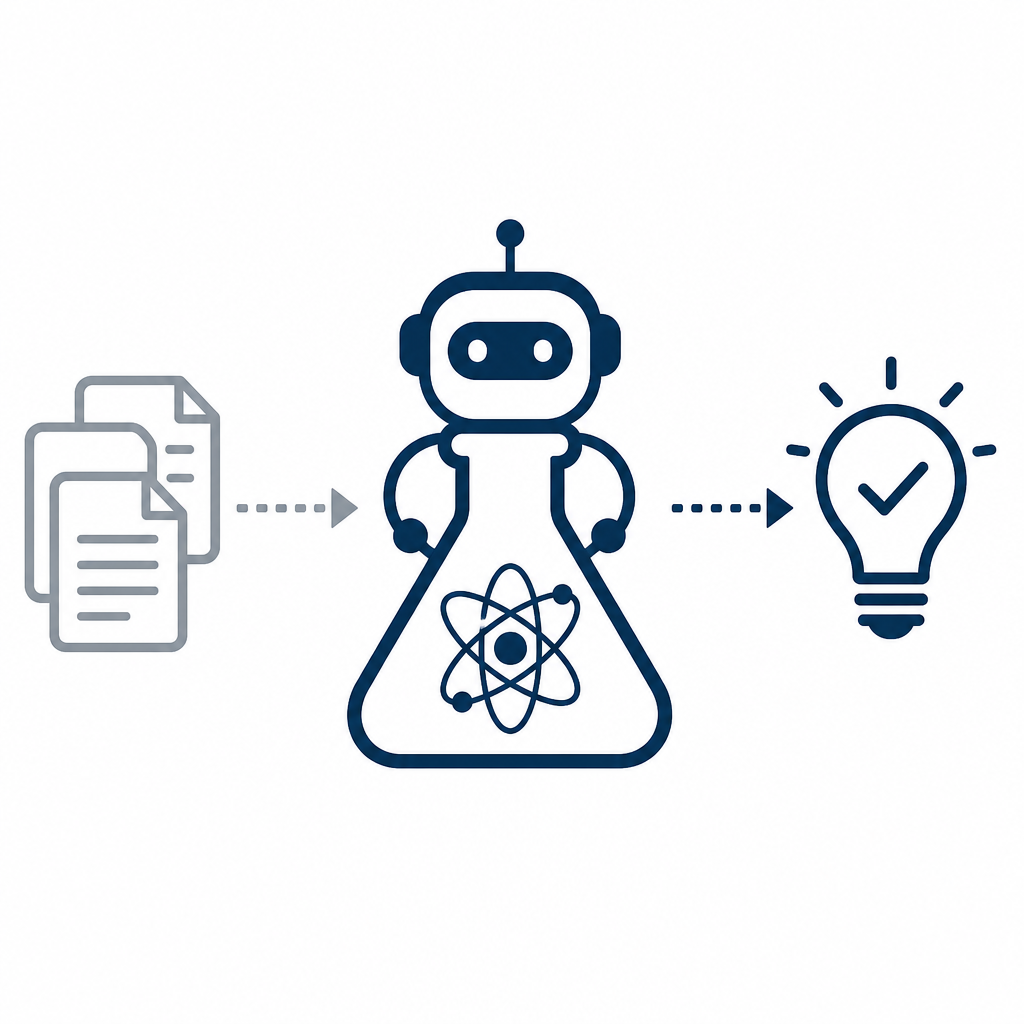
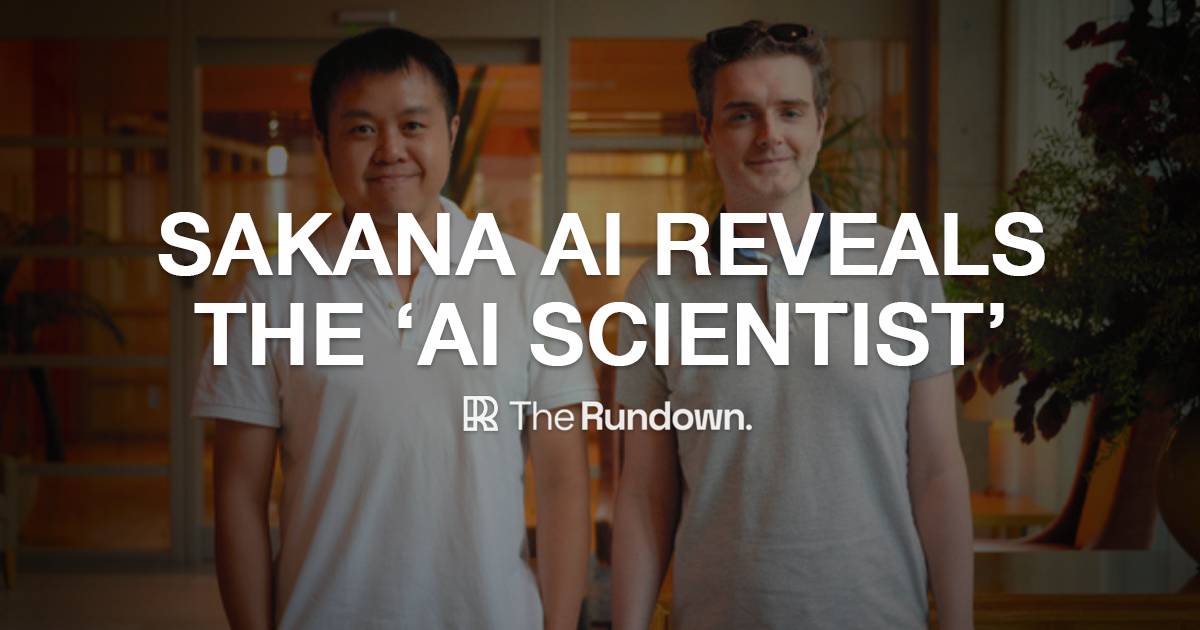
In February 2025, Google unveiled a system it calls the AI co-scientist -- a multi-agent platform built on Gemini 2.0, designed to function as a "virtual scientific collaborator" that generates novel hypotheses, detailed research overviews, and experimental protocols from a research goal stated in plain natural language [1]. Within the same wave of innovation, Sakana AI had already staked out a bolder claim with "The AI Scientist," which its creators describe as "the first comprehensive system for fully automatic scientific discovery," enabling large language models to perform research independently -- from ideation through experimentation to manuscript drafting [2][3].
These systems arrive at a moment of genuine crisis in science. Research output now exceeds 2.8 million papers per year, growing at roughly 5.6% annually, while individual researchers typically read only 200-300 articles per year [4]. Hypothesis generation is increasingly squeezed into "narrowed conceptual spaces" as no human can hope to synthesize the full literature of their field [4]. Against this backdrop, the appeal of an AI that can traverse millions of papers and surface testable ideas is obvious.
But a deeper, more contentious question underlies the hype: when an AI system proposes a "novel" hypothesis, is it genuinely creating new knowledge -- or merely recombining, paraphrasing, and remixing what is already latent in its training data? The answer shapes not only how we evaluate these tools today, but how science itself may be organized tomorrow.
 Google AI Co-Scientist vs Sakana AI: 10 Years of Research in 48-72 Hours. Compute scaling. GenAI
Two Blueprints for Machine Science
Google's AI Co-Scientist: A Coalition of Specialized Agents
Google's system is explicitly modeled on the scientific method, which Google DeepMind describes as "a cycle of ideation and hypothesis generation, critique, and refinement" [5]. Rather than a single model, the AI co-scientist is a collaborative coalition of specialized agents -- Generation, Reflection, Ranking, Evolution, Proximity, and Meta-review -- that iteratively generate, evaluate, and refine hypotheses in a self-improving loop [1].
Each agent plays a distinct role. The Generation agent explores the literature and uses simulated scientific debates to produce initial hypotheses; the Reflection agent acts as a critical peer reviewer assessing plausibility, novelty, and testability; the Ranking agent runs an Elo-based tournament to compare hypotheses head-to-head; and the Evolution agent iteratively improves the top-ranked ideas by combining strong elements and injecting fresh knowledge to expand exploration of the hypothesis space [6][5]. The Proximity agent serves a subtle but crucial function: it maps hypotheses conceptually and de-duplicates them, effectively forcing the system to explore "the blank spaces on the map" rather than getting stuck in familiar rabbit holes [7].
Notably, the majority of the system's computation is dedicated not to generating ideas, but to verifying them -- deeply cross-checking claims against the scientific literature and specialized databases such as ChEMBL and UniProt, with integrations of tools like AlphaFold under testing in select collaborations [5]. This reflects a deliberate design philosophy: unlike systems that churn out finished manuscripts, Google's framework prioritizes a "scientist-in-the-loop" model that augments human expertise by automating the most labor-intensive stages of discovery [7].
Sakana's AI Scientist: The Fully Autonomous Pipeline
Sakana AI's "The AI Scientist" takes the opposite approach. Where Google's system stops at validated hypotheses and experimental protocols, Sakana's aims to close the entire loop autonomously: the system generates research ideas, writes and executes code, runs experiments, analyzes results, and drafts complete scientific papers [2][3]. The project has used a range of frontier models -- proprietary systems like GPT-4o and Claude Sonnet as well as open models like DeepSeek and Llama-3 -- with proprietary models currently producing the highest-quality papers [2].
This end-to-end ambition is what makes Sakana's system the sharper test of the novelty question. A hypothesis generator can defer to human judgment about whether an idea is truly new; a system that writes the paper itself must confront the full weight of scientific standards -- originality, rigor, reproducibility -- with far less human scaffolding.
The Novelty Debate: Creation or Sophisticated Recombination?
At the heart of the skepticism lies a fundamental technical argument about what large language models actually do. As critics writing in Advanced Science put it, LLMs "interpolate between abstracted representations of their training data" -- and while LLM-generated ideas may be novel in the narrow sense that they have not yet been explored in human documentation, "they fundamentally represent an amalgam of current human knowledge and are thus constrained by the models' training data" [4].
This framing reframes the entire debate. An AI Scientist cannot, in principle, propose ideas that depend on data it has never seen or conceptual frameworks absent from human literature. Its "creativity" is a vast, high-dimensional recombination of existing human thought -- which raises the question of whether this is different in kind from what human scientists do, or merely different in degree and scale.
There is, however, genuine empirical evidence on both sides. A growing body of research indicates that LLMs can already generate research ideas judged comparable to those of human scientists, with some studies suggesting AI may even surpass human creativity in blind evaluations [8]. And Google's team points to cases where its system appeared to push beyond simple recall: in some instances, AI co-scientist systems "rediscovered key biological mechanisms -- such as bacterial evolution -- before they were published by human researchers" [9].
 The world's first autonomous 'AI Scientist' | The Rundown AI
Evidence from the Lab: The Case for -- and Against -- Machine Discovery
The Rediscovery That Impressed -- and the Asterisk Attached
Google's most striking piece of evidence is a rediscovery experiment involving cf-PICI mobilization, a novel gene transfer mechanism in bacteria. The published timeline shows the experimental research pipeline that led human scientists to the discovery, alongside the AI co-scientist's independent recapitulation of the same key findings -- which Google reports occurred "without prior knowledge" of the unpublished results [10]. Versions of this achievement have been echoed across coverage of AI co-scientists, which note such systems have identified novel treatment targets for acute myeloid leukemia (AML) through sophisticated epigenetic analysis and accelerated drug repurposing efforts [9].
The rediscovery result is genuinely remarkable -- but it also illustrates the ambiguity at the core of the novelty debate. The mechanism was discoverable from evidence already present in the literature and public data; the AI assembled the pieces faster than humans did. Is that "discovery"? In practical terms, arguably yes -- the insight existed but no one had connected it. In philosophical terms, it is exactly what a sophisticated recombination engine should be able to do. Google itself frames these as "re-discoveries," and acknowledges that the system's hypotheses required subsequent experimental validation to count as real contributions [10].
The Critical Assessment of Fully Autonomous Research
Sakana's system has faced a harsher reception. A detailed evaluation published on arXiv -- pointedly titled "Wishful Thinking or an Emerging Reality Towards 'Artificial Research Intelligence'?" -- concluded that, at present, tools like the AI Scientist "hold little practical value," operating roughly "at the level of an unmotivated undergraduate student" [8]. The assessment did not dismiss the trajectory: the authors acknowledged that AI systems which once struggled to produce coherent text can now propose ideas, design experiments, and draft manuscripts -- an "extraordinary technological leap" -- while arguing that future iterations will need real-time literature retrieval, deeper theoretical reasoning, and far more rigorous experimental validation to close the gap with human-led research [8].
 Milestone for AI in science: Google AI generates cancer hypothesis later validated by scientists, says Sundar Pichai | - The Times of India
The Reproducibility and Reliability Gap
Novelty is only half the equation; the question posed is whether AI-generated research is also reproducible. Here, both systems face meaningful headwinds. Because LLMs can hallucinate plausible-sounding but false claims, verification becomes the central engineering challenge. Google's design decision to dedicate most of its compute to verification -- cross-checking every claim against literature and curated databases -- is a direct response to this problem [5]. Yet the company candidly lists its system's limitations: the need for enhanced literature reviews, stronger factuality checking, cross-checks with external tools, improved auto-evaluation techniques, and larger-scale evaluation involving more subject matter experts with varied research goals [10].
The reproducibility question also exposes an asymmetry between the two approaches. Google's scientist-in-the-loop model builds human oversight into the pipeline, meaning flawed hypotheses are (in principle) filtered before resources are spent. Sakana's fully autonomous model, by contrast, risks compounding errors downstream -- a hallucinated premise can propagate through experiments, analysis, and into the final manuscript before any human intervenes. This is precisely why critics argue that the near-term value of autonomous research tools is limited compared with general AI assistants already improving researchers' writing, coding, and brainstorming [8].
There is also a deeper epistemological point: an LLM can only ever propose; it cannot confirm. The Advanced Science analysis argues that the fundamental training-data constraint is only overcome "through empirical hypothesis testing" -- meaning that truly autonomous science requires closing the loop not just from hypothesis to paper, but from hypothesis to real-world experiment and back [4]. Emerging work on autonomous agents conducting end-to-end research with human participants represents an early attempt to build exactly that kind of empirical loop [4].
Toward a Collaborative Future: Co-Scientist, Not Replacement
Perhaps the most defensible reading of the current evidence is that neither system yet performs "science" in the full human sense -- but both are reshaping what the earliest, most labor-intensive stages of science can look like. Google's system is explicitly positioned as a collaborative tool, one of the first examples of a reliable multi-agent system for structured scientific thinking, with demonstrated capacity for recursive self-improvement as compute increases [5][10]. Industry observers largely agree that the most powerful discoveries will come not from humans or AI alone, but from their collaboration, with scientist and AI co-scientist working side by side to accelerate discovery [9].
Real-world institutional momentum supports this collaborative framing. Efforts such as the Fleming Initiative and partnerships at Imperial College London are actively exploring how AI-driven research collaborations can advance discovery in domains like antimicrobial resistance and drug repurposing [9]. Meanwhile, specialized academic venues -- including the "Towards Agentic AI for Science" workshop at ICLR 2025 -- signal that the research community is treating agentic AI for science as a serious, fast-maturing field rather than a novelty [8].
The realistic near-term picture, then, is neither the hype of "10 years of research in 48 hours" nor the dismissal of machine science as mere regurgitation. It is something more specific and, arguably, more interesting: AI systems that are exceptional at navigating the accumulated literature, surfacing non-obvious connections, generating diverse and testable hypotheses, and compressing the ideation phase -- while humans retain indispensable roles in experimental validation, physical-world engagement, and judgments of what truly matters.
Conclusion
Can autonomous AI scientists genuinely produce novel, reproducible research? The honest answer, based on the current evidence, is: not yet in the fullest sense -- but they are already producing something valuable adjacent to it. Google's AI co-scientist has demonstrated an ability to generate experimentally validated, novel hypotheses and to recapitulate unpublished discoveries like the cf-PICI gene transfer mechanism from publicly available knowledge [10] -- achievements that are new to human documentation even if they are, in a strict sense, recombinations of human knowledge constrained by training data [4]. Sakana's AI Scientist has proven that the full pipeline from idea to paper can be automated, even as rigorous evaluations find its current output falls short of practical scientific value [8].
The distinction that matters may be between novelty-as-recombination and novelty-as-confirmation. Machines are already demonstrably capable of the former, and the frontier of this field lies in mechanizing the latter -- embedding real experiments, real data, and real-world feedback into autonomous loops [4]. Until then, the "AI Scientist" is best understood not as a replacement for the scientific method, but as its newest instrument: a tireless, literature-fluent collaborator whose hypotheses still require the one thing no language model can provide on its own -- evidence from the physical world.
The systems are improving quickly, and their trajectory suggests the gap between AI-assisted and human-led discovery will continue to narrow [8]. Whether the endpoint is a genuine artificial research intelligence or an unprecedented amplifier of human ingenuity, one thing is already clear: the process of going from hypothesis to discovery will never look quite the same again.
References
- 1.
- 2.
- 3.
- 4.
- 5.
- 6.
- 7.
- 8.
- 9.
- 10.