Introduction
For nearly three years, the story of AI in software engineering was one of assistance: autocomplete on steroids, a "copilot" that suggested the next line while the human remained firmly in the driver's seat. That story is now being rewritten. A qualitatively different class of tooling--agentic coding systems capable of autonomous, end-to-end software development with minimal human intervention--has arrived, and it operates on fundamentally different principles. Where copilot tools respond to individual prompts within a developer's workflow, agentic systems work in closed loops: they interpret a high-level task specification, plan an implementation strategy, generate code, execute tests, diagnose failures, and iterate until the work is done [1].
The distinction matters. Researchers now separate an "AI agent"--a single autonomous system pursuing goals in an environment--from the broader paradigm of "agentic AI," in which LLM-based systems autonomously plan, execute, and iterate on complex tasks [1]. What makes this generation of tooling structurally different from everything before it is not better prompting but sustained execution: frontier models can now reason across long-running, multi-step workflows, invoking tools, interpreting results, and correcting course over time [2]. Entire segments of the software development lifecycle are shifting from human-executed to autonomously executed work.
The implications ripple far beyond individual productivity. Adoption is accelerating--an analysis of over 129,000 public GitHub projects found that between 16% and 23% had integrated agentic coding tools within months of general availability, spanning projects at every maturity level, established organizations, and diverse programming domains [1]. Gartner projects that by 2028, 75-90% of software engineers will use AI code assistants as part of their regular work, a dramatic jump from under 15% just a couple of years earlier [3]. This article examines what agentic coding actually is, how it is transforming engineering workflows, what it means for team economics, and why the developer skill set itself is undergoing its most significant redefinition in a generation.
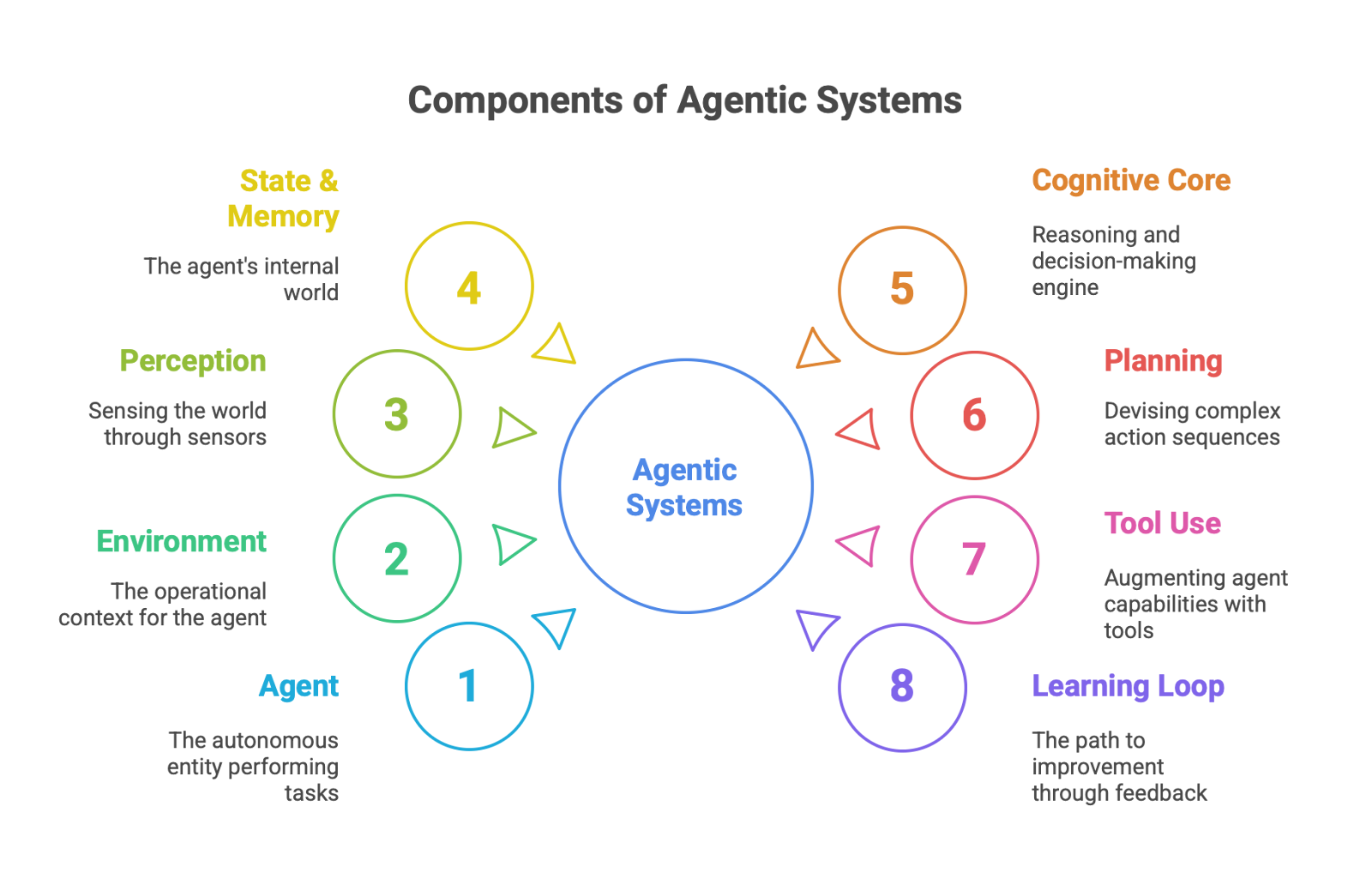 The Agentic Transformation of Software Engineering
From Copilots to Autonomous Teammates: What Makes Agentic Coding Different
The current generation of integrated coding agents--including Claude Code, OpenAI Codex, GitHub Copilot Workspace, Gemini Code Assist, Devin, Cursor, OpenHands, and Aider--offers end-to-end workflows encompassing code generation, refactoring, test authoring, debugging, and deployment configuration [1]. These systems build on research milestones like SWE-agent, which demonstrated autonomous resolution of real-world GitHub issues drawn from the SWE-bench benchmark, which evaluates agents against actual bug reports and feature requests from popular open-source repositories [1].
Complementing these integrated tools is a growing ecosystem of multi-agent orchestration frameworks such as AutoGen, CrewAI, and LangChain/LangGraph, which enable organizations to compose custom agentic pipelines by coordinating multiple specialized agents within a single development workflow [1]. The significance of this architecture cannot be overstated: rather than one generalist assistant, firms can now deploy teams of agents--one for implementation, one for testing, one for documentation--mirroring the specialization that human engineering teams have long relied upon.
The defining shift is structural, not cosmetic. Earlier developer tooling responded; agentic systems execute. They can analyze requirements, write and review code, run tests, create documentation, and even coordinate across different tools--actively participating in workflows rather than merely accelerating them [4]. One developer's experience captures the transition vividly: after integrating an autonomous agent into a personal workflow, hours of manual debugging and test execution were handed off seamlessly, accelerating delivery while improving software quality [5].
What separates a mature agentic deployment from a novelty, however, is the operational infrastructure around it. Integrating an agent-specific observability platform into the development and deployment pipeline is no longer optional--it is a fundamental requirement for building, debugging, and maintaining production-grade agentic systems. This creates a tight, continuous feedback loop between development and operations--a practice increasingly termed AgentOps or LLMOps--in which production traces are fed back to development teams to identify failure modes, discover edge cases, and continuously refine prompts, tools, and control logic. The result is a development process that is far more iterative and data-driven than traditional software engineering [6].
Rewriting the Software Development Lifecycle
The most immediate and tangible impact of agentic AI is on development velocity. Industry analysts describe a move "beyond AI as a sophisticated coding assistant to AI as an autonomous, multi-skilled team member"--agents acting as a first-pass executor across the entire SDLC: analyzing feasibility during planning, implementing features during build, expanding test coverage during validation, and surfacing risks during review, compressing weeks of coordination into continuous workflows [2].
Leading teams are converging on a simple operating model to govern this shift: delegate, review, and own. AI agents handle first-pass execution--scaffolding, implementation, testing, and documentation. Engineers review outputs for correctness, risk, and alignment. Ownership of architecture, trade-offs, and outcomes remains human. This division of labor allows autonomy to scale without diluting accountability [2].
Perhaps the most concise articulation of what changes comes from practitioners describing agentic software development as a delivery model where the unit of work moves from the keystroke to the task. Agents carry multi-step engineering assignments from ticket to pull request while engineers direct and review rather than type every line. Teams keep their review gates, CI checks, and deployment controls--but throughput per engineer changes, and attention shifts out of implementation and into specification and review. In this world, the quality of your tickets starts to matter about as much as the quality of your code [4].
The productivity implications are striking, even if vendor benchmarks should be read with appropriate skepticism. Augment's internal benchmarks claim an AI agent can move from a well-formed concept to a production-ready pull request 252 times faster than traditional workflows--translating to roughly $4.5 million in recovered engineering productivity annually for a 200-engineer organization, without hiring additional developers [7][8]. The claim targets a real pain point: large-scale engineering has hit a wall of fragmentation and friction, with code spread across dozens of repositories, brittle test suites, unpredictable dependency ripples, and slow CI cycles strangling delivery velocity [8]. Agents that can perform deep context analysis across fragmented repositories and resolve technical debt that traditionally consumes sprint capacity attack precisely this bottleneck [8].
The transformation extends upstream into planning itself. Agents can now break high-level features into technical tasks, estimate effort based on historical data, detect duplicate issues, and suggest sprint planning adjustments--while linking code changes directly to backlog items and automatically updating statuses. This creates a tighter feedback loop between planning and execution than most organizations have ever had [4].
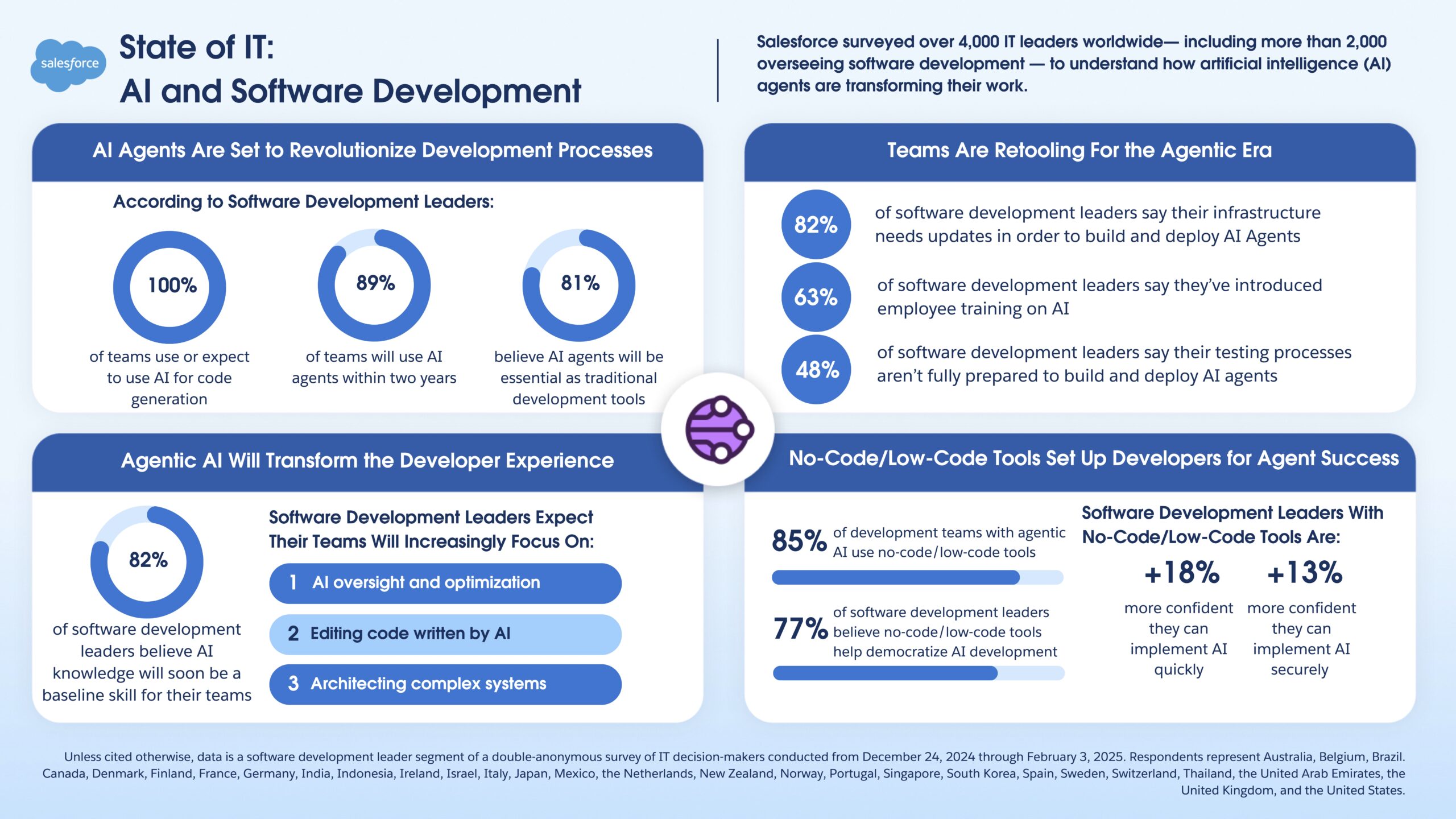 Best of 2025: How AI Agents are Reshaping the Developer Experience - DevOps.com
Team Economics: Productivity, Headcount, and the Buy-or-Build Calculus
The proliferation of agentic AI triggers what analysts call third-order effects--changes that extend beyond individual workflows and team structures to fundamentally reshape the economics and business models of the software industry [6]. The market is responding accordingly: BCG projects the market for AI agents will expand at roughly 45% CAGR over the next five years [7].
For engineering leaders, the headline question is whether agentic AI changes headcount math. The early evidence suggests a more nuanced answer than either the doomsday or utopian narratives predict. Despite widespread fears, no wave of developer layoffs attributable to AI has materialized; on the contrary, demand for good engineers remains high--but the skill set is shifting. Familiarity with AI tools is fast becoming an expected qualification, with job descriptions already listing experience with AI coding assistants as a plus [3]. In one survey, over 90% of engineering leaders said they plan to expand their use of AI coding tools [3].
The economic logic behind this expansion is captured by McKinsey findings: the teams that benefit most from AI are not merely those that deploy agents, but those that rethink how they structure teams, track results, and organize processes [4]. Treating AI as part of the entire development lifecycle rather than an isolated tool is what separates meaningful gains from marginal ones [4].
There is also a competitive dimension that leaders describe in existential terms. When an agent can carry an idea to production in hours, teams that rely on traditional workflows--days of context gathering, spec rewrites, code searches, review queues, and CI flakiness before a single line ships--face a gap that is "not just embarrassing, it's existential" [8]. This pressure is forcing a revisit of the classic enterprise buy-or-build decision: with commercial integrated agents, open-source frameworks, and orchestration platforms all maturing rapidly, firms must now decide not only whether to adopt agentic coding but which layer of the stack to own versus rent [1].
Importantly, the economics favor augmentation over replacement in the current phase. The compelling framing from practitioners is that agents function as force multipliers handling the grunt work so senior engineers can focus on problems only humans can solve [8]--a framing that preserves, rather than eliminates, the value of experienced engineering talent, even as it redefines what that talent does all day.
The Developer Skill Set: From Coder to Conductor
If agents handle a growing share of the coding and quality checks, what do human engineers actually do? Early signals point to a shift in emphasis from typing out code to directing, validating, and integrating it--essentially, more thinking and reviewing, less routine typing [3]. The evolving role has been described as moving "from coder to conductor," with the engineer's craft migrating up the abstraction stack [6].
The concrete skill changes are already visible:
- From prompt engineering to orchestration. Crafting the perfect prompt for a single task is becoming a basic, secondary skill. The decisive competency is orchestration--designing how agents are deployed across workflows, what guardrails constrain them, and how their outputs are validated [2].
- Specification as a first-class skill. When the unit of work is the task rather than the keystroke, writing precise, unambiguous, agent-ready specifications becomes as consequential as writing clean code [4][8]. Structured requirements that eliminate ambiguity reduce costly misunderstandings before an agent ever writes a line.
- Harness engineering and complexity management. Some commentators argue senior developers face a "Deep Blue Moment," and that skills like managing complexity, harness engineering, and behavior-driven development are now more vital than ever--precisely because agents that generate code freely can otherwise produce sprawling, incoherent "Winchester Mystery House" architectures that no one fully understands [9].
- Review and validation judgment. Knowing when to rely on AI suggestions versus human judgment is becoming a core discipline, requiring proper oversight mechanisms for systems whose autonomous behavior is inherently less predictable than traditional tooling [10].
Team dynamics are evolving in parallel. As one practitioner framing puts it: a decade ago, "DevOps" blurred the lines between development and operations; now agentic engineering is blurring the lines between coding and directing an intelligent machine. The best engineers will be those who harness both [3]. A useful shorthand captures the consensus trajectory: agents will become a standard part of the developer toolbox, embedded across many stages of the SDLC--but as assistants, not autonomous overlords [3].
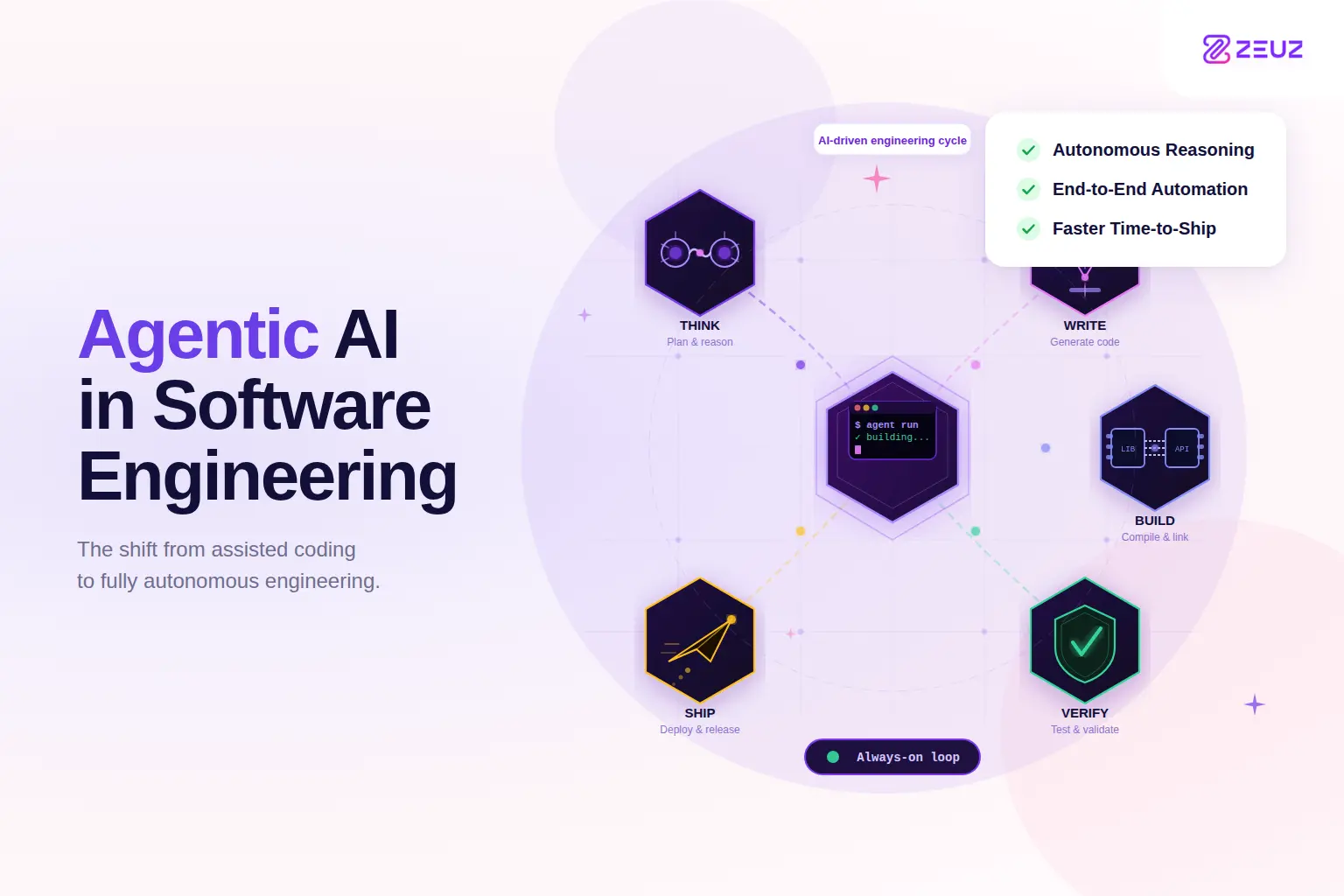 Agentic AI in Software Engineering: The Complete 2026 Guide
Challenges: Trust, Security, and the Limits of Autonomy
None of this transformation is friction-free, and a candid assessment must reckon with the failure modes.
Trust and reliability. The autonomous nature of AI agents raises fundamental questions about reliability, especially in critical systems. Because agents behave less predictably than rule-based systems, developers must establish oversight mechanisms and develop clear judgment about when to defer to AI output versus human intuition [10]. This is precisely why observability has become non-negotiable: production-grade agentic systems require instrumentation that surfaces failure modes before they compound [6].
Security and privacy. Agents typically require access to codebases, documentation, and sensitive development data. Organizations must implement robust security measures to protect intellectual property while still enabling AI capabilities--a governance challenge that grows more acute as agents gain broader tool access and autonomy [10].
Integration complexity. Incorporating agents into existing development workflows demands careful planning and often significant infrastructure changes. Teams must balance the benefits of automation against the complexity of implementing and maintaining the agentic stack itself [10].
Skill gaps and over-reliance. Development teams need new skills to collaborate effectively with these systems--prompting, configuring, and monitoring agents is becoming as important as traditional programming [10]. And the inverse risk looms just as large: over-reliance. An engineering culture that stops scrutinizing agent output risks shipping subtle defects and architectural decay at unprecedented speed. The teams succeeding with agentic AI are those that maintain human ownership of architecture, trade-offs, and outcomes while letting autonomy handle execution [2].
Conclusion
Agentic coding represents more than the next increment of developer productivity tooling--it is a structural change in how software gets built, who does the building, and what engineering organizations cost and produce. Autonomous systems that plan, implement, test, and iterate are already embedded in a meaningful fraction of the open-source ecosystem, and analyst forecasts suggest near-universal adoption of AI-assisted development within a few years [1][3].
Three threads tie the transformation together. First, workflows are being reorganized around a delegate-review-own model, where the unit of work shifts from the keystroke to the task and specification quality becomes as important as code quality [2][4]. Second, the economics are being rewritten: dramatic productivity claims, a rapidly compounding market, and competitive pressure are forcing every engineering organization to reconsider its buy-or-build calculus--while headcount fears, so far, have given way to a story of shifting rather than shrinking demand [3][7][8]. Third, the developer skill set is migrating from implementation toward orchestration, review, and architectural judgment--making the engineer less a line-by-line author and more a conductor of intelligent systems [6][2][9].
The open questions are as important as the answers. How quickly can governance, security, and observability practices mature to match agent capabilities? Will the productivity gains flow to smaller teams shipping more, or to larger ambitions at the same headcount? And as agents take on ever more of the SDLC, will the senior judgment that reviews, validates, and owns outcomes scale alongside them? What is already clear is that the defining challenge is no longer whether AI can participate across engineering workflows--it is how deliberately organizations design for it [2]. The teams that treat agentic AI as a reason to rethink their structures, skills, and standards--rather than merely a tool to bolt on--will define the next era of software engineering.
References
- 1.
- 2.
- 3.
- 4.
- 5.
- 6.
- 7.
- 8.
- 9.
- 10.