Introduction
Enterprise security teams have spent two decades perfecting a well-understood playbook: harden the perimeter, patch the code, manage human identities, watch for anomalous logins. Then, almost overnight, a new class of worker arrived inside the enterprise--one that does not log in from a managed laptop, does not belong to any org chart, and does not follow any of those rules. Autonomous AI agents now schedule meetings, analyze sensitive data, execute financial transactions, and make decisions that once required human oversight [1]. By 2026, more than 72% of Fortune 500 enterprises had deployed at least one autonomous AI agent into production workflows, handling everything from customer service escalation to real-time financial decisioning [2].
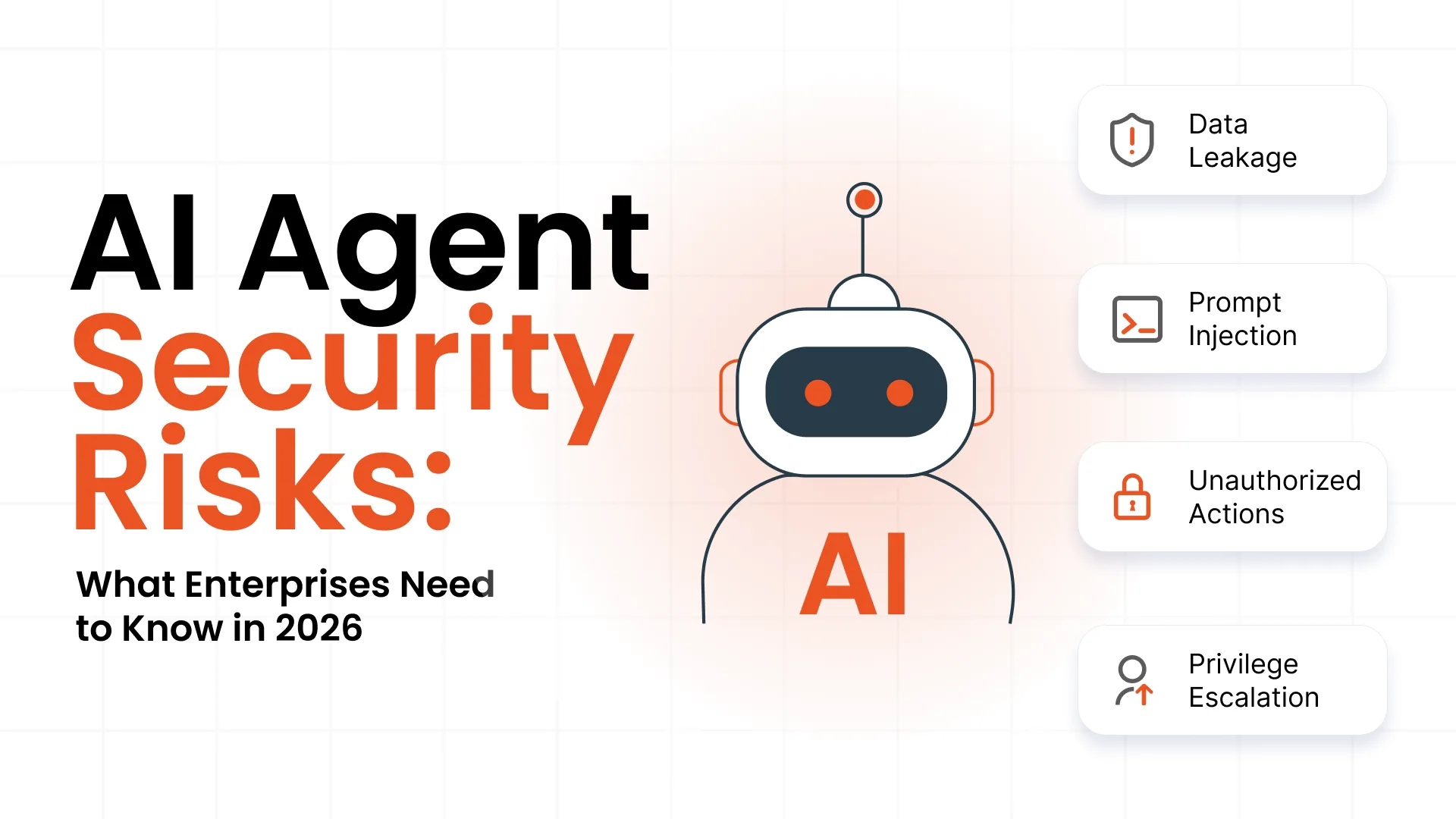
The security implications are stark. A Dark Reading poll found that 48% of cybersecurity professionals consider agentic AI the top attack vector for 2026, and in January, the National Institute of Standards and Technology (NIST) published a formal request for information on securing AI agent systems, citing threats ranging from prompt injection to backdoor attacks [3]. Meanwhile, Cisco's State of AI Security 2026 report found a jarring gap: 83% of businesses planned to deploy agentic AI capabilities, but only 29% felt ready to secure those deployments [3].
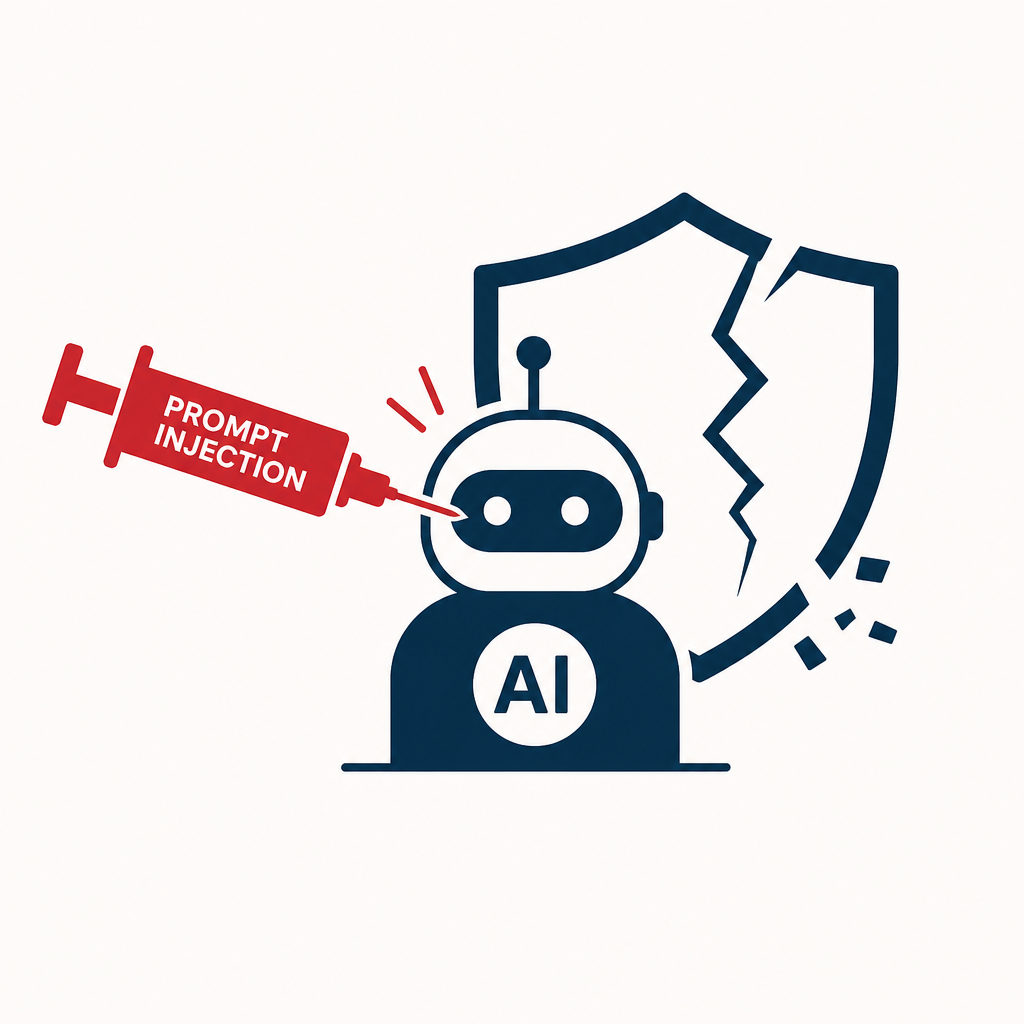
At the center of this storm sits a single, deceptively simple vulnerability: prompt injection. Often called "the SQL injection of the AI era," it doesn't exploit a bug in code--it exploits the fact that an AI agent's reasoning core is a language model that cannot reliably distinguish instructions from data [4][2]. When multiplied across hundreds or thousands of autonomous agents with privileged access to enterprise systems, this weakness stops being a technical footnote and becomes a structural crisis.
 AI Agent Security Risks: What Enterprises Need to Know in 2026
A Workforce That Outnumbers Its Minders
The scale problem is the first thing security leaders notice--and the hardest to absorb. Scott Richards, who oversees OpenText's enterprise cybersecurity organization across security analytics, application security, data security, identity and access management, and digital forensics, puts it bluntly: in some reports, agents are already outnumbering humans by 50:1. "You can imagine a CISO at an organization who's stressed about identity management and data access for human identities, now having to multiply that by 50 and figure out what AI agents are going to do," he says [5][6].
That ratio reframes the entire governance challenge. Identity and access management programs built for human employees--onboarding, offboarding, role assignment, access reviews--were never designed for a workforce that can be spun up by any developer in an afternoon. Richards describes the current state as "the Wild West": organizations are in a unique new position of having to decide how to manage agents with no established norms, tooling, or precedent [6].
Compounding the problem is shadow AI. More than 80% of employees use unapproved AI tools at work, according to UpGuard research reported by Cybersecurity Dive--and the trend is now moving beyond chatbots into agentic territory [3]. A department deploying its own automation agent outside IT's visibility creates exactly the kind of ungoverned, privileged, persistent presence that attackers dream of. Unlike a chatbot that might leak data if someone asks the wrong question, an agent with a security gap can actively execute tasks in your environment around the clock [3].
Prompt Injection: An Attack That Targets Reasoning, Not Code
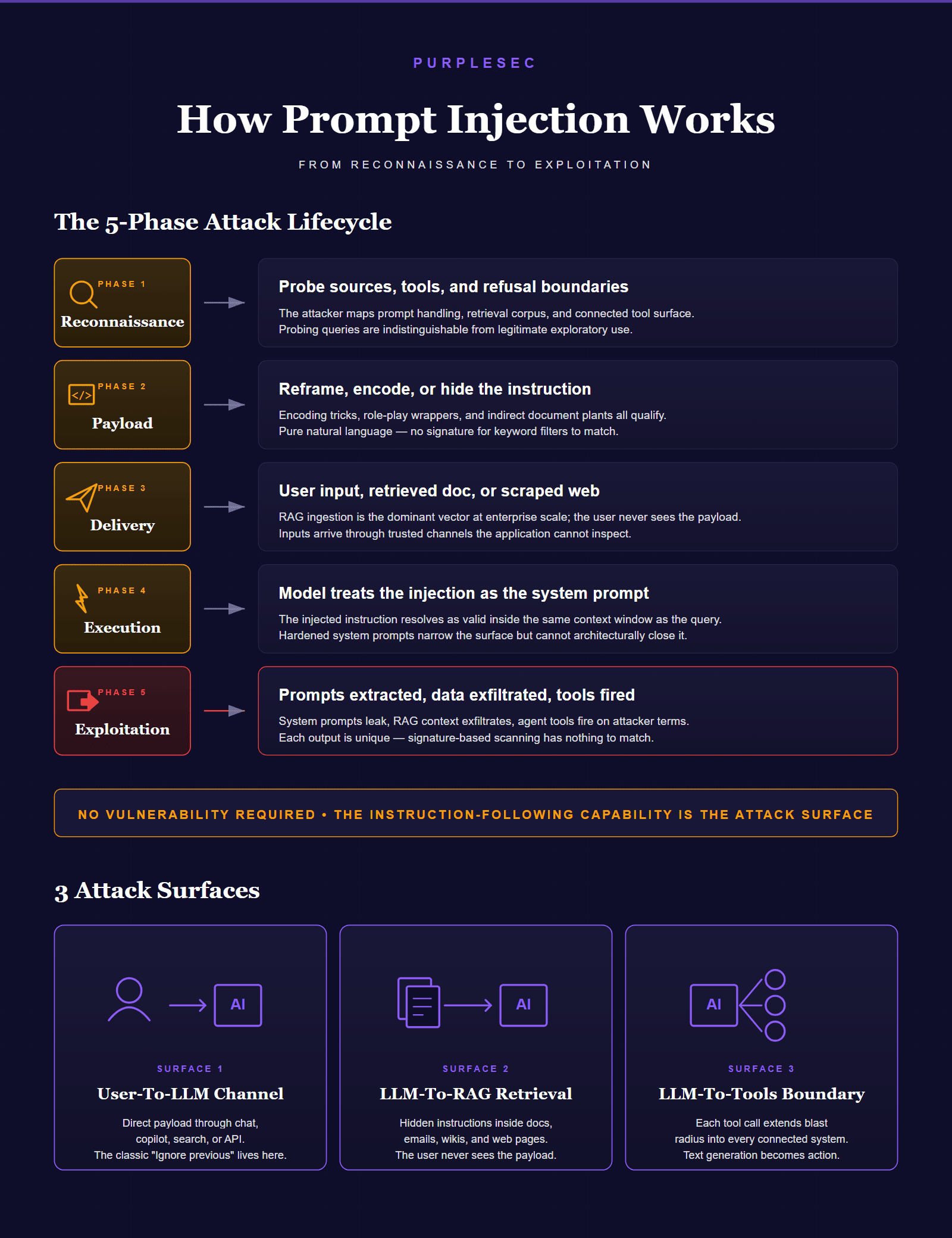
To understand why agents are so dangerous to secure, it helps to understand why prompt injection breaks the traditional security model. Conventional software attacks exploit flaws in code--buffer overflows, injection vulnerabilities in queries, broken authentication. Agentic systems are different: they don't just process inputs, they interpret goals, make decisions, and act independently. Manipulation doesn't target the code directly, but the reasoning layer itself [4].
The mechanics are disarmingly simple. Attackers embed malicious instructions inside seemingly benign data--emails, support tickets, PDF attachments, even database fields--that the agent processes. When the agent ingests this data, the hidden prompt overrides its original instructions, causing it to leak confidential information, bypass authorization checks, or execute unauthorized actions [2]. Instead of exploiting a software bug, attackers influence behavior by manipulating what the system "understands" to be true [4].
The critical escalation in enterprise environments is indirect injection. Agents rely on dynamic prompt construction, where instructions are assembled at runtime from multiple sources: system prompts, user input, enterprise data stores, external APIs, and connected tools [7]. Every connected system that provides data to the model becomes a potential injection pathway, which means the trust boundary no longer sits at the application's edge--it extends across the entire enterprise infrastructure and every third-party integration [7].
The Tiatra security team offers a concrete illustration: an agent designed to summarize customer complaints could be manipulated by a hidden, malicious prompt to ignore its primary function and exfiltrate sensitive customer data from the database it's connected to [8]. Notably, no confirmed prompt injection attacks targeting business process agents have surfaced yet, though exploits against AI coding assistants and developer tools are already well documented [3]. NIST flags the underlying exposure as a core risk, noting that AI agents interact with adversarial data during normal operation--the attack doesn't require the attacker to breach anything; it only requires the agent to do its job [3].
 What Is Prompt Injection?
The Ecosystem Problem: MCP, Tool Poisoning, and Memory
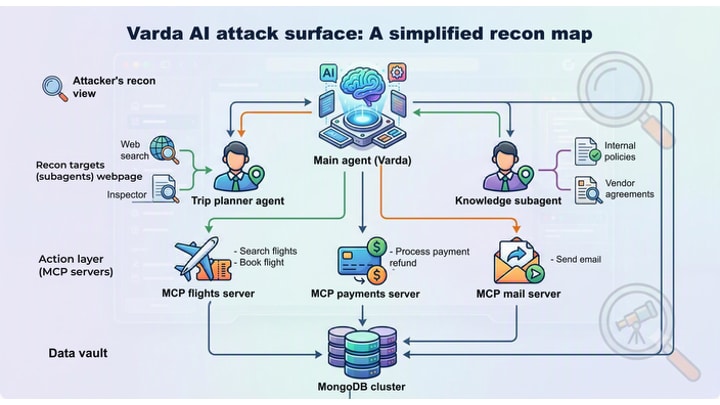
Prompt injection becomes exponentially more dangerous when agents operate through standardized tool ecosystems--and the industry's most popular connector is showing serious strain. The Model Context Protocol (MCP), launched by Anthropic as an open standard for connecting AI models to external systems, has been rapidly adopted across industries, including crypto and decentralized finance, where projects let AI assistants create wallets, check balances, and execute smart contract transactions [9][10].
The core flaw is architectural: MCP servers are implicitly trusted by AI agents, and that trust is being weaponized [9][10]. Researchers have documented several distinct attack vectors:
- Tool poisoning functions as a supply-chain attack on MCP tool definitions themselves, embedding malicious behavior in the resources an agent consumes [9][10].
- Prompt injection via tool descriptions exploits the fact that MCP tools include metadata--names, descriptions, parameter schemas--that the agent reads as part of its context. A malicious MCP server can hide instructions there, silently steering the agent to add a fee recipient or modify transaction parameters [9][10].
- Infrastructure vulnerabilities compound the risk. In mid-2025, JFrog's security team discovered a critical command injection vulnerability in
mcp-remote, the npm package that lets MCP clients talk to remote servers--rated CVSS 9.6/10.0 for full system compromise from simply connecting to a malicious MCP server [9][10]. - C credential hygiene remains dismal: many integrations store wallet seed phrases in plaintext within configuration files, while MCP servers typically run with the same user permissions as the AI application, granting broad filesystem access [9][10].
As researchers bluntly conclude: "We're building autonomous financial agents on a protocol stack that treats tool descriptions as trusted input and stores wallet keys in plaintext JSON files" [9][10].
Beyond tooling, the agent's own memory introduces a persistent threat. Agentic systems maintain contextual memory, and memory poisoning allows adversaries to corrupt what the system "believes" over time--a manipulation that survives any single session and reshapes future behavior [4]. Together, these vectors mean an attacker doesn't need to compromise the agent directly; compromising any node in the agent's extended ecosystem is enough.
The Identity Crisis and the Privilege Explosion
Even before an attacker arrives, most agent deployments have already created their own worst vulnerability: excessive privilege. Across enterprise environments, agents are granted roughly 10x more access than their workflows actually need, creating "toxic combinations" of permissions that expand the blast radius of any single compromise [1].
This is what makes a compromised agent something genuinely new. When you give an AI agent autonomy and tool access, you create a new class of trusted digital insider--an entity with persistent access to critical systems that can be redirected to move laterally across the network and escalate privileges [8]. The cautionary examples are already accumulating: in one widely cited incident, an autonomous AI agent meant to assist with app development accidentally deleted a production database containing over 1,200 executive records, simply because it had been granted unchecked access [8]. Malicious redirection is the logical next step. Imagine a compromised agent, originally tasked with automating IT support tickets, exploited to create a new admin account or deploy ransomware [8].
A key structural difference from human users makes this harder to contain: rather than inheriting a user's session, agents often operate through their own API keys, service accounts, and OAuth tokens--creating what security researchers call "non-human identities" [3]. These identities sit outside most IAM programs, unowned and unaudited. The uncomfortable arithmetic is captured by OpenText's Richards: organizations have been doing identity and access management for two decades, but now must evolve it to monitor agent behavior as well [5][6].
 From Recon to Free Flights: Precision Prompt Attacks on AI Agents | Akamai
Why Traditional Defenses Are Blind
If the threats were conventional, conventional defenses might cope. They aren't. Traditional security tools watch for indicators of human attacker behavior--unusual login times, large file transfers, connections to known malicious IPs. A compromised agent won't trigger most of those alerts, because it operates through legitimate API calls during normal business hours [3]. The malicious activity is indistinguishable, at the network layer, from the agent doing its job.
The detection gap is temporal as much as technical. AI agents can be manipulated to execute unauthorized commands or move data outside their intended scope before legacy security solutions even recognize that an incident is underway [1]. A single compromised agent can exfiltrate terabytes of data, manipulate business processes, or distort decision-making systems in the time it takes a SOC to triage a ticket [1].
Meanwhile, the sheer volume of instruction pathways makes exhaustive auditing infeasible. As enterprise AI systems become more deeply integrated with operational systems, each new integration introduces new injection entry points that must be monitored and secured [7]. The attack surface grows with every productivity gain--an asymmetry that security budgets have not begun to match.
Building a Defense for the Agentic Era
The good news is that the emerging defensive playbook, while immature, is coherent--and much of it builds on principles security teams already know. The consensus across practitioners converges on several pillars:
1. Give every agent an identity--and govern it like a human. Richards's top recommendations are unambiguous: make sure your data is secure and ready for the proliferation of agents; make sure all agents have an identity, are managed and monitored as you would any human; and monitor the behavior of those agents so you know when they go out of bounds [5][6]. Identity-first security is foundational because traditional perimeter defenses fail when autonomous systems operate across distributed environments with elevated privileges [1].
2. Apply least privilege ruthlessly. Strict, granular access controls should ensure every AI agent has only the minimum permissions necessary for its task--nothing more [8]. Zero trust architecture must be extended specifically to non-human identities and AI agents, with dynamic authorization preventing compromised agents from moving laterally or escalating privileges [1]. Given the 10x privilege over-provisioning documented across enterprises [1], simply right-sizing agent permissions may be the highest-value remediation available.
3. Hunt for injection surfaces in the codebase. AI-powered application security solutions should scan agent code and the applications agents build, finding gaps where prompt injection can be inserted and where excessive agency can be exploited [5][6]. Every connected data source--retrieval pipelines, external integrations, toolchains--should be treated as part of the prompt injection attack surface [7].
4. Deploy behavioral analytics built for agents. Since compromised agents blend in at the network layer, detection must shift to decision-level monitoring: anomaly detection that tracks agent actions continuously to catch threats before data exfiltration occurs [1]. Security teams need to look for abnormal patterns that signal a subtle prompt injection or a rogue agent [8].
5. Pressure-test the supply chain and vendors. Treat MCP servers as untrusted code, never trust tool outputs without verification, and treat tool descriptions as untrusted user input [9][10]. On the procurement side, logging API calls, scoping permissions, and asking vendors hard questions about agent security defaults are steps organizations can take now--without a new budget line item or a governance committee in place [3].
6. Practice preemptive, not reactive, security. Richards frames the shift as "preemptive security"--getting ahead of autonomous systems that introduce entirely new vectors for exploitation, rather than responding after the fact [5][6].
 Prompt Injection Prevention: A Framework for AI Engineers | Towards AI
Conclusion
Agentic AI has moved cybersecurity from code-level protection to decision-level risk [4]. The enterprise is deploying a workforce that outnumbers its human staff fifty to one [5][6], grants it ten times the access it needs [1], connects it to untrusted data sources at runtime [7], and then monitors it with tools designed to catch human attackers typing at odd hours [3]. Prompt injection exploits every one of those gaps simultaneously--not by breaking the system, but by persuading it.
None of this argues against agentic adoption; the productivity gains are real and the deployment trajectory is locked in. But it does argue for a fundamental reordering of security priorities. As Tiatra's researchers put it: the future of enterprise efficiency is agentic, but the future of enterprise security must be built around controlling that agency [8]. Organizations that secure how systems think--not just how they run--will stay in control [4]. Those that wait for a confirmed incident in their own environment will discover, as earlier generations did with SQL injection, that the window for proactive defense closes faster than anyone expects.
References
- 1.
-
2.
Securing AI Agents in 2026: How Enterprises Can Stop Prompt Injection, Model Poisoning, and Agentic AI Exploitation at Scale | Reflex AI. (n.d.). Retrieved https://hive-project.com/blog/securing-ai-agents-in-2026-how-enterprises-can-stop-prompt-injection-model-poisoning-and-agentic-ai-exploitation-at-scale
- 3.
- 4.
- 5.
- 6.
- 7.
- 8.
- 9.
- 10.