
Introduction
Market volatility is one of the few constants in investing. Whether triggered by geopolitical conflicts, economic data surprises, pandemics, or recessions, markets have always experienced periods of dramatic fluctuation--and they have always recovered over time [1]. Yet for investors watching their account balances swing wildly from day to day, staying rational can feel nearly impossible. Fear and panic are natural emotional responses to this financial roller coaster, and acknowledging them is an important first step. However, acting on those emotions often leads to impulsive, irrational decisions that can derail carefully constructed long-term financial plans [2].
The challenge, of course, is that "don't panic" is far easier said than done. Experts have long warned investors against letting emotions drive their decisions, but without concrete strategies and mental frameworks, even seasoned investors can find themselves making knee-jerk reactions during turbulent periods [2]. Emotional decisions made during volatility--such as selling at a loss, abandoning savings plans, or moving entirely to cash--can lock in losses and cause investors to miss the market's best recovery days [1].
This article explores a comprehensive approach to maintaining composure during market volatility, blending psychological techniques with actionable investment strategies. By understanding both the mental and practical dimensions of volatility, investors can build resilience and make informed choices that serve their long-term objectives.
The Psychology of Calm: Mastering Your Mindset
Understanding Emotional Traps
Emotions are often false indicators of opportunity. Fear during downturns can drive investors to sell at precisely the wrong moment, while overconfidence during bull markets may lead to taking on excessive risk [3]. Any emotional reaction during a volatile period has the potential to derail long-term financial goals and lead to costly mistakes that compound over time [3]. Recognizing these patterns is essential before they manifest in portfolio decisions.
Common "panic moves" during volatile markets include abandoning savings plans, hastily selling market assets at low points to address debt, and switching investment options in a poorly timed effort to protect capital [4]. These reactions not only have immediate consequences but can also impact long-term financial health in ways that are difficult to recover from.
Building Mental Discipline Through Routine
Developing mental strength is an ongoing effort that requires consistent practice. Traders and investors alike benefit from establishing daily routines that reinforce discipline and perspective. Recommended practices include reviewing your trading or investment journal each morning, studying higher timeframes for broader market trends, and using smaller position sizes during uncertain periods [5]. These routines create structure and help prevent reactive decision-making.
Mindfulness has emerged as a particularly powerful tool for maintaining composure. Studies show that practicing mindfulness leads to clearer decision-making by helping individuals stay focused and manage emotions effectively, avoiding impulsive reactions to market swings [5]. Techniques such as negative visualization--mentally preparing for adverse outcomes--and reframing can help investors handle stress more constructively [5].
Limiting Information Intake
One often-overlooked strategy is simply reducing the frequency of portfolio checks. Constant monitoring can amplify anxiety and push investors toward rash decisions, creating an illusion of control that rarely translates to better outcomes [3][6]. Attempting to second-guess market movements is virtually impossible, even for experts, and limiting exposure to constant market updates can preserve both financial and emotional wellbeing [6].
 Staying Calm Amidst Market Volatility - FasterCapital
Strategic Investment Choices for Volatile Markets
The Foundation: Diversification and Asset Allocation
Spreading investments across a range of asset classes--including equities, bonds, property, and cash--is one of the most effective ways to limit losses during volatile periods [6]. Each asset class performs differently under varying market conditions; when some lose value, others may make gains, helping to smooth overall returns over time [6]. A well-structured asset allocation strategy forms the foundation of sound investment planning and provides a roadmap that investors can adhere to regardless of short-term market movements [7].
Diversification also extends to sectors within equity allocations. During volatile periods, defensive sectors such as consumer staples and utilities tend to offer more stability, as these businesses provide goods and services that remain in demand regardless of economic conditions [7]. Additionally, dividends from these sectors can offer a buffer against price fluctuations, providing income even when capital values are declining.
Dollar-Cost Averaging: Consistency Over Timing
Dollar-cost averaging--investing a fixed amount at regular intervals regardless of market levels--is a strategy particularly well-suited to volatile markets [7][8]. This approach naturally buys more shares when prices are low and fewer when prices are high, effectively lowering the average cost per share over time. According to Morningstar data, this strategy outperformed lump-sum investing approximately 67% of the time during volatile periods over a ten-year horizon [8].
The key to dollar-cost averaging is consistency. Continuing to add to long-term investment accounts despite market fluctuations requires discipline, but it prevents investors from trying to time the market--a feat that virtually no one, including professionals, can accomplish reliably [7][1]. Missing just a few of the market's best days can have a significant impact on long-term returns [1].
Maintaining Liquidity and Cash Reserves
Having a cash cushion provides both emotional comfort and strategic advantage during market volatility [7]. Liquidity on hand prevents impulsive decisions forced by circumstance--such as having to sell investments at depressed prices to cover expenses--and positions investors to capitalize on opportunities that arise during market downturns [7]. For those who have performed well in the market, taking some profit off the table and moving it to a money market or high-yield savings account can still generate impressive returns while decreasing overall portfolio risk [8].
Guaranteed Income Solutions
For investors nearing retirement, volatility can feel particularly destabilizing as it may impact withdrawal plans and income security [4]. In these cases, allocating a portion of assets toward guaranteed income solutions--such as annuities or bond ladders--can establish a baseline of income independent of market performance [4]. Whole life insurance products can also provide diversification and financial confidence during turbulent periods [4].
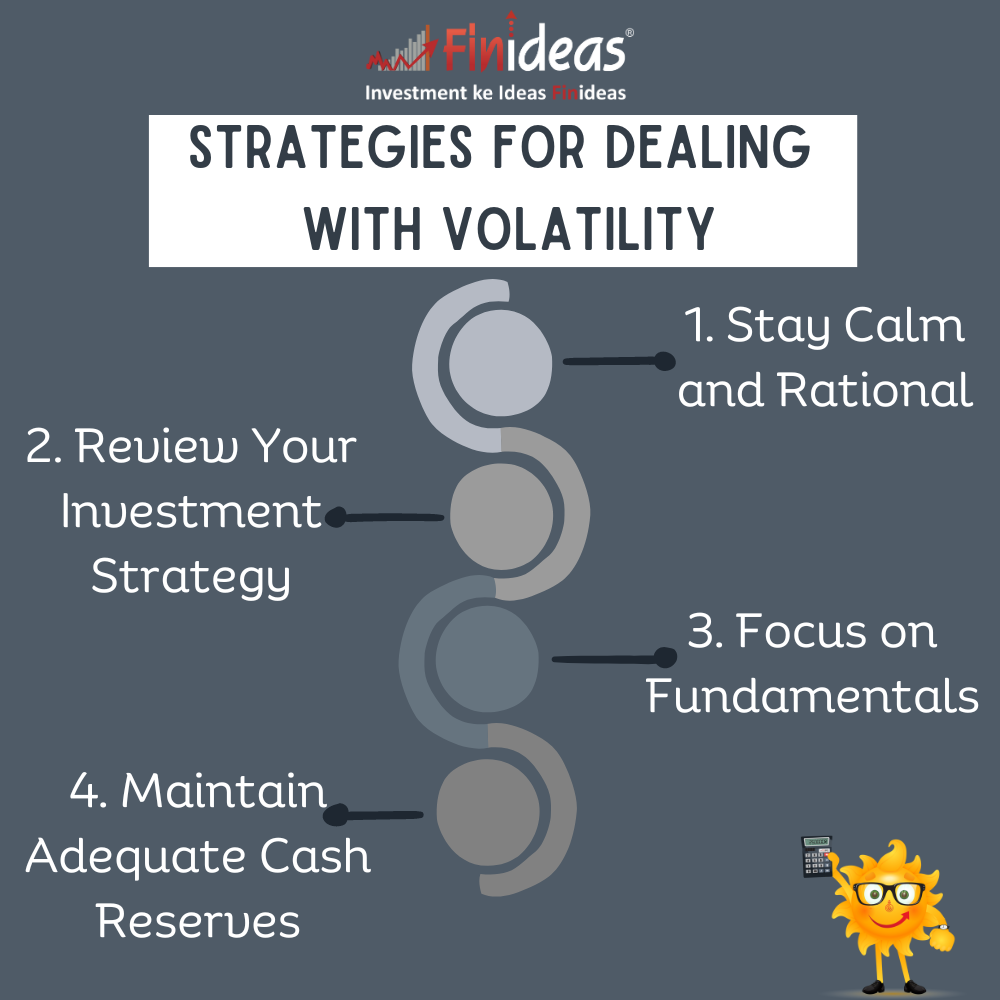 How to Deal With Volatile Markets?
Establishing and Reviewing Your Investment Plan
The Importance of a Written Plan
Building a solid investment plan is the single most effective defense against emotional decision-making during volatility [3]. This plan should clearly define your goals, articulate your risk tolerance, and commit to a long-term strategy that can withstand short-term turbulence [3]. Having this framework in place prevents obsessively monitoring markets and provides a reference point when emotions threaten to override logic.
For traders specifically, setting clear rules around entry and exit points, stop losses, and risk limits creates boundaries that remove discretion from emotionally charged moments [5]. Reducing position sizes and avoiding overleveraging during uncertain times can protect capital while still allowing for participation in potential recoveries [5].
Periodic Review and Gradual Adjustment
Volatile periods serve as natural prompts to review your investment plan and ensure it still reflects your current needs and circumstances [2]. For example, an investor whose strategy has shifted over twenty years from wealth accumulation to wealth preservation may need to adjust their allocation from riskier assets to more conservative ones [2]. However, any necessary adjustments should be implemented gradually rather than abruptly--testing the waters with small shifts or setting clear thresholds for portfolio changes helps manage risk effectively [7].
Rebalancing regularly with the guidance of a financial advisor ensures that the portfolio remains aligned with its target allocation. In fast-moving markets, the old-school passive approach may not always be optimal, and active portfolio management can add value [8]. However, it is crucial to distinguish between thoughtful rebalancing and reactive tinkering driven by fear.
Learning from Experience
Market challenges present valuable learning opportunities. Reflecting on past decisions, accepting mistakes, and using them to inform future strategies can strengthen an investor's approach over time [7]. Maintaining a trading or investment journal that documents not only decisions but also the reasoning and emotions behind them creates a powerful tool for self-improvement and pattern recognition [5].
After a loss, a structured recovery plan is essential. Taking a break, documenting lessons learned, reducing position sizes temporarily, and refocusing on higher-probability opportunities can help restore confidence and prevent destructive behavior spirals [5].
 Staying Calm Amidst Market Volatility - FasterCapital
The Role of Professional Guidance
Objectivity When You Need It Most
One of the most effective ways to navigate market volatility is working closely with a financial advisor [3]. In times of uncertainty, having a knowledgeable and objective partner provides perspective that is difficult to maintain when you are emotionally invested in your own portfolio [3]. Advisors bring not only technical expertise but also the ability to provide clarity during turbulent periods, helping investors avoid knee-jerk reactions and market timing that can undermine long-term goals.
Research supports the value of this relationship. Working with a financial professional is one of the behaviors associated with "high financial health," according to studies examining the connection between mental wellbeing and financial outcomes [4]. As stressful as market volatility may be, attempting to navigate it alone can compound that stress unnecessarily [4].
What Professionals Provide
Financial advisors help construct portfolios with the right mix of asset classes for individual circumstances, designed to preserve purchasing power and grow investments over the long term [6]. They can also provide context--comparing portfolio performance to relevant benchmarks and explaining that variations in returns are often linked to asset allocation choices rather than poor decision-making [7]. This perspective can be invaluable when emotions tempt investors to abandon their strategy.
For those who prefer a more hands-off approach, professionally managed diversified investment options--such as balanced or target-date funds--offer built-in diversification and automatic rebalancing designed to support long-term goals through various market conditions [1].
Conclusion
Market volatility is not an anomaly to be feared but a natural feature of the investment landscape. History consistently demonstrates that events triggering volatility--whether recessions, natural disasters, financial crises, or pandemics--have ultimately been followed by market recovery [1]. The investors who fare best are not those who predict market movements with precision, but those who maintain discipline, adhere to a well-constructed plan, and make strategic choices grounded in long-term objectives rather than short-term fear.
Staying calm during volatile markets requires a multifaceted approach. Psychologically, it demands mindfulness, emotional awareness, and the discipline to limit reactive behaviors. Strategically, it calls for diversification, dollar-cost averaging, adequate liquidity, and--where appropriate--guaranteed income solutions. Practically, it requires a written investment plan, periodic review, and the humility to seek professional guidance when needed [5][7][3][6][4].
Perhaps most importantly, investors should remember that market cycles are a natural occurrence and that maintaining a well-structured asset allocation provides a foundation for weathering any storm [7]. By focusing on what they can control--their investment contributions, their choices, and their emotional responses--rather than what they cannot control, investors can navigate even the most turbulent markets with measured confidence [2]. In the end, it is time in the market, not timing the market, that determines long-term investment success [6].
References
- 1.
- 2.
- 3.
- 4.
- 5.
- 6.
- 7.
- 8.