Introduction
The modern classroom is increasingly mediated by algorithms. Driven by the promise of hyper-personalized education, school districts across the globe have rapidly adopted AI-driven adaptive learning technologies. These platforms, which range from intelligent tutoring systems to dynamic math and reading applications, continuously assess student performance and adjust the difficulty and sequence of content in real time. For many educators, these tools represent a paradigm shift, offering the elusive ability to meet every student precisely where they are [1].
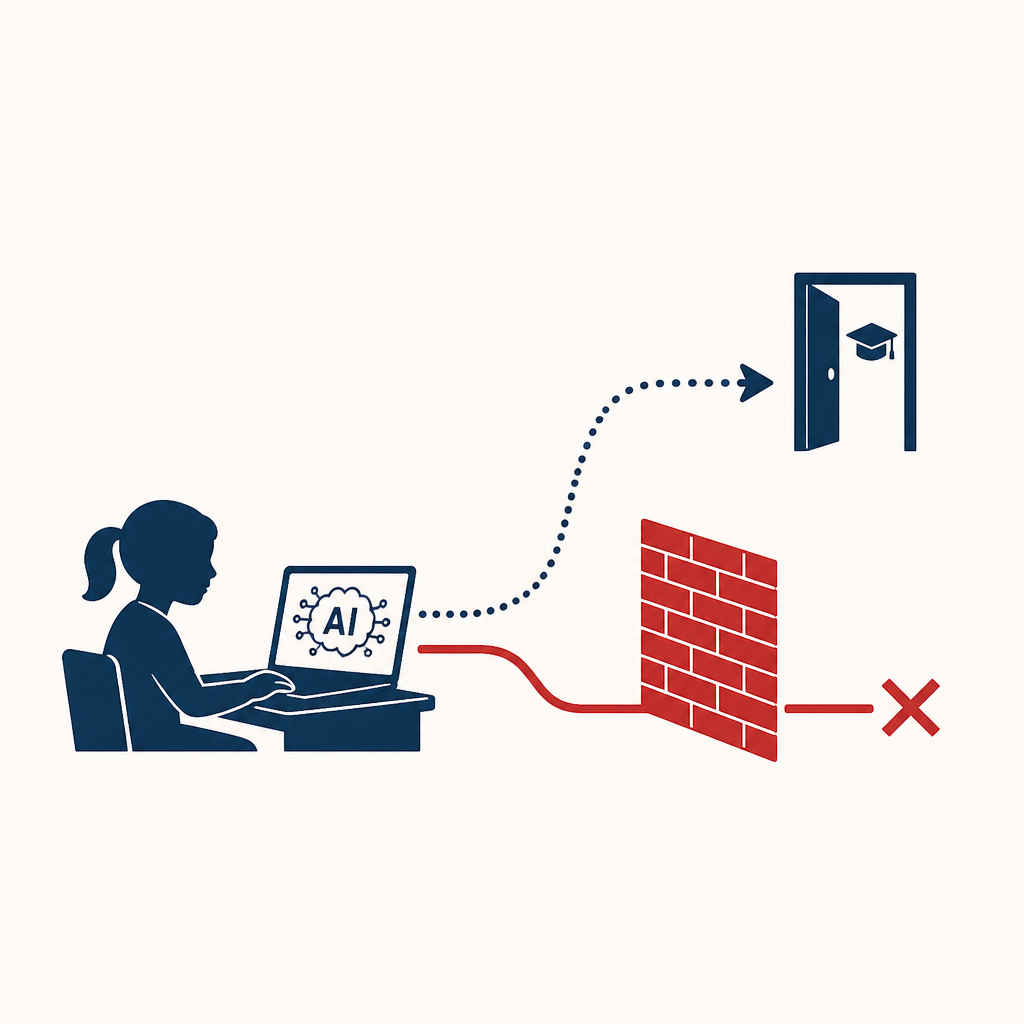
However, beneath the veneer of technological objectivity lies a deeply concerning reality. Just as the historical practice of redlining marginalized minority communities by denying them financial services based on their geographic location, AI systems in education are capable of executing a parallel form of digital discrimination. Algorithmic redlining in the classroom occurs when machine learning models systematically limit the educational opportunities and trajectories of marginalized students based on flawed, historically biased data [2].
This phenomenon does not typically stem from malicious intent by software developers. Rather, it emerges from the inherent limitations of predictive analytics when applied to complex human learning within an unequal society. As we entrust machines with an increasing share of pedagogical decision-making, it is imperative to scrutinize how these algorithms assess equity, where they fail, and how their hidden biases threaten to deepen the very achievement gaps they were designed to close.
The Mechanics of Proxy Discrimination
To understand how algorithmic redlining manifests, one must first understand how adaptive learning systems make their decisions. These platforms rely on machine learning models trained on vast datasets of historical student performance, behavioral metadata, and demographic information. To predict a student's future success or likelihood of mastering a concept, the algorithm searches for patterns and correlations [3].
When explicit data regarding a student's race or socioeconomic status is removed to prevent outright discrimination, algorithms often rely on proxy variables. These are seemingly neutral data points that strongly correlate with marginalized identities--such as zip code, parental education level, internet connection speed, or even the type of device used to access the platform. Because of decades of systemic disinvestment, a student's zip code is inextricably linked to the quality of their local school district and, consequently, their historical test scores [4].
When an adaptive learning system ingests these proxy variables, it begins to make deterministic assumptions. A student logging in from an under-resourced neighborhood via a lagging smartphone may be instantly categorized as "high risk." As a result, the algorithm might restrict that student to repetitive, rote-memorization tasks, denying them access to higher-order critical thinking exercises. This creates a self-fulfilling prophecy: by limiting the cognitive demand of the work, the system ensures the student does not develop advanced skills, thereby "confirming" the algorithm's initial, biased prediction.
The "Black Box" Classroom: Opacity and Pedagogical Harm
One of the most insidious aspects of algorithmic redlining is the opacity of the technology itself. Many AI-driven educational platforms operate as "black boxes," meaning that even their creators cannot fully explain the specific weight given to each variable when the system generates a recommendation [5]. For a teacher, the output is simply a dashboard indicating that a student is "struggling" and needs intervention, with no transparency regarding the underlying data that triggered the alert.
This lack of transparency transfers immense pedagogical power from human educators to proprietary algorithms. When a teacher receives an AI-generated recommendation to hold a student back from advanced coursework, they may defer to the machine's supposed objectivity, a phenomenon sociologists refer to as "automation bias." This is particularly damaging for students of color and English language learners, who are frequently misidentified by AI as lacking proficiency due to cultural biases embedded in natural language processing models or assessment questions [6].
Furthermore, the harm of this black-box decision-making extends beyond academic tracking; it affects student psychology. When students are continuously fed remedial content by a machine, they internalize the system's low expectations. The algorithm, devoid of empathy or contextual understanding, effectively places an invisible ceiling on the student's potential, replicating the insidious effects of traditional tracking systems under the guise of digital personalization.
Data Deserts and the Deficit Model
Machine learning algorithms require massive amounts of high-quality data to function accurately. However, marginalized communities frequently reside in what researchers call "data deserts"--environments where there is a scarcity of representative, high-quality digital data. In education, this means that the training datasets used to build adaptive learning models are overwhelmingly skewed toward white, affluent, suburban student populations [7].
When an AI system encounters a student whose cultural or linguistic background deviates from the "norm" established by the training data, it struggles to categorize them accurately. Instead of recognizing diverse ways of knowing, problem-solving, or expressing knowledge, the algorithm defaults to a deficit model. It interprets deviation from the norm as an academic deficiency rather than a cultural difference. Consequently, Indigenous students, Black students, and neurodivergent learners may be perpetually flagged as "anomalous" by the system, leading to constant, unnecessary interventions that disrupt their learning flow and stigmatize them within the classroom environment.
Regulatory Gaps and the Path Forward
Despite the rapid integration of AI into K-12 education, the regulatory landscape remains woefully inadequate. Current federal education privacy laws, such as the Family Educational Rights and Privacy Act (FERPA), were designed to protect the privacy of student records, not to ensure algorithmic fairness or prevent digital discrimination [8]. There is currently no federal mandate requiring edtech companies to conduct algorithmic impact assessments or submit their models for independent bias auditing.
Addressing algorithmic redlining requires a multi-pronged approach. First, there must be a shift toward "equity by design" in software development. This involves intentionally including diverse populations in training datasets and actively testing algorithms for disparate impact before they are deployed in classrooms. Second, educators must be empowered with algorithmic literacy, enabling them to critically evaluate AI recommendations rather than accepting them as infallible truths.
Most importantly, we must insist on a "human-in-the-loop" approach to adaptive learning. Algorithms should be positioned as suggestive tools, not final arbiters of student destiny. Teachers must retain the pedagogical sovereignty to override AI recommendations, supported by a transparent interface that explains why the system is making a specific suggestion.
Conclusion
The promise of AI-driven adaptive learning is undeniably compelling. In an idealized world, these technologies would dismantle the factory model of education, providing every child with a uniquely tailored pathway to academic success. Yet, without rigorous oversight, we risk allowing these same technologies to automate and scale historical inequities. Algorithmic redlining in the classroom represents a civil rights issue of the digital age--a quiet, invisible mechanism that can dictate a child's future based on the biases of the past. If we are to truly harness the power of AI in education, we must ensure that these systems are held to the highest standards of equity, transparency, and human accountability.